Is Nandi the Eternal Symbol of Shiva and the Soul of Taurus?
By Pt. Suvrat Sharma
Nandi’s story from divine birth to guardianship of dharma and Taurus’s spiritual message
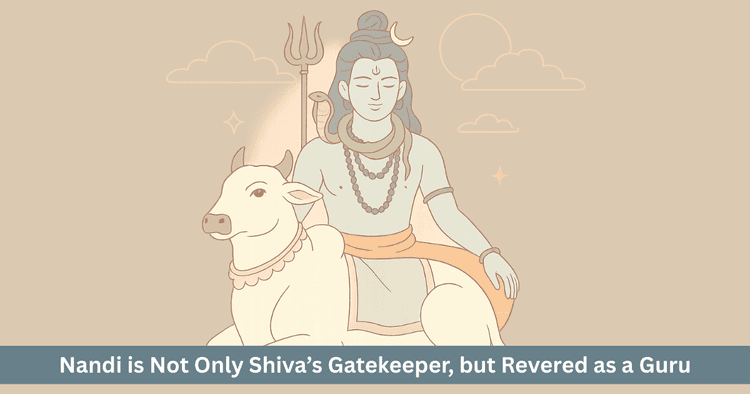
Table of Contents
The eternal cosmos, woven in its primordial rhythm, witnessed sages crafting the foundations of existence with fearsome penance and unwavering meditation. Among those luminaries, sage Shilada became renowned for his ascetic powers and relentless devotion. His body radiated spiritual energy, his mind unwavering in focus: to invoke Lord Shiva’s blessing for a son who would be untouched by birth and death, embodying the living essence of divinity.
Shilada’s penance mirrored the fire’s singularity, the coolness of flowing waters and the resolve of the wandering winds, each austerity, vow and focus reverberated across the universe. At last, Shiva manifested, appearing as the living embodiment of a boon. From Shilada’s own spirit, Shiva revealed a child of celestial brilliance, Nandi, not born of flesh or mortal womb but formed from the union of austerity and divine will.
Nandi’s birth testifies to the transformative power of truth, purity and devotion. Even in his earliest years, Nandi displayed unwavering vitality, deep gentleness and steadfast spirituality. Shilada raised his son in accordance with Vedic tradition, emphasizing selfless love, discipline and the wisdom of asceticism.
Taurus’s Symbolism: Nandi’s Spiritual Reflection
In the Vedas, Puranas and astrological texts, the bull is revered for its strength, stability and loyalty. United with Shiva, Nandi reveals the profound secrets and spiritual wisdom encoded within Taurus.
The Taurean temperament, earthy determination, appreciation for comfort, boundless tolerance and true love, resonates in every aspect of Nandi’s presence. Upon entering any Shiva temple, the devotee’s gaze is drawn first to Nandi. Seated at the temple entrance, ever facing the Shivling, Nandi radiates an atmosphere of focus and reverence. His posture, fixed upon the highest spiritual goal, his eyes shining with constant meditation, inspires inner pilgrimage.
The symbolic nature of Nandi guides Taurus natives in cultivating patience, restraint and loyalty in their lives. Here, strength is not aggression but endurance; true power is found in patience and inner steadiness. Nandi synthesizes the most sacred qualities of the Taurean soul; facing life’s trials and transitions, he imparts guidance with quiet firmness.
The Spiritual Treatise of Nandi’s Form: Four Pillars and the Path of the Seeker
Nandi’s four legs symbolize the core principles of Hindu philosophy, Sathya (insight and the purity of thought), Dharma (righteous action and decisive conduct), Shanti (clarity and serenity of mind and soul) and Prema (divine feeling and unconditional love).
Ancient scriptures describe these as the four main pathways, East, South, West and North, wherein each direction is represented by a facet of Nandi’s energy.
His steadfast gaze personifies surrender to God and the devotion of the seeker. In the eyes of young Nandi, there are no worldly desires, only focus upon Shiva. This sense of detachment is the secret to reaching the pinnacle of progress.
Sacred Signs and the Mystery of Worship
Nandi’s ears symbolize proximity to Shiva; worshippers trust that by speaking into his ear, their prayers reach Shiva directly. His white skin is a sign of purity and spotless living.
Many spiritual qualities shine in Nandi’s form:
- The broad chest reflects courage and perseverance
- The sturdy body reflects tranquility and equilibrium
- The unwavering stare personifies focus and devotion
Across cultures, honoring Nandi reflects the balance of cosmic forces.
Service, Devotion and Spiritual Attainment: Nandi’s Teachings and Religious Duty
Nandi is not only Shiva’s gatekeeper but revered as a guru, the form of Nandikeshwara, occupying the highest rank among Shiva’s attendants. Legends speak of Nandi’s discipline, tireless service and sense of justice. His devotion and compassion inspire other ganas to emulate him.
Temple tradition honors the practice of whispering one’s wishes into Nandi’s ear, confident that he relays prayers swiftly to Shiva. This custom builds a bridge between devotee and deity, with Nandi as messenger.
Yogic disciplines recognize Nandi’s meditation practice as supreme for developing a steady mind, inward gaze and unshakeable devotion.
Children, youth and elders alike benefit profoundly when adopting Nandi’s qualities in any sphere of life. Fixing Nandi’s example as the ideal, discipline, virtue and spiritual pursuit flow harmoniously into one’s journey.
Ritual Methods and the Place of Nandi
Scriptures advise that regular meditation, mantra chanting and devotional practice be undertaken near Nandi’s idol. Mondays, Pradosh evenings and Maha Shivaratri are auspicious days for his worship.
At dawn, devotees offer aarti, flowers and prasad to Nandi at the temple entrance, speaking desires softly into his ear, believing this infuses their lives with positive energy.
Ravana’s Story: Protection of Dharma, Humility and the Power of a Curse
Countless tales echo through the ancient texts but the story of Ravana and Nandi stands as a testament to dharma’s power. At Kailash, ascetic Nandi kept vigil at Shiva’s gates. When Ravana, blinded with pride, approached and disrespected both Nandi and Shiva, it became an affront to devotion and righteousness.
Empowered by penance and dharma, Nandi cursed Ravana, “A monkey shall burn your kingdom to ashes!” This foretold Hanuman’s coming, who would set Lanka alight in service of justice and dharma.
This episode teaches all seekers the tremendous potential that lies within humility; when dharma must be protected, even the humblest devotee can wield extraordinary force.
Curse, Penance and Lessons of Justice
Tradition holds that the strength forged by penance, faith and action is meant for justice. Nandi’s curse instructs us that the powers of truth and righteousness can never be denied. When the true devotee stands for righteousness, the world changes course.
Nandi’s Place at the Temple Door: Spiritual Guidance and Inner Focus
Passing through the temple’s threshold is not merely crossing a physical boundary but an invitation for the soul to enter the realm of sadhana. Nandi’s placement, always oriented towards the sanctum, focuses the mind of every devotee upon the Shivling.
Yogic wisdom describes this as “steadfastness” and “complete surrender”, a state in which mind, intellect and soul remain fixed upon Lord Shiva.
Beholding Shiva through Nandi reminds every seeker that in life, as in worship, the mind should not wander but remain wholly dedicated to the divine.
For Taurus, this guidance and worship bring unique blessings, rooted stability, inner vision and unwavering selfless service are ingrained in their nature.
The Contemporary Relevance of Nandi
Amidst the chaos, tension and competition of modern life, Nandi’s teachings are uniquely relevant. Through his determination, patience and surrender, one finds tools for overcoming adversity.
In work, family and society, Nandi’s virtues remain keys to true success. His path of devotion, service and love leads the spirit towards unwavering resolve.
Nandi - Guardian of Dharma, Soul of Taurus and Ideal of Spiritual Discipline
Ultimately, Nandi is far more than a mythological figure; he serves as a radiant beacon of stability, humility and discipline for all humanity. Positioned at Shiva’s temple threshold, he ceaselessly reminds seekers that the journey to Shiva’s grace begins in devotion, blossoms in discipline and culminates in blissful union.
Nandi transforms stability to worship, might to humility and loyalty to vigilant spirituality. As the silent sentinel, he bestows divine energy upon all who journey towards ultimate truth.
To meditate upon Nandi is to master the art of focusing the soul on its highest aim, where “Nandi” means bliss, the state of union with the divine.
FAQs
Q1: Under what circumstances was Nandi born?
Nandi appeared as the result of sage Shilada’s long and intense penance, fulfilling the vow for an immortal and divine son by Mahadeva’s grace.
Q2: Why is Nandi especially significant for Taurus?
Nandi expresses Taurus’s stability, devotion and calm temperament; through his qualities, Taurus natives are guided to their spiritual purpose.
Q3: What do Nandi’s four legs signify?
Truth, righteousness, peace and love, these main pillars are essential for liberation and spiritual accomplishment; they make life sacred, balanced and purposeful.
Q4: Why do devotees speak into Nandi’s ear?
The tradition holds that because of Nandi’s closeness to Shiva, he transmits prayers directly to the Lord, granting swift results.
Q5: What was Nandi’s curse to Ravana and what was its impact?
Nandi cursed Ravana, saying: “A monkey shall burn your kingdom to ashes,” which was fulfilled when Hanuman set Lanka ablaze, establishing righteousness.
What does moon sign reveal about me?
My Moon SignDid you like it?
Author

Pt. Suvrat Sharma (63)
Experience: 20
Consults About: Family Planning, Career
Clients In: Punjab, Haryana, Delhi
Share this article with friends and family
About ZODIAQ
ZODIAQ is an online Vedic Astrology platform. It connects clients seeking astrological advice to experienced astrologers with deep knowledge. Our users also generate kundali and perform kundali milan for free. ZODIAQ also offers services to the Astrologers. Astrologers utilize various offerings by ZODIAQ to serve their clients effectively.
If you are a User
Consult with experienced astrologers and seek their guidance. You can also order handwritten Janm Patrika report with life prediction prepared by experienced astrologers. Generate accurate Kundali, perform Kundali Matching and check horoscope and muhurat. Utilize our online library for all the necessary astrological and spiritual information.
If you are an Astrologer
Create accurate kundali for your clients and perform Kundali Matching for up to 5 people at a time. Write comprehensive Janm Patrika report for your clients with ZODIAQ. Check client details anytime by saving it in client directory. Become more productive by tracking how many clients you guide every day.
WELCOME TO
ZODIAQ
Right Decisions at the right time with ZODIAQ
