Chitra Nakshatra and Tvashtar: The Divine Architect, Artistry and the True Secret of Creation
By Pt. Amitabh Sharma
Chitra - Art, Architecture, Innovation, Struggle, Perfection, Practice, FAQs
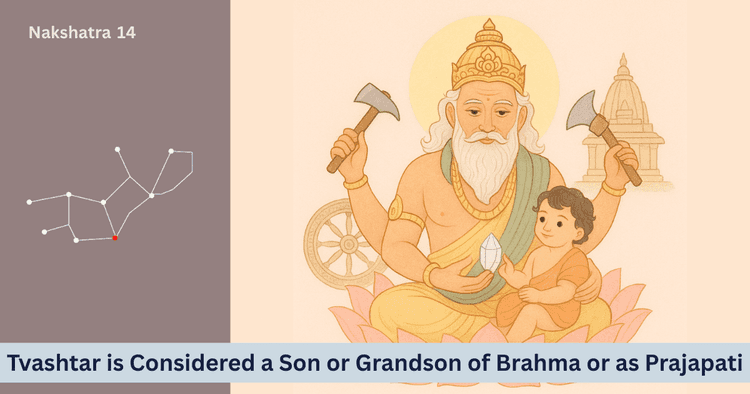
Table of Contents
Chitra Nakshatra, the “star of wonder” spanning Virgo and Libra, is fundamentally a constellation of vision, transformation and artistry. Its emblem, a radiant jewel formed under pressure, exemplifies a universal message: beauty, value and brilliance are not given by ease but shaped over time by force, effort and creative challenge. At the heart of Chitra’s mythos is its presiding deity, Tvashtar (later widely revered as Vishwakarma), the celestial architect and archetype of cosmic craftsmanship in the oldest Vedic and Puranic traditions. Exploring his story not only elevates our understanding of Chitra's astrological meaning but also opens our eyes to the very forces of creation, struggle and perfection intertwined in all existence.
Who is Tvashtar? Origins and Vedic Lineage
Place in the Vedas
The name “Tvashtar” literally means “fashioner” or “shaper.” In the Rigveda, he is exalted as the master smith, first among artisans and supreme craftsman of the universe and all its divine tools. Later, this identity is merged with Vishwakarma, “the all-maker”, who comes to embody the cosmic engineer, craftsman, builder and divine designer in the broader Hindu system.
Ancestry and Cosmic Heritage
Tvashtar is considered a son or grandson of Brahma or as Prajapati, the lord of creation and progeny. In certain accounts, he fathers Brihaspati (the preceptor of the gods), Surya (the Sun) and fashions all forms and creatures. Thus, Tvashtar stands at the genesis of cosmic order, transmuting chaos into cosmos and bringing both sublime spiritual order and tangible form to the universe.
Myths and Accomplishments: Tvashtar/Vishwakarma’s Legendary Feats
1. The Vajra and Divine Weapons
Among his greatest exploits is the crafting of Indra’s Vajra, the thunderbolt weapon used to slay the demon Vritra and release the boundless celestial waters. Only Tvashtar could shape the bones of the sage Dadhichi into such a mighty instrument, signifying a force of both creation and righteous rebirth, crucial to the balance of the universe.
2. Trident of Shiva, Chariot of the Sun and Wonders of Heaven
Tvashtar forged the trident of Shiva, the famed Sudarshana Chakra for Vishnu, Surya’s radiant chariot, Amaravati’s palaces and many divine flying crafts. Each artifact is not only artful and miraculous but a spiritual cipher for protection, intent and ultimate balance.
3. Legendary Cities and Golden Architectures
In epics such as the Mahabharata and Ramayana, Vishwakarma appears as the builder of Lanka (for Ravana and later Vibhishana), the city of Dwarka for Krishna, Kailash and legendary bridges and citadels. These exemplify how architecture, when guided by sacred intention, becomes a vessel for cosmic energy.
4. Stories of Imperfection and Redemption
In some stories, Tvashtar must remake his creations after flaws or outside interference (such as Indra’s disruption), indicating the necessity of perseverance and adaptability, a reminder that even divine acts are refined through humility, revision and acceptance of imperfection. Tales involving his daughter’s fate also echo the sacrificial cost often inherent in the creative life.
Symbolism and Psychological Insight
The Jewel and the Artist’s Path
Chitra’s jewel, paralleling Tvashtar’s long and laborious work, illustrates that only through enduring challenge and time does true brilliance emerge.
- Creation Through Challenge: Genius and value are not spontaneous, they are shaped by friction, learning and adversity.
- Patience and Discernment: True achievement requires repeated effort, revision and acceptance of growth as process, not just result.
- Aesthetic Integrity: The urge to make, beautify and uplift is core to the soul’s nature and a sacred impulse.
- Alignment of Inner and Outer Worlds: Like Vishwakarma, who crafts temples and fortresses, Chitra natives are called to reconcile material success with inner harmony.
Innovators and Builders
Wherever true innovation, design or new systems are created, in science, art, architecture, engineering or leadership, Vishwakarma’s impulse thrives. Each builder, designer or reformer who leaves a mark is echoing this divine energy.
The Solitary Path and Social Legacy
Often, the creative or artisan’s journey is solitary, marked by toil, trial and missteps. Yet the fruits, once realized, uplift entire societies: temples, cities, inventions, frameworks of civilization. The labor is solitary, the gift, collective.
Worship, Rituals and Cultural Reverence
Vishwakarma Puja and Modern Homage
In India, artisans, engineers, architects and workers honor Vishwakarma annually, with rituals, tool purification, group prayers and the launching of projects, seeking inspiration, protection and excellence.
Mantras and Spiritual Discipline
Mantras and meditations invoking Tvashtar or Vishwakarma are still used to bless work, seek new beginnings and overcome creative obstacles. Cleansing one’s space, mind or tools remains an everyday spiritual act.
Folklore and Living Temples
Temples dedicated to Vishwakarma exist in several regions, especially South and East India, serving as hubs for artisan families and their traditions.
Astrological Meaning and Guidance for Chitra Natives
Those born under Chitra Nakshatra are blessed with:
- Innate Talent: A passion to create, solve, innovate, build, across art, science, leadership or medicine.
- Growth Through Adversity: They may face early challenges, doubt or criticism, ultimately achieving recognition when ambition joins perseverance and humility.
- Dual Vision: Chitra individuals rise highest when they balance outer accomplishment with inner integrity, creative excellence with humility.
Chitra Nakshatra’s Great Lesson
Chitra teaches:
- Every challenge is an opportunity for refinement and renewed mastery.
- Recognize the sacred in all work, even the smallest task is a divine offering.
- Excellence, sustained effort and conscious intention give all creation lasting value.
Frequently Asked Questions
Who is the ruling deity of Chitra Nakshatra?
Tvashtar (Vishwakarma), celestial architect, cosmic craftsman and divine shaper of creation.
What key traits define Chitra natives?
Creative problem-solvers, designers, refined thinkers, driven to build, improve and innovate in any field.
What is the modern relevance of Vishwakarma Puja?
Honoring every tool, process, technology or project; cleansing the workspace, group prayer, launching new projects for success and safety.
What are some cultural symbols of Tvashtar’s creativity?
Indra’s Vajra, Shiva’s Trident, Vishnu’s Chakra, cities like Dwarka and Lanka, legendary temples and sacred artifacts.
What is the most important lesson for Chitra natives?
Value inner growth with outer achievement, perseverance with talent, integrity with artistry, treating every act of building as a contribution to eternity.
What does Nakshatra reveal about me?
My NakshatraDid you like it?
Author

Pt. Amitabh Sharma (56 Years)
Experience: 20
Consults About: Family Planning, Career
Clients In: Punjab, Haryana, Delhi
Share this article with friends and family
About ZODIAQ
ZODIAQ is an online Vedic Astrology platform. It connects clients seeking astrological advice to experienced astrologers with deep knowledge. Our users also generate kundali and perform kundali milan for free. ZODIAQ also offers services to the Astrologers. Astrologers utilize various offerings by ZODIAQ to serve their clients effectively.
If you are a User
Consult with experienced astrologers and seek their guidance. You can also order handwritten Janm Patrika report with life prediction prepared by experienced astrologers. Generate accurate Kundali, perform Kundali Matching and check horoscope and muhurat. Utilize our online library for all the necessary astrological and spiritual information.
If you are an Astrologer
Create accurate kundali for your clients and perform Kundali Matching for up to 5 people at a time. Write comprehensive Janm Patrika report for your clients with ZODIAQ. Check client details anytime by saving it in client directory. Become more productive by tracking how many clients you guide every day.
WELCOME TO
ZODIAQ
Right Decisions at the right time with ZODIAQ
