Dhanishta Nakshatra Symbol: The Drum, Rhythm of Time and the Sound of Prosperity
By Pt. Abhishek Sharma
Understand Dhanishta through the drum, Ashta Vasus and timing, linking wealth, fame, collective energy, discipline, cycles and balanced progress
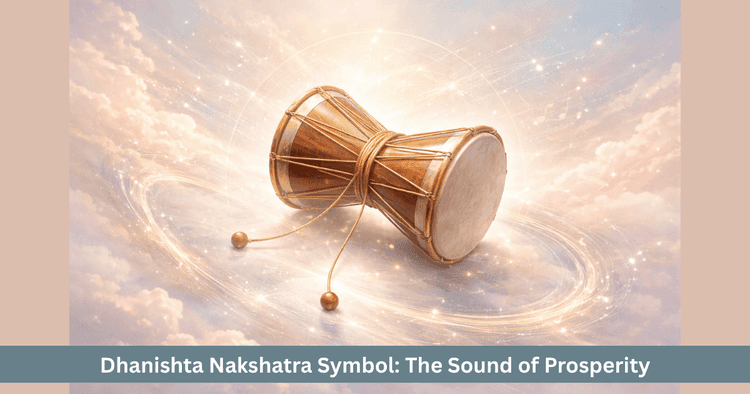
Table of Contents
In Vedic astrology, Dhanishta Nakshatra is regarded as one of the powerful lunar mansions associated with wealth, rhythm, movement, fame and collective energy. Its primary symbol is the drum or musical instrument, which is not merely a sign of music or art but a deep representation of cosmic timing, vibration and both material and spiritual abundance. Where some Nakshatras emphasise stillness or inwardness, Dhanishta expresses the beat that lies behind every motion, opportunity and accomplishment in life.
The name Dhanishta is formed from two Sanskrit roots. “Dhana” means wealth, prosperity, value and worth. “Ishta” means desired, cherished or auspicious. Together, Dhanishta signifies that state or power which, through right alignment and right timing, brings desired prosperity. In this way, Dhanishta does not simply point to wealth. It points to the rhythm behind wealth.
The Drum as the Sound That Sets Life in Motion
In the Indian tradition, the drum and other rhythmic instruments have held a sacred role from ancient times. They were used not only for entertainment but to mark announcements, rituals, time cycles and to awaken collective awareness. When a drum is played, it generates movement both outwardly in the environment and inwardly in the listener. This is the essence that the symbol of Dhanishta reveals.
The drum symbol in Dhanishta contains several important meanings. It stands for the heartbeat of time. It shows the rhythm of life. It embodies the beat that drives action. In Vedic thought, nada or sound, is considered the first expression of creation. The sound of the drum recalls this primordial vibration from which all movement begins. Dhanishta teaches that in this universe no real progress can happen without rhythm.
How the Drum Becomes a Symbol of Timing and Coordination
The true power of a rhythmic instrument does not lie only in its loudness. It lies in its timing and coordination. If a drum is played out of time, it disturbs instead of uplifting. This is exactly the wisdom Dhanishta imparts through its symbol. Here, effort is important, yet right effort at the right moment becomes essential.
Dhanishta’s teaching is that success depends not only on how much one works but also on when and how one acts. This Nakshatra guides a person to tune themselves with life cycles. It hints that one must learn when to move forward, when to pause and listen and when to adjust course as situations change. In all these decisions, an inner sense of timing plays a crucial role. The drum of Dhanishta keeps reminding that those who understand time, rhythm and coordination walk ahead with much greater ease.
Dhanishta Nakshatra and the Ashta Vasus
The presiding deities of Dhanishta Nakshatra are the Ashta Vasus, eight elemental forces associated with earth, water, fire, air, space, sun, moon and energy. Together they sustain different layers of nature and existence. When a drum is struck, its vibration travels not only through air. On a subtle level it touches all these elements.
Through this, the symbol reveals that Dhanishta does not function merely at an individual level. Its energy expresses itself in groups, systems, structures and society. This Nakshatra is often linked with people who work most effectively within teams, organisations, families or larger networks. It suggests that the rhythm of a person becomes much more powerful when it is aligned with collective energy.
The Drum as a Mark of Fame and Recognition
Historically, drums and percussion instruments were sounded to announce the arrival of a king, to declare victory, to mark festivals and to gather people. Because of this, the drum naturally carries the meanings of public recognition, fame, visibility and social standing. Within Dhanishta, the drum strongly points to the possibility of becoming noticed and celebrated.
People governed by Dhanishta often gravitate towards areas where one’s presence must be felt, where a voice must be heard or where influence needs to reach many. Whether it is art, leadership, enterprise or any public platform, this Nakshatra gives inner confidence and outer active expression. The drum symbol here teaches that appearing at the right time, in the right way, is itself a significant part of success.
Rhythm and the Flow of Wealth
The syllable “Dhana” in Dhanishta directly signals wealth. Yet the wealth of this Nakshatra is not random or purely sudden. It is rhythmic. Just as the patterns of a drum include both high and low beats, the journey of finances also includes rises and falls. The symbol of Dhanishta teaches that prosperity follows a kind of pattern.
The drum suggests that in the financial realm, cycles are always at work. There are phases of expansion and phases of contraction. Times of gain and times of loss. Dhanishta helps a person understand how to remain balanced through these cycles. It encourages discipline, planning and consistency in managing the flow of money. Those who walk with this rhythm learn how to rise again after setbacks, how to learn from circumstances and how to grow through steady progress.
Psychological Meaning of the Drum in Dhanishta
On the psychological plane, the drum represents high energy, motivation, inner restlessness and a strong drive to achieve. Individuals born under Dhanishta often feel an inner beat urging them to move forward. It is not easy for them to remain idle for long. They are comfortable in activity and may feel uneasy in extended silence or inactivity.
When directed properly, this trait can take a person very far. They avoid laziness and remain ready to seize opportunities. however if this energy moves without guidance, it can turn into over busyness, fatigue, inner agitation and restless striving without a clear purpose. Dhanishta’s message is that one must join inner energy with rhythm, discipline and meaningful goals. Only then does the drum’s beat become powerful and harmonious.
Balanced Expression of Dhanishta Energy
In a balanced state, the energy of Dhanishta appears very beautifully through the drum symbol. Such individuals become disciplined, punctual, purpose driven and quietly inspiring. They do not stop at dreams. They walk day after day towards realising them. Their financial life also gradually takes a more stable and fruitful form.
People with balanced Dhanishta energy often gain recognition through their consistent work. Their presence motivates others because they lead not only by words but by example. The drum here works like an inner rhythm that fills daily life with enthusiasm, order and direction.
When the Dhanishta Drum Loses Balance
When Dhanishta goes out of balance, the sound of the drum can turn into noise. Life begins to feel like constant rush. A person moves towards the next objective before completing the current one. Excess ambition may lead to burnout and stress. Instead of rhythm, life seems filled with scattered effort.
In such moments, the Dhanishta symbol reminds that progress requires not only motion but also pauses. It becomes important to stop at intervals, to listen, to rest and to review one’s direction. If the inner drumbeat loses meaning, it becomes only an external sound. The true power of this Nakshatra appears when energy is joined with a clear purpose and a thoughtful plan.
Spiritual Dimension of the Drum
On the spiritual side, the drum is often linked with the damaru of Shiva, the instrument that maintains the rhythm of creation, preservation and withdrawal. It does not symbolise music alone. It points to cycles of time, to beginnings and endings and to the balance between material and spiritual life. Dhanishta teaches through this symbol that worldly success and spiritual growth can move together if one honours rhythm.
This Nakshatra tells a person that one must know when to put full energy into work and when to turn inward for contemplation and meditation. From a spiritual view, Dhanishta says that prosperity is not measured only by outer gain. It is also seen in inner peace, contentment and a sense of meaningful living.
Dhanishta Nakshatra and Collective Responsibility
The drum is rarely played for a single listener. Its sound spreads and reaches many. In the same way, Dhanishta reminds that success brings responsibility. When wealth, fame or influence arrives, it also calls for a willingness to use that capacity for the benefit of family, community and society.
This Nakshatra encourages that those who rise with Dhanishta’s energy do not remain isolated but create support, inspiration and security for others through their work. The drum gathers people. In a similar way, Dhanishta inspires one to become a person who connects others, builds teams and contributes to collective progress.
Core Message of the Dhanishta Nakshatra Symbol
The drum or musical instrument of Dhanishta carries a powerful and practical message. It says that life moves in rhythm. Wealth follows discipline and the right beat. Recognition appears when a person is inwardly aligned and acts in step with time. Here, timing becomes the key.
Dhanishta reminds that those who learn to recognise the rhythm of life and choose to move with it rather than against it, rise in a way that is natural, sustainable and meaningful. Such people do not constantly struggle with chaos. They know when and how to place their steps on the drumbeat of time.
Frequently Asked Questions
What is the main symbol of Dhanishta Nakshatra
The main symbol of Dhanishta Nakshatra is the drum or musical instrument, representing the rhythm of time, movement, cycles of wealth and the power of collective energy.
What does the name Dhanishta indicate about prosperity
The name combines “Dhana” and “Ishta”, pointing to desired prosperity, valuable gain and auspicious results that arise through right alignment and timing.
How does the connection with the Ashta Vasus shape Dhanishta energy
The Ashta Vasus are deities of eight elemental forces. Their link shows that Dhanishta works not only for individuals but through teams, systems and the larger web of nature and society.
What psychological traits are common in Dhanishta natives
They often display high energy, drive, a strong wish to achieve, difficulty sitting idle and, when guided, the ability to advance through disciplined, rhythmic effort.
What challenges can appear when Dhanishta energy is unbalanced
Imbalance may lead to a life that feels over busy, inwardly restless, filled with scattered goals and prone to fatigue and stress, making it essential to restore rhythm and balance.
What does Nakshatra reveal about me?
My NakshatraDid you like it?
Author

Pt. Abhishek Sharma (63)
Experience: 20
Consults About: Family Planning, Career
Clients In: Punjab, Haryana, Delhi
Share this article with friends and family
About ZODIAQ
ZODIAQ is an online Vedic Astrology platform. It connects clients seeking astrological advice to experienced astrologers with deep knowledge. Our users also generate kundali and perform kundali milan for free. ZODIAQ also offers services to the Astrologers. Astrologers utilize various offerings by ZODIAQ to serve their clients effectively.
If you are a User
Consult with experienced astrologers and seek their guidance. You can also order handwritten Janm Patrika report with life prediction prepared by experienced astrologers. Generate accurate Kundali, perform Kundali Matching and check horoscope and muhurat. Utilize our online library for all the necessary astrological and spiritual information.
If you are an Astrologer
Create accurate kundali for your clients and perform Kundali Matching for up to 5 people at a time. Write comprehensive Janm Patrika report for your clients with ZODIAQ. Check client details anytime by saving it in client directory. Become more productive by tracking how many clients you guide every day.
WELCOME TO
ZODIAQ
Right Decisions at the right time with ZODIAQ
