What is the hidden mystery of Jyeshtha Nakshatra deities?
By Pt. Nilesh Sharma
Mythological and spiritual significance of Jyeshtha Nakshatra and its deities
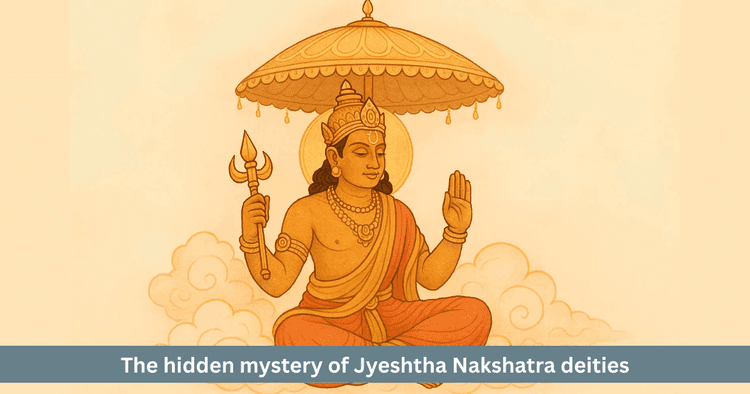
Table of Contents
In timeless Vedic tradition, Jyeshtha Nakshatra is considered a symbol of power, supremacy and profound spiritual doctrine. This star bestows authority, wisdom, shelter and the rare capacity to triumph. The ruling planet is Mercury (Budha), the master of intellect and communication. Jyeshtha’s principal deity is Indra, whose ancient legends in the Vedas reveal a formidable yet compassionate presence. The umbrella, its main symbol, marks the divine protection and prestige that always elevates the native’s life.
Mythological and astrological significance of Jyeshtha
Jyeshtha Nakshatra finds connections to major events and legends within the Vedic era. The Vedas mention that during a fierce battle between Devas and Asuras, Indra led the gods to victory through his power, wisdom and wielding of the Vajra. This same victorious spirit is believed to reside in every Jyeshtha native.
- Unique timing: When Jyeshtha influences the Moon, natives experience marked events, new responsibilities or completions in life cycles.
- Foundational importance: Within the Vedic context, Jyeshtha’s place is constant, integral for rituals such as the Mrityunjaya mantra, crisis-averting ceremonies and festival worship.
- Benevolent worship: Prayer to Indra, Vishnu and Ganga during Jyeshtha offers relief from planetary afflictions, mental turmoil and obstacles from rivals.
Indra: The supreme energy of Jyeshtha
The lord of Jyeshtha, Indra, is not merely a mighty warrior or king of heaven but enforces divine governance.
- Guardian of Rta: Indra serves as protector of cosmic law and order, known as Rta. He ensures adherence to divine principles among gods and humans alike.
- Symbolic power of Vajra: Indra’s Vajra is not just a physical weapon but a destroyer of inner weakness. It conquers demons, negativity and ignorance alike.
- Umbrella of shelter: The umbrella represents Indra’s power to bestow profound security upon family, society and the spiritual path.
- Domains of rule and justice: In myth, Indra presides over discipline order and justice. Jyeshtha natives are marked by decisive courage and moral firmness.
- Emergence of new possibilities: Indra’s blessing brings fresh opportunities for advancement, prosperity and happiness.
Lord Vishnu and the spiritual meaning of "Seniority"
Jyeshtha does not solely convey power but also equilibrium and protection.
- Sattva of Vishnu: Vishnu’s influence in Jyeshtha awakens forgiveness, balance and gentleness. He protects the universe and grants stability to all beings.
- Spirit of the eldest sister: The name “Jyeshtha” itself stands for seniority, maturity and dutiful guardianship, much like the most experienced sibling in a family.
- Role of sustainer: Natives excel at creating balance and offering protection in family, society and at work.
- The protector’s duty: Just as Vishnu has saved the world from devastation, Jyeshtha natives uphold duty and rescuing others in times of crisis.
- Ceremony and ritual: Vishnu-related rites performed in Jyeshtha Nakshatra bring peace of mind and prosperity to the household.
Sacred Ganga: The spiritual flow of Jyeshtha
The holy stream of Ganga is intimately linked with Jyeshtha Nakshatra.
- Purification and renunciation: Bathing in the Ganges symbolizes deep purification and liberation from mental affliction.
- Divine blessings: Ganga worship in Jyeshtha Nakshatra grants the seeker spiritual strength, devotion and vivid recollection.
- Cleanliness and continuity: The river’s ever-flowing quality inspires adaptability, movement and relief from stress.
- Offering and surrender: Rituals such as ancestral oblations (tarpana) performed at the Ganga bring blessing and release from karmic burden.
- The path to liberation: Ganga carries away all impurities, helping natives of Jyeshtha emerge purified and resilient despite adversity.
Mythical facets and stories of Jyeshtha
- The war of Devas and Asuras: Indra protected the gods, sacred knowledge and spirituality from demon forces, a universal allegory for Jyeshtha natives’ inner struggle against fear, weakness and ignorance.
- Seniority and devotion: The nakshatra’s "eldest sister" aspect underlines responsibilities and duty towards kin, community and lineage.
- Wisdom, strength and policy: Jyeshtha natives are noted for their intelligence, tact and the rare ability to overcome every challenge.
- Spiritual alignment: Those born under Jyeshtha uphold sacred tradition, spirituality and divine order.
- Importance of Mrityunjaya Mantra: Rituals like Mrityunjaya mantra, Rudrabhishek and certain recitations bring protection from fear and difficult karmic afflictions.
Symbols, powers and mysteries
| Aspect | Details |
|---|---|
| Main Deity | Indra: king of heaven, Vajra-holder, protector of Rta |
| Other Deities | Vishnu: Sattva, harmony; Ganga: purification and soulful devotion |
| Main Symbols | Umbrella - shelter and prestige; earrings - dignity and confidence; circular amulet - Vishnu’s chakra |
| Power (Shakti) | "Emergence and Ascent" - rare ability to overcome inner fears and rise above limitation |
| Animal Symbol | Male Deer - vigilance, patience, agility |
| Bird Symbol | Brahmini Duck / Jacobin Cuckoo - insight, counsel, communication |
Practical meaning of symbols
- Umbrella: connotes leadership, elevated status and protection.
- Vajra: embodies self-strength, resilience and decisive action.
- Earrings: express honor, dignity and eloquence.
- Chakra (disc): the divine weapon of Vishnu, signifying balance and cosmic time.
- Animal and bird symbols: The deer urges vigilance and activity; the duck imparts dialogue and communal harmony.
Spiritual, philosophical and social insights
- Divine protection and moral order: Jyeshtha Nakshatra teaches that true leadership lies not in mere authority but in conquering injustice and cultivating empathy.
- Giver of shelter and protector of society: Natives become refuge for family, institution or community, offering steadfast support.
- Inner purification and selfless service: The Ganga and Jyeshtha’s connection highlight the journey toward internal purity and the pursuit of deeper truths.
- Luminous action and discernment: The karmic path of Jyeshtha is ever constructive, grounded in principle and public good.
- Speech and intellect: Under Mercury’s influence, natives possess outstanding communication, diplomacy and intellectual clarity.
Mystique and worship at sacred sites
Among the holiest places for Jyeshtha Nakshatra is the Sri Varadaraja Perumal Temple near Pondicherry.
- Temple’s uniqueness: Dedicated to Vishnu, this temple is renowned for removing planetary obstacles, fostering peace and bestowing desired results upon devotees.
- Special worship: During Jyeshtha, offerings include lighting lamps, ceremonial bathing, Vishnu Sahasranama chanting and sacred Ganga water rituals.
- Benefits: This grants release from enemy interference, mental hurdles and adverse planetary influences.
- Ritual significance: Nakshatra worship here brings fulfillment of wishes, health recovery and public esteem.
- Festival and celebration: Festivals during Jyeshtha feature special ceremonies and chariot processions, conferring immense family and spiritual strength.
Influence of deities and symbols on native’s life
| Deity / Symbol | Significance | Native’s Traits |
|---|---|---|
| Indra | Leadership, discipline, rule, justice | Righteousness, victory, fearlessness |
| Vishnu | Balance, ritual, compassion | Tolerance, protection, peace |
| Ganga | Purity, flow, ancestor rites | Devotion, merit, inner clarity |
| Umbrella | Shelter, fame, guidance | Supportive, honorable |
| Vajra | Invincible strength, charisma | Decisiveness, self-power |
| Earrings | Dignity, eloquence | Respect, expressive capacity |
| Deer | Vigilance, movement | Alertness, sharp decision making |
| Duck / Cuckoo | Dialogue, wisdom | Guidance, foresight |
Jyeshtha Nakshatra merges Vedic strength, intellect and moral protection. The valor of Indra, balance of Vishnu and purity of Ganga combine to create the distinctive aura of this star. Natives harbor resolution, blessings and natural leadership. Through duty, sacrifice and counsel, they serve as beacons within their communities.
Since ancient times, the enduring mystery of Jyeshtha Nakshatra has illuminated spiritual seekers through meditation, mantra, ritual and faith. Those born within this lunar mansion are inherently responsible, spiritually attuned and guardians of tradition. Their continual self-discipline, intense prayer and karma reflect a life dedicated to dharma.
Frequently Asked Questions
Q1: Who is the main deity of Jyeshtha Nakshatra?
A: Lord Indra is the supreme deity, serving as the protector of the sacred order and wielder of the Vajra.
Q2: What is the primary symbol of Jyeshtha Nakshatra?
A: The umbrella is its most prominent symbol, signifying protection, honor and liberty.
Q3: Why is the river Ganga associated with Jyeshtha Nakshatra?
A: Ganga is the emblem of purification, merit and spiritual flow, helping natives receive absolution, blessing and divine experience.
Q4: Which qualities are common among Jyeshtha natives?
A: Leadership, justice, courage, responsibility, protector spirit, eloquence, discernment and spiritual awareness.
Q5: Which temple is renowned for Jyeshtha Nakshatra worship?
A: Sri Varadaraja Perumal Temple (near Pondicherry) is the unique site where devotees receive the blessings of Vishnu and Ganga.
What does Nakshatra reveal about me?
My NakshatraDid you like it?
Author

Pt. Nilesh Sharma (63)
Experience: 20
Consults About: Family Planning, Career
Clients In: Punjab, Haryana, Delhi
Share this article with friends and family
About ZODIAQ
ZODIAQ is an online Vedic Astrology platform. It connects clients seeking astrological advice to experienced astrologers with deep knowledge. Our users also generate kundali and perform kundali milan for free. ZODIAQ also offers services to the Astrologers. Astrologers utilize various offerings by ZODIAQ to serve their clients effectively.
If you are a User
Consult with experienced astrologers and seek their guidance. You can also order handwritten Janm Patrika report with life prediction prepared by experienced astrologers. Generate accurate Kundali, perform Kundali Matching and check horoscope and muhurat. Utilize our online library for all the necessary astrological and spiritual information.
If you are an Astrologer
Create accurate kundali for your clients and perform Kundali Matching for up to 5 people at a time. Write comprehensive Janm Patrika report for your clients with ZODIAQ. Check client details anytime by saving it in client directory. Become more productive by tracking how many clients you guide every day.
WELCOME TO
ZODIAQ
Right Decisions at the right time with ZODIAQ
