Aditi, Kashyapa and the Deva-Asura Conflict: The Mythical Tale of Dharma, Penitence and the Vamana Avatar
By Pt. Suvrat Sharma
Aditi’s penance and Vishnu’s Vamana incarnation in the battle of dharma and adharma offer a message of hope and justice.
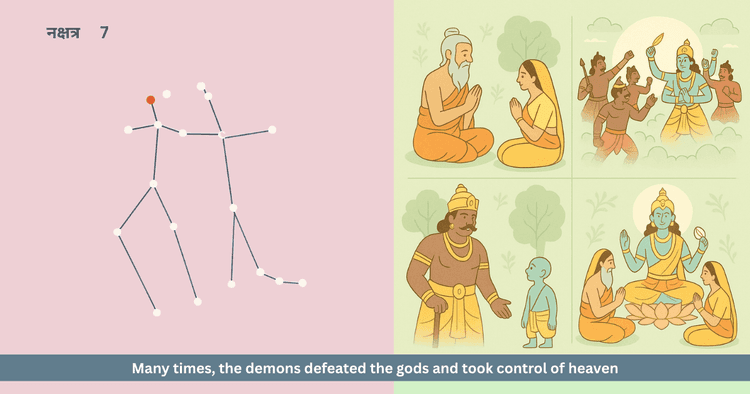
Table of Contents
A tale of devotion, discipline and the divine incarnation of Vamana
In Hindu mythology, the story of Aditi and Kashyapa is not merely an account of cosmic creation.
It symbolizes the eternal struggle between righteousness and imbalance, the power of motherhood and the compassion of the divine.
The conflict between the gods and the asuras, Aditi’s austerities and the incarnation of Vamana offer a profound message of renewal and justice.
Aditi and Kashyapa: The Parents of the Devas
Aditi is described in the Vedas as boundless, pure and unrestricted cosmic energy.
Kashyapa, one of the ancient Saptarishis, is her consort.
Their sons are the Adityas — deities like Surya, Indra, Varuna and Pushan who uphold cosmic law, radiance and dharma.
The Deva–Asura Conflict
The sons of Aditi, the devas, and the sons of Diti, the asuras, have struggled since ancient times for power and the dominion of heaven.
Under the leadership of King Bali, the asuras overpowered the devas and seized heaven, creating imbalance in the cosmos.
Defeated and distressed, the devas approached their mother Aditi.
Aditi and Punavarsu: The Story of the Mother of the Gods
Aditi’s Austerity and the Incarnation of Vamana
Aditi performed intense penance to protect her sons and restore dharma.
Moved by her devotion, Vishnu promised to take birth from her womb.
During Punarvasu Nakshatra, Vishnu incarnated as Vamana.
In this form, he requested three steps of land from Bali and, after assuming a cosmic form, measured the three worlds, restoring heaven to the devas.
Message of the Story
Aditi represents the highest expression of motherhood — compassion strengthened by resolve.
The incarnation of Vamana reflects the principle that whenever righteousness is threatened, divine intervention restores balance.
The Deva–Asura conflict symbolizes the eternal play of light and shadow, hope and hardship, in which truth ultimately prevails.
Summary Table
| Aspect | Description |
|---|---|
| Aditi and Kashyapa | Parents of the Adityas |
| Deva–Asura Conflict | Struggle between righteousness and imbalance |
| Aditi’s Austerity | Strength, compassion and maternal devotion |
| Vamana Incarnation | Restoration of dharma and cosmic order |
| Punarvasu Nakshatra | Renewal, prosperity and fresh beginnings |
Vedic Insight
The narrative teaches that patience and devotion create the momentum for renewal.
Aditi’s penance, Vishnu’s incarnation and the restoration of the devas together reveal that hope always re-emerges after difficulty and alignment returns to life.
FAQ
1. Why is Aditi called the mother of the gods?
Because she gave birth to the Adityas who protect cosmic order.
2. What triggered the conflict between the devas and asuras?
The battle for dominion of heaven and the preservation of dharma.
3. Why did Aditi undertake penance?
To protect her sons and restore cosmic harmony.
4. What was the purpose of the Vamana incarnation?
To reclaim heaven from Bali and re-establish balance.
5. Why is Punarvasu Nakshatra important in this story?
It represents renewal, auspicious return and restorative energy after adversity.
What does Nakshatra reveal about me?
My NakshatraDid you like it?
Author

Pt. Suvrat Sharma (63)
Experience: 20
Consults About: Family Planning, Career
Clients In: Punjab, Haryana, Delhi
Explore Related Articles
Explore All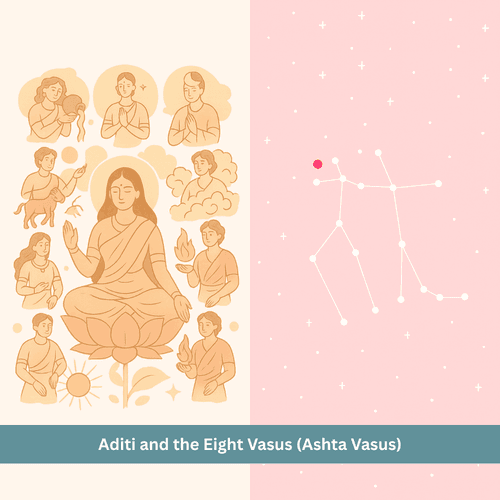
Aditi and the Ashta Vasus: The Vedic Mystery of Nature, Light and the Punavarsu Nakshatra
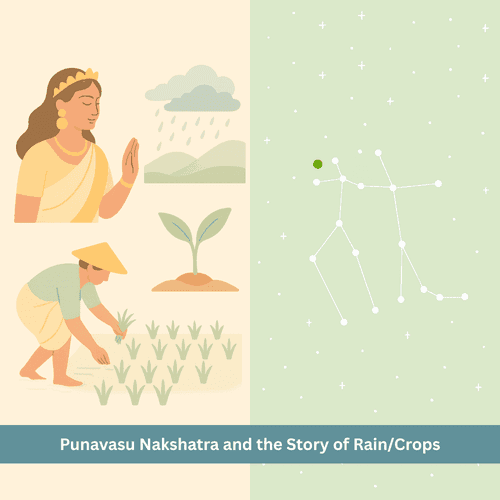
Punavasu Nakshatra and the Story of Rain/Crops: The Divine Confluence of Aditi, Monsoon and the Cycle of Life
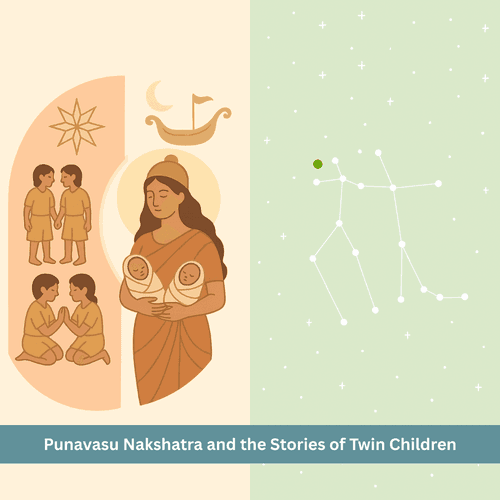
Punavasu Nakshatra and the Stories of Twin Children: The Vedic Mystery of Duality and Plurality
Punavasu and Tales of Resurrection: Hope, New Beginnings and Victory in Life
Punavasu Nakshatra and Tales of Charity: Aditi’s Compassion and Lord Rama’s GracePunavasu Nakshatra and Lord Rama’s Compassion: Astrological Meaning of Charity
अदिति और अष्ट वसु: प्रकृति, प्रकाश और पुनर्वसु नक्षत्र का वैदिक रहस्य
Share this article with friends and family
About ZODIAQ
ZODIAQ is an online Vedic Astrology platform. It connects clients seeking astrological advice to experienced astrologers with deep knowledge. Our users also generate kundali and perform kundali milan for free. ZODIAQ also offers services to the Astrologers. Astrologers utilize various offerings by ZODIAQ to serve their clients effectively.
If you are a User
Consult with experienced astrologers and seek their guidance. You can also order handwritten Janm Patrika report with life prediction prepared by experienced astrologers. Generate accurate Kundali, perform Kundali Matching and check horoscope and muhurat. Utilize our online library for all the necessary astrological and spiritual information.
If you are an Astrologer
Create accurate kundali for your clients and perform Kundali Matching for up to 5 people at a time. Write comprehensive Janm Patrika report for your clients with ZODIAQ. Check client details anytime by saving it in client directory. Become more productive by tracking how many clients you guide every day.
WELCOME TO
ZODIAQ
Right Decisions at the right time with ZODIAQ
