Kamada Ekadashi 2026: Date, Significance, Vrat Vidhi
By Pt. Nilesh Sharma
First Ekadashi of the year for desire fulfillment, sin removal, and liberation
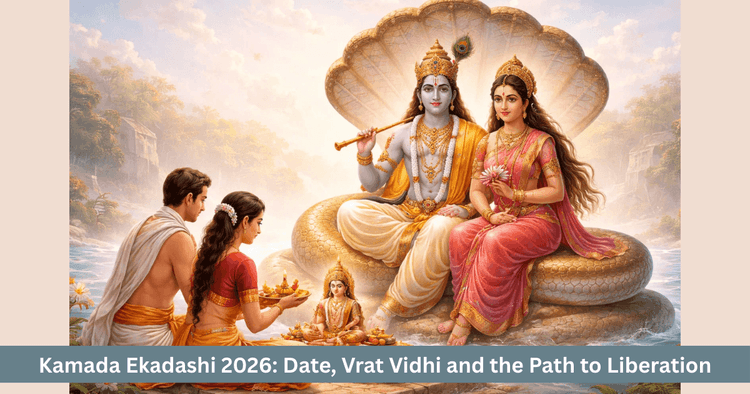
Table of Contents
Kamada Ekadashi is regarded as one of those special vrats that are deeply connected with fulfilment of desires, removal of sins and movement towards liberation. As the first Ekadashi of the bright fortnight of Chaitra and the first major Ekadashi after the Hindu New Year, it offers a chance to begin the year with a purified resolve and disciplined devotion. Dedicated to Lord Vishnu in the form of Sri Krishna, this vrat, when observed with faith, can influence not only present circumstances but also the deeper patterns of karma and character.
Kamada Ekadashi 2026 date and Ekadashi timings
According to the Hindu calendar, Kamada Ekadashi falls on the Ekadashi Tithi of the Shukla Paksha in the month of Chaitra. It is the eleventh day of the waxing moon and comes after the celebration of Chaitra Navratri, which makes it spiritually significant as the first Shukla Ekadashi of the year.
Kamada Ekadashi 2026 date and time table
| Detail | Date and time |
|---|---|
| Kamada Ekadashi 2026 | Sunday, 29 March 2026 |
| Ekadashi Tithi begins | 28 March 2026, 08:47 AM |
| Ekadashi Tithi ends | 29 March 2026, 07:48 AM |
| Parana date | Monday, 30 March 2026 |
| Parana window | 06:16 AM to 07:11 AM |
| Dwadashi end moment | 07:11 AM |
This indicates that the fast for Kamada Ekadashi will be kept on 29 March 2026 and will be broken on 30 March 2026 during the Parana period while Dwadashi is still in force.
What is the meaning and spiritual importance of Kamada Ekadashi
The word Kamada in Sanskrit signifies that which fulfils desires. In this sense, Kamada Ekadashi may be understood as an Ekadashi that supports inner wish fulfilment when those wishes are offered at the feet of the Lord.
Texts such as Varaha Purana describe the glory of this vrata and in the Mahabharata, Lord Krishna is said to have explained its benefits to King Yudhishthira. From these references, it is clear that Kamada Ekadashi is valued not only for one particular result but for its capacity to
- lessen the weight of sin
- offer a field for sincere repentance
- awaken dormant virtues
- and gradually prepare the soul for liberation
Traditional belief also holds that this vrat protects the devotee and the family from various curses. In some descriptions it is mentioned that even very grave sins can be lightened when this Ekadashi is observed with genuine remorse and disciplined devotion. For married couples, Kamada Ekadashi is seen as supportive of the wish for progeny.
Kamada Ekadashi and the path of moksha
Another important dimension of Kamada Ekadashi is its connection with moksha or release from bondage. In the Vaishnava understanding, a person who observes this Ekadashi with proper method, self control and devotion makes progress towards attaining Vaikuntha, the abode of Lord Vishnu.
Here, moksha does not mean only reaching a certain realm after death. It also points to
- loosening of inner attachments
- gradual freedom from fear and guilt
- and a deepening attraction towards the Lord
Seen in this way, Kamada Ekadashi becomes a day that gently turns the focus of life from worldly restlessness towards God centred living.
How and when to begin Kamada Ekadashi 2026 vrata
The discipline of Kamada Ekadashi does not begin and end within a single day. It is traditionally linked with the days around Ekadashi as well.
- On Chaitra Shukla Dashami, the day before Ekadashi, the devotee is advised to take only one simple, sattvic meal before sunset. This prepares the body and mind for the coming fast.
- On the morning of Ekadashi, one wakes before sunrise, bathes, wears clean clothes and cleans the Puja area.
- A vrata sankalpa is then taken, resolving to restrain the body, speech and mind and to dedicate the day to the remembrance and worship of Lord Vishnu or Sri Krishna.
In this way, the vrata becomes a small but complete discipline that begins on Dashami and flows through Ekadashi into Dwadashi.
Vrat and Puja Vidhi for Kamada Ekadashi 2026
On the day of Chaitra Shukla Ekadashi, the following simple pattern of observance may be followed.
- Rise before sunrise, bathe and wear clean, preferably light coloured clothes.
- In the home shrine or a temple, clean and decorate the murti or picture of Lord Vishnu or Sri Krishna with sandal paste, flowers, tulsi leaves and lamp.
- Formally take the Ekadashi vow, deciding to avoid grains and tamasic foods from Ekadashi sunrise until at least the sunrise of Dwadashi or for about twenty four hours according to capacity.
- Through the day, engage in nama japa, bhajan, recitation of stotras and quiet reflection on the qualities of the Lord. Reading from the Gita, Vishnu Sahasranama or other Vaishnava texts is considered very auspicious.
- Maintain the fast through the night as far as health allows. Those who cannot remain without food may take fruits, milk and nuts, yet should keep the mind and senses as restrained as possible.
The emphasis is that Kamada Ekadashi should become a day of mindful remembrance, not only a change in diet.
Food guidelines for Kamada Ekadashi vrata
Scriptural guidelines for Kamada Ekadashi encourage sattvic eating and controlled intake.
- On this day, devotees avoid grains such as rice, moong dal, wheat and barley.
- Fried, heavily spiced and stimulating foods are also to be set aside.
- Fruits, milk, yoghurt, nuts and lightly prepared vegetables may be taken in moderation when health requires it.
Those who are physically strong and medically fit sometimes choose to fast with only water or fruits. Whatever the level of fasting, the inner intention should remain to step away from indulgence and to turn the heart towards the Lord.
How is Parana performed after Kamada Ekadashi
Parana means the formal breaking of the fast. For Kamada Ekadashi, the Parana is done on Dwadashi within the recommended time.
In 2026, the Parana window for Kamada Ekadashi is from 06:16 AM to 07:11 AM on 30 March.
A simple Parana sequence is as follows
- First, offer a brief Puja to Lord Vishnu or Sri Krishna with lamp, water and simple offerings.
- Where possible, serve sattvic food to a Brahmin or to a deserving person and offer some dakshina according to means.
- Only after this does the devotee take food and formally end the fast.
This pattern keeps the entire vrat, from beginning to Parana, under the shelter of the Lord’s remembrance.
Recommended recitations and japa on Kamada Ekadashi
On Kamada Ekadashi, the chanting of the names and glories of Lord Vishnu and Sri Krishna is especially recommended.
- Vishnu Sahasranama recitation
- Selected chapters of the Bhagavad Gita
- Dhyan shlokas describing the form and qualities of the Lord
Along with these, many devotees chant the Hare Krishna Mahamantra
Hare Krishna Hare Krishna Krishna Krishna Hare Hare
Hare Rama Hare Rama Rama Rama Hare Hare
This nama japa helps to steady the mind, cleanse the heart and make the fasting a joyful offering rather than a mere physical effort.
Kamada Ekadashi vrat katha and traditional background
The Kamada Ekadashi vrat katha has been preserved in the oral and written tradition from ancient times. One reference links it to an instruction given by the sage Vashishtha to King Dilipa.
King Dilipa later became known in the lineage as the great grandfather of Sri Rama. This link suggests that Kamada Ekadashi was valued even in royal households not only as a private vow but as a support for dharma, lineage welfare and collective good.
The stories associated with this Ekadashi generally convey that serious sins can be gradually neutralised, bonds created by curses can be cut and lives bound by guilt and heaviness can be redirected through sincere observance of this vrata.
Life guidance offered by Kamada Ekadashi 2026
In the present age, desires can multiply without limit while inner satisfaction often remains low. Kamada Ekadashi 2026 gently reminds us that the goal is not to chase every desire but to purify and align desires with dharma and devotion.
This vrata teaches that
- spiritual progress rests on discipline
- desires need the guidance of remembrance of the Lord
- and regular vows such as Ekadashi can support family welfare, mental peace and character refinement
A person who takes Kamada Ekadashi 2026 as a turning point, deciding to leave a few harmful habits behind and to adopt a few sattvic practices more firmly, may find that the effect of this single day extends quietly through the months ahead.
Common questions
When will Kamada Ekadashi be observed in 2026 and when is the Parana Kamada Ekadashi in 2026 will be observed on Sunday, 29 March 2026. The Ekadashi Tithi will run from 08:47 AM on 28 March to 07:48 AM on 29 March. Parana should be done on Monday, 30 March 2026, between 06:16 AM and 07:11 AM, while Dwadashi is still present.
Why is Kamada Ekadashi called the first Ekadashi of the year This Ekadashi falls in the bright half of Chaitra, soon after the Hindu New Year and after the close of Chaitra Navratri. For this reason, it is honoured as the first major Shukla Ekadashi of the new year.
What foods are recommended and which should be avoided on Kamada Ekadashi On Kamada Ekadashi, grains like rice, moong dal, wheat and barley are avoided. Fruits, milk, yoghurt, nuts and simple sattvic preparations may be taken in moderation when needed. The main aim is to reduce heaviness and support remembrance of the Lord.
What spiritual benefits are associated with Kamada Ekadashi vrata Scriptural accounts describe that Kamada Ekadashi can help to lessen the burden of sins, ease the effects of curses, restore lost virtues, support the wish for children for married couples and guide the devotee towards moksha when observed with sincerity and discipline.
How can Kamada Ekadashi 2026 be made more meaningful in daily life The vrata becomes truly meaningful when it inspires more truthful behaviour, a calmer mind and a more God centred outlook. If Kamada Ekadashi 2026 is used to strengthen regular nama japa, simple living and thoughtful decisions, it can open a lasting path towards inner peace and fulfilment.
Get your accurate Kundali
Generate KundaliDid you like it?
Author

Pt. Nilesh Sharma (63)
Experience: 20
Consults About: Family Planning, Career
Clients In: Punjab, Haryana, Delhi
Share this article with friends and family
About ZODIAQ
ZODIAQ is an online Vedic Astrology platform. It connects clients seeking astrological advice to experienced astrologers with deep knowledge. Our users also generate kundali and perform kundali milan for free. ZODIAQ also offers services to the Astrologers. Astrologers utilize various offerings by ZODIAQ to serve their clients effectively.
If you are a User
Consult with experienced astrologers and seek their guidance. You can also order handwritten Janm Patrika report with life prediction prepared by experienced astrologers. Generate accurate Kundali, perform Kundali Matching and check horoscope and muhurat. Utilize our online library for all the necessary astrological and spiritual information.
If you are an Astrologer
Create accurate kundali for your clients and perform Kundali Matching for up to 5 people at a time. Write comprehensive Janm Patrika report for your clients with ZODIAQ. Check client details anytime by saving it in client directory. Become more productive by tracking how many clients you guide every day.
WELCOME TO
ZODIAQ
Right Decisions at the right time with ZODIAQ
