Phalguna Purnima 2026: Date, Meaning and Spiritual Practice
By Pt. Narendra Sharma
Know the significance, Tithi, and spiritual practices for Phalguna Purnima on 4 March 2026
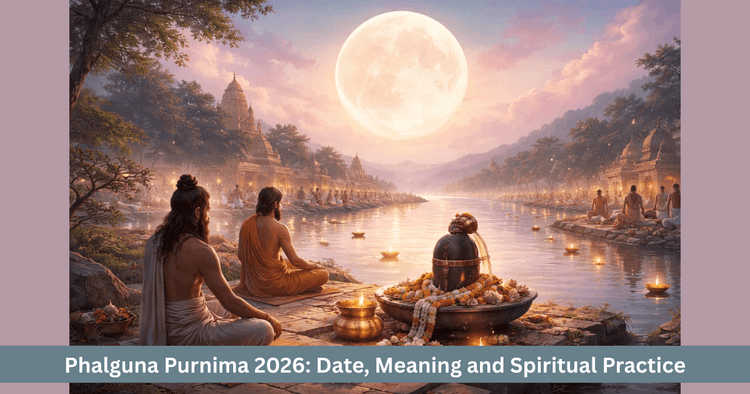
Table of Contents
In the Hindu Panchang Phalguna Purnima is seen as a day when a monthly cycle completes and a new spiritual chapter begins to take shape. The cool radiance of the Moon on this night illuminates not only the sky but also the path of inner practice. In the year 2026 Phalguna Purnima will be observed on Wednesday, 4 March 2026. The Phalguna Purnima Tithi will start at 08:57 AM on 3 March 2026 and end at 06:04 AM on 4 March 2026 and because the Purnima Tithi will prevail at sunrise on 4 March, the observance of Phalguna Purnima will fall on this date.
How to understand the date and Tithi of Phalguna Purnima 2026
To understand the date of Phalguna Purnima it is important to remember that in the Hindu calendar a day is counted from sunrise to the next sunrise. The date of any festival is decided on the basis of which Tithi is present at sunrise.
Phalguna Purnima 2026: date and time schedule
| Detail | Date and time |
|---|---|
| Phalguna Purnima festival | Wednesday, 4 March 2026 |
| Purnima Tithi begins | 3 March 2026, 08:57 AM |
| Purnima Tithi ends | 4 March 2026, 06:04 AM |
| Tithi at sunrise | Phalguna Purnima Tithi on 4 March 2026 |
Thus when seekers rise for bath, japa and worship on the morning of 4 March, Phalguna Purnima Tithi will be in effect and from a religious and astrological viewpoint that day is considered suitable for worship, fasting and charity.
What is Phalguna Purnima and why is it considered important
The full moon of the month of Phalguna is regarded as a symbol of completion, balance and light. Just as the Moon appears in the sky with all its phases complete, this day is connected with the completion of a cycle in life and preparation for a new beginning. The month of Phalguna itself is a time close to seasonal change, when the intensity of winter recedes and spring starts spreading its colours.
Tradition considers this full moon particularly favourable for devotion, self purification and charity. The lunar energy of this day is believed to support mental clarity, emotional balance and spiritual awareness. Many seekers use this day to review their previous resolutions and to quietly strengthen new positive intentions for the time ahead.
Religious and spiritual importance of Phalguna Purnima
Phalguna Purnima is not only the closing date of a month, it is also recognised as a day of spiritual completion and renewal. It carries special weight in Vaishnava traditions.
1. Sense of completeness and contentment
This date is seen as an opportunity to look at the progress of any vows, practices or inner commitments observed during the month of Phalguna. As the monthly cycle reaches fullness, one may open space for self reflection and a feeling of quiet satisfaction.
2. Favourable time for devotion
Phalguna Purnima is especially associated with devotion to Lord Vishnu and Lord Krishna. In many places Vishnu temples, Krishna related centres and ashrams organise special kirtan, bhajan and discourses on this day. The date encourages devotion to be lived not as mere formality but as a natural expression of love and simplicity in the heart.
3. Completion of austerities and vows
Seekers who follow specific vows, extra japa or disciplines during the month of Phalguna often see this day as a time for spiritual completion of that effort. The meaning is not to stop growing but to recognise that one phase has been honoured and to welcome the next with a sense of gratitude and peace.
Main rituals observed on Phalguna Purnima
The practices of Phalguna Purnima are simple on the surface, yet their inner meaning is deep. The day invites purity and discipline at the levels of body, mind and conduct.
Phalguna Purnima 2026: main observances
| Type of practice | Short description |
|---|---|
| Early morning bath | Bath and bodily purification at or before sunrise |
| Worship of deity | Puja of Vishnu or Krishna, mantra japa, bhajans |
| Fasting and restraint | Full or partial fast, sattvic diet |
| Charity and service | Donation of food, grains, clothes or essentials |
| Meditation and study | Meditation, japa and recitation or listening of sacred texts |
In many families there is a tradition of offering special lamps, flowers and fruits at the home altar on this day. Some people also take simple vows such as speaking less, avoiding unnecessary discussions or keeping a period of silence, to gently turn the mind inward.
Simple method of fasting, japa and charity on Phalguna Purnima
Those who wish to observe Phalguna Purnima 2026 in a peaceful and meaningful way can follow a few easy steps.
- Take bath in the morning, wear clean light clothes and keep the surroundings as calm and tidy as possible.
- At the place of worship remember Lord Vishnu or Lord Krishna, light a lamp, place incense and spend a few moments watching the breath so that the mind may become steady.
- Offer flowers, tulsi leaves, fruits and a small portion of pure food which can later be taken as prasadam.
- According to capacity take up a mantra, such as “Om Namo Bhagavate Vasudevaya” and sit quietly for some time repeating it or chanting any simple divine name.
- If health and circumstances permit, observe a full or partial fast, otherwise at least prefer light, sattvic food for the day.
- At some point donate food, grains, clothing or other essentials to someone in genuine need, offering it without pride and seeing oneself simply as a channel of grace.
In this way Phalguna Purnima becomes more than a religious duty and turns into an occasion to strengthen inner peace, gratitude and balance.
How is Phalguna Purnima connected with Holi traditions
One important aspect of Phalguna Purnima is its close link with Holi related observances, especially Holika Dahan in many regions. On the full moon night of Phalguna, Holika Dahan is performed as a symbol of victory of righteousness over negativity.
In several areas during the day people engage in worship, recitation and preparations and in the evening or night they perform Holika Dahan. This ritual deepens the inner meaning of Phalguna Purnima as a time when one phase completes and the path opens for joy, togetherness and renewal that follow with Holi. Thus Phalguna Purnima and Holi are connected through a natural spiritual bridge.
Gentle guidance from Phalguna Purnima 2026
Phalguna Purnima 2026 is not only a date in the calendar, it is also a quiet reminder for life. The day suggests pausing to consider in which direction life is moving, which habits may now be released and which qualities deserve more space.
Those who spend even a little time on this day reflecting on their thoughts, relationships and future choices can experience Phalguna Purnima as a day of inner balance and clarity. When the Moon shines brightly outside and awareness awakens within, the true essence of this date is fulfilled.
Common questions
On which day will Phalguna Purnima fall in 2026 and how is its Tithi calculated
In the year 2026 Phalguna Purnima will fall on Wednesday, 4 March 2026. The Purnima Tithi will begin at 08:57 AM on 3 March and end at 06:04 AM on 4 March and since the full moon Tithi will be present at sunrise on 4 March, the observance of Phalguna Purnima is placed on that date.
Why is this day considered so important religiously and spiritually
Phalguna Purnima is regarded as a symbol of wholeness, light and balance. The fullness of the Moon is believed to support mental clarity, emotional stability and spiritual awareness, which is why the date is considered especially favourable for devotion, purification and acts of giving.
With which deity is Phalguna Purnima especially associated
This full moon is closely connected with devotion to Lord Vishnu and Lord Krishna. In many Vaishnava traditions, vows or special practices observed during the month of Phalguna are brought to a devotional close on this day through worship, kirtan and prasadam.
What main practices can be followed on this day
Bathing at sunrise, worship of the chosen deity, mantra japa, full or partial fasting, sattvic food, recitation or listening of sacred texts and donating food, clothes or essentials to those in need are all regarded as auspicious observances on Phalguna Purnima.
What is the relationship between Phalguna Purnima and Holi
On the night of Phalguna Purnima many regions perform Holika Dahan, symbolising the burning away of negativity and the triumph of dharma. Thus Phalguna Purnima not only marks the completion of a monthly cycle but also prepares the spiritual ground for purification and readiness before the colours and celebrations of Holi.
Get your accurate Kundali
Generate KundaliDid you like it?
Author

Pt. Narendra Sharma (63)
Experience: 20
Consults About: Family Planning, Career
Clients In: Punjab, Haryana, Delhi
Share this article with friends and family
About ZODIAQ
ZODIAQ is an online Vedic Astrology platform. It connects clients seeking astrological advice to experienced astrologers with deep knowledge. Our users also generate kundali and perform kundali milan for free. ZODIAQ also offers services to the Astrologers. Astrologers utilize various offerings by ZODIAQ to serve their clients effectively.
If you are a User
Consult with experienced astrologers and seek their guidance. You can also order handwritten Janm Patrika report with life prediction prepared by experienced astrologers. Generate accurate Kundali, perform Kundali Matching and check horoscope and muhurat. Utilize our online library for all the necessary astrological and spiritual information.
If you are an Astrologer
Create accurate kundali for your clients and perform Kundali Matching for up to 5 people at a time. Write comprehensive Janm Patrika report for your clients with ZODIAQ. Check client details anytime by saving it in client directory. Become more productive by tracking how many clients you guide every day.
WELCOME TO
ZODIAQ
Right Decisions at the right time with ZODIAQ
