Shattila Ekadashi 2026: Date, Muhurat and Vrat Vidhi
By Pt. Abhishek Sharma
Detailed guide to Shattila Ekadashi 2026 date, auspicious muhurat, vrat vidhi, six uses of sesame and spiritual importance
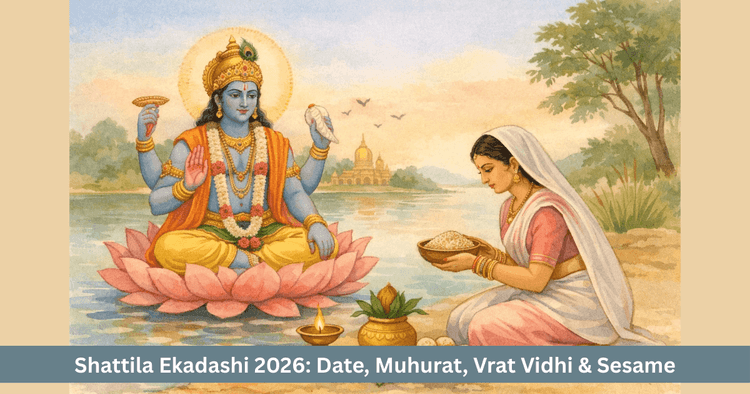
Table of Contents
Why Shattila Ekadashi 2026 is so special
Shattila Ekadashi falls in the Krishna Paksha of the Magha month and is regarded as a highly auspicious day for the worship of Lord Vishnu. In 2026, this sacred fast will be observed on 14 January and on the same day Makar Sankranti will also be celebrated. When two such auspicious events fall together, the merit of fasting, charity and worship is believed to increase manifold. For this reason, Shattila Ekadashi 2026 is considered an especially powerful vrata at the very beginning of the year.
In the Hindu tradition, Ekadashi is a day of discipline for the body, mind and senses. Those who observe all twenty four Ekadashis in a year with sincerity are regarded as moving steadily towards inner purification and liberation. Since Shattila Ekadashi comes at the start of the calendar year, many devotees see it as an opportunity to establish strong spiritual resolve and a pure direction for the months ahead.
Shattila Ekadashi 2026: date, start and end of Tithi
Understanding the exact date and timing of Shattila Ekadashi 2026 is very important for proper observance of the vrat. The Ekadashi Tithi of Magha Krishna Paksha will begin on 13 January 2026 at 3:17 PM and will end on 14 January 2026 at 5:52 PM. The fast will be kept on 14 January because Ekadashi Tithi will be present at sunrise on that day.
The main timings and details of Shattila Ekadashi 2026 are presented below in an easy table.
| Details | Date and Time |
|---|---|
| Ekadashi Tithi begins | 13 January 2026, 3:17 PM |
| Ekadashi Tithi ends | 14 January 2026, 5:52 PM |
| Main fasting and worship day | 14 January 2026, Wednesday |
| Auspicious puja muhurat | 14 January, 7:15 AM to 9:53 AM |
| Vrat paran date | 15 January 2026 |
| Vrat paran time | 7:15 AM to 9:21 AM |
| Dwadashi ends | 15 January 2026, 8:16 PM |
For those who follow the panchang carefully, this schedule offers a clear guideline. The purity and correctness of Ekadashi fasting lies in beginning and concluding the vrat within the proper Tithi and muhurat.
How the union with Makar Sankranti enhances the fruit of this vrat
One of the rare features of Shattila Ekadashi 2026 is that it coincides with Makar Sankranti. It is not very common for the first Ekadashi of the year and the transition of the Sun into Makara rashi to fall on the same date. Makar Sankranti is already considered a very favourable day for holy bath, charity and recitation of sacred names. When the vrata of Shattila Ekadashi is observed on the same day, the spiritual effect is understood to become even more profound.
From a devotional perspective, this union brings together the worship of Lord Surya and Lord Vishnu. This combination is seen as a harmony of light, stability and inner clarity. Ekadashi fasting nurtures restraint and control over the senses, while Makar Sankranti inspires feelings of generosity and renewal. For seekers who wish to build a stronger spiritual routine in the new year, Shattila Ekadashi 2026 offers an especially meaningful starting point.
The spiritual importance of Shattila Ekadashi vrat
The heart of Ekadashi observance is not only the avoidance of food. It is a conscious effort to purify thoughts, speech and conduct. According to traditional beliefs, when a person observes Ekadashi with devotion, negative tendencies such as laziness, anger and uncontrolled desires gradually lose their grip. The importance of Shattila Ekadashi increases further because of the special role of sesame or til in this vrat.
It is believed that sesame seeds are dear to Lord Vishnu and are associated with purity and subtle energy. When til is used in bath, charity, fire offerings, food and abhishek, it is not just an external ritual. It also symbolises the cleansing of inner impurities. Shattila Ekadashi is therefore considered particularly beneficial for those who desire stability, prosperity and peace of mind, along with progress on the spiritual path.
Meaning of the word Shattila and the sixfold use of sesame
The very name Shattila arises from two Sanskrit words. Shat means six and tila means sesame. Shattila Ekadashi is thus the Ekadashi on which six distinct uses of sesame are recommended. These six forms of using til are believed to bring purity and balance into different layers of life. The following table summarises them clearly.
| Use of sesame | Method | Benefit |
|---|---|---|
| Bathing with sesame water | Mixing black sesame seeds in bath water | Cleansing of body and mind, reduction of inertia |
| Applying sesame paste | Making a paste of til and applying it on the body | Removal of negativity, enhancement of glow and vitality |
| Offering sesame in havan | Adding sesame in offerings to the sacred fire | Dissolution of inauspicious influences, purification of surroundings |
| Donating sesame | Donating til to the needy, priests or temples | Satisfaction of ancestors, accumulation of merit and relief from poverty |
| Eating sesame based food | Preparing laddus or other dishes with til as prasad | Sattvic energy, warmth and strength for the body |
| Drinking sesame infused water | Taking water with a small quantity of til | Inner balance, calmness and support for self control |
Along with these six practices, in many households abhishek of Lord Vishnu with sesame water is also performed. This is seen as a subtle reminder that just as sesame grains are washed away during abhishek, in the same way inner harshness and negativity can be washed away through sincere devotion and discipline.
Complete Shattila Ekadashi 2026 vrat vidhi
The procedure of Shattila Ekadashi vrat becomes easier to follow when understood step by step. Each devotee may choose the strictness of the fast according to health, age and circumstances, yet the inner mood of devotion should remain steady.
Preparations on the previous day
Proper preparation is important for a calm and fruitful Ekadashi. The day before, usually on Dashami, one sets the mind and routine in a focused direction.
- Taking simple and sattvic food at night to avoid discomfort during fasting
- Avoiding late night entertainment, arguments or stressful activities
- Mentally resolving to wake up early and maintain a peaceful state on the day of Ekadashi
Morning bath and sankalp on the day of Shattila Ekadashi
On the day of the vrat, waking up during Brahma muhurat or around sunrise is recommended. After cleaning the teeth and tongue, a bath with sesame mixed water is taken. This is considered to purify not only the physical body but also subtle impressions in the mind.
- Wearing clean and modest clothes after bath
- Sitting facing the east or north and meditating on Lord Vishnu
- Taking water, til and flowers in hand and making a sankalp to observe Shattila Ekadashi vrat with faith and restraint
During sankalp, the thought is kept firm that the fast is for inner refinement and not only for outer show.
Worship of Lord Vishnu and use of sesame
The central part of Shattila Ekadashi is the worship of Lord Vishnu. If there is a deity of Shri Vishnu, Narayana, Lakshmi Narayana or a Shaligrama in the home, they are worshipped with devotion.
- Offering yellow or white flowers and fragrant incense
- Performing abhishek with water, milk and a little sesame mixed in the water
- Reading or listening to the Shattila Ekadashi vrat katha with full attention
- Chanting the names of Lord Vishnu, such as Vishnu Sahasranama or shorter mantras like “Om Namo Narayanaya”
Charity of sesame plays a central role on this day. Depending on capacity, one may donate til along with food grains, clothes or other useful items. It is believed that such charity helps in pacifying ancestral disturbances and reducing financial difficulties.
Types of fasting and personal discipline
Every individual has a different level of physical strength and health. For this reason, scriptures describe different ways of observing the fast.
| Type of fast | Description | Suitable for |
|---|---|---|
| Nirjala fast | Abstaining from food and water for the entire day | Strong and experienced practitioners |
| Phalahar fast | Taking fruits, milk or light prasad only | Those with moderate strength |
| Sattvic meal fast | Taking one simple salt free meal or very light food | Elderly persons or those with health concerns |
Regardless of the method chosen, the essential discipline is to avoid anger, harsh speech and negative habits. True fruit of the fast comes when self control is visible in behaviour, not only in the plate.
Shattila Ekadashi 2026 vrat paran
The vrat of Shattila Ekadashi 2026 is to be concluded on 15 January in the morning, between 7:15 AM and 9:21 AM. Dwadashi Tithi will remain until 8:16 PM, so the early morning period is considered best for paran. Before breaking the fast, devotees bow to Lord Vishnu and express gratitude for the strength to complete the vrat.
During paran, it is good to remember sesame and basil again. One may first drink water or a light preparation and then take simple sattvic food such as fruits, khichdi or light kheer. Suddenly taking heavy and oily food after a day of fast is not advised. Those who observe Ekadashi regularly also prefer to come out of the vrat gently so that the body remains in balance.
The inner message of the Shattila Ekadashi vrat katha
The Shattila Ekadashi vrat katha emphasises that charity without genuine warmth and kindness does not bring complete benefit. The story narrates the case of a woman who used to give in charity but her attitude lacked softness and true concern. Because of this, she did not receive the happiness she expected. When she learnt about Shattila Ekadashi and began to donate sesame with a heart full of humility and devotion, her life changed and abundance entered her home.
Through this story, the vrat teaches that external actions must be supported by inner transformation. Even a small offering of sesame, when made with respect and love, carries great potency. That is why many spiritual teachers advise not to perform Shattila Ekadashi as a formality but as a conscious step towards a more compassionate and refined life.
Influence of Shattila Ekadashi on home and family
Another beautiful aspect of Shattila Ekadashi is its impact on family harmony. When members of a household take a collective sankalp to observe Ekadashi, the atmosphere of the home becomes gentle and devotional. Children who participate in simple ways, such as helping in puja or listening to the vrat katha, gradually imbibe values of discipline, respect and sharing.
In many homes, traditional dishes like til laddus, til chikki or other sesame based sweets are prepared as prasad on this day. These dishes suit the winter season and bring warmth and nourishment to the body. At the same time, they carry a sense of togetherness when shared among family, neighbours and guests. The pairing of til and jaggery is often seen as a symbol of firmness and sweetness coming together in relationships.
Shattila Ekadashi, sesame and health
Beyond religious symbolism, sesame holds a respected place in the context of health. Shattila Ekadashi falls in the peak of winter, when the body needs warmth and strength. Sesame seeds are rich in natural oils, minerals and nutrients that support bones, skin and overall vitality. This explains why winter delicacies with til and jaggery have been a part of Indian kitchens for generations.
When on Shattila Ekadashi sesame is used in bath, food and rituals, it aligns both with spiritual tradition and seasonal needs of the body. This blending of health and devotion is a hallmark of many Hindu festivals and vrats. Shattila Ekadashi thus becomes not only a day of worship but also a reminder to care for the body in harmony with nature.
Quick reference table for Shattila Ekadashi 2026
The table below brings together the key points of Shattila Ekadashi 2026 for easy recall.
| Topic | Details |
|---|---|
| Name of vrat | Shattila Ekadashi Vrat |
| Year | 2026 |
| Vrat date | 14 January 2026 |
| Month and Paksha | Magha month, Krishna Paksha |
| Special combination | Shattila Ekadashi and Makar Sankranti on same day |
| Ekadashi Tithi begins | 13 January, 3:17 PM |
| Ekadashi Tithi ends | 14 January, 5:52 PM |
| Auspicious puja muhurat | 14 January, 7:15 AM to 9:53 AM |
| Vrat paran date | 15 January 2026 |
| Vrat paran time | 7:15 AM to 9:21 AM |
| Presiding deity | Lord Vishnu |
| Central element | Sesame used in six ways |
Frequently asked questions on Shattila Ekadashi 2026
1. On which day and in which month will Shattila Ekadashi 2026 be observed
Shattila Ekadashi 2026 will be observed in the Krishna Paksha of the Magha month on Wednesday, 14 January 2026.
2. What is the auspicious puja muhurat for Shattila Ekadashi 2026
The auspicious time for puja, japa and Vishnu worship on Shattila Ekadashi 2026 will be from 7:15 AM to 9:53 AM.
3. When should devotees break their fast of Shattila Ekadashi 2026
The fast of Shattila Ekadashi 2026 is to be broken on 15 January 2026 between 7:15 AM and 9:21 AM, while Dwadashi Tithi still prevails.
4. Why is sesame used in six different ways on Shattila Ekadashi
On Shattila Ekadashi, sesame is used for bathing, applying on the body, fire offerings, charity, food and drinking water. Sesame is regarded as sacred to Lord Vishnu, so these six uses are believed to purify body, mind, ancestors and the environment.
5. What benefits are associated with observing the Shattila Ekadashi fast
With sincere observance, Shattila Ekadashi is said to reduce sinful reactions, ease financial difficulties, bring prosperity to the family, increase mental peace and strengthen spiritual resolve. As the first Ekadashi of the year, it also lays a positive foundation for the months to come.
Get your accurate Kundali
Generate KundaliDid you like it?
Author

Pt. Abhishek Sharma (63)
Experience: 20
Consults About: Family Planning, Career
Clients In: Punjab, Haryana, Delhi
Share this article with friends and family
About ZODIAQ
ZODIAQ is an online Vedic Astrology platform. It connects clients seeking astrological advice to experienced astrologers with deep knowledge. Our users also generate kundali and perform kundali milan for free. ZODIAQ also offers services to the Astrologers. Astrologers utilize various offerings by ZODIAQ to serve their clients effectively.
If you are a User
Consult with experienced astrologers and seek their guidance. You can also order handwritten Janm Patrika report with life prediction prepared by experienced astrologers. Generate accurate Kundali, perform Kundali Matching and check horoscope and muhurat. Utilize our online library for all the necessary astrological and spiritual information.
If you are an Astrologer
Create accurate kundali for your clients and perform Kundali Matching for up to 5 people at a time. Write comprehensive Janm Patrika report for your clients with ZODIAQ. Check client details anytime by saving it in client directory. Become more productive by tracking how many clients you guide every day.
WELCOME TO
ZODIAQ
Right Decisions at the right time with ZODIAQ
