The Science Behind Holi: A Festival for Body and Mind
By Aparna Patni
Beyond Tradition, Holi Connects Health and Nature
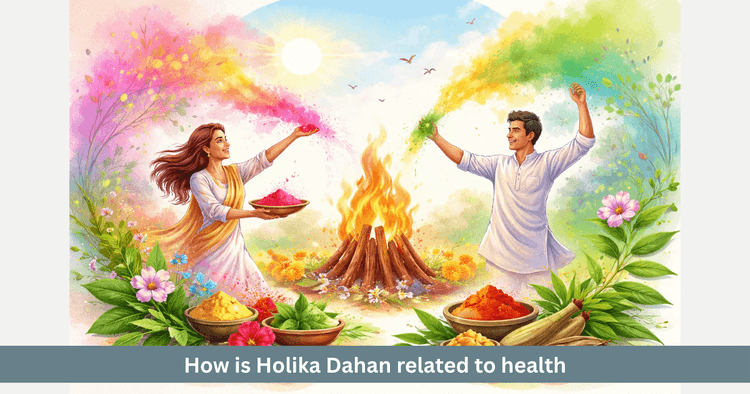
Table of Contents
Often it is not even considered that festivals can be a form of natural care for body and mind and not just tradition. Holi is a beautiful example of this. On the Full Moon of the month of Phalguna, when winter is departing and spring is arriving, people in many parts of the country observe Holika Dahan and play with colours the next day. On the surface it appears as a festival of colours and laughter, yet within it hides a deep connection with season, health and nature.
Around Holi, the direction of the sun, the level of heat and the humidity in the air start to change. This is a phase when the balance of the body can become disturbed. Fatigue, skin issues, infections and dullness of mind can increase if care is not taken. At such a time the fire of Holika, the touch of natural colours and the joy of music together prepare body and mind for the new season.
When and how does the season shift around Holi
Holi comes on the Full Moon of Phalguna, when the influence of cold reduces and the energy of spring rises. This transitional time is sensitive for health. In winter many people bathe less frequently due to cold, sunlight is not always strong and dust, sweat and other particles tend to accumulate on the skin.
During this period the activity of disease causing microorganisms in the environment can increase. The large bonfires of Holika Dahan are believed in many traditions to reduce surrounding dampness, bring some warmth into the air and help decrease the number of such germs. The warmth of the fire touches not only the outer air but also supports the removal of inner inertia and heaviness.
How is Holika Dahan related to health
From a devotional perspective Holika Dahan symbolises the burning of harmful tendencies, yet in folk tradition it is also linked to health.
The custom of performing parikrama around the Holika fire is still alive in many places. Going near the fire gives the body a gentle warmth. It is believed that this helps destroy some surface germs on the skin and encourages the body to become slightly more active.
In some regions people apply a little ash from the cooled Holika on their forehead. In a few traditions this ash is mixed with a small amount of sandal paste and tender mango leaves and taken in tiny quantity. The belief is that this supports digestion and resistance in a subtle way and prepares the body to face seasonal infections with slightly greater strength.
Spring, heaviness and Holi’s effect on the mind
Between winter and summer the body commonly experiences slowness and heaviness. Sleep may increase, interest in work may fall and a feeling of tiredness can spread. This is a natural reaction to the change in temperature and day length.
Here the social and psychological side of Holi becomes important. People gather in groups and sing traditional songs such as
phag,
jogira,
accompanied by drums and cymbals. Dancing, clapping and laughing together increase blood circulation, quicken breathing and activate muscles. Running, bending, stretching and playing during the use of colours acts like a form of exercise. This reduces lethargy and gradually lifts the heavy mood from the mind.
What is the science of natural Holi colours
In ancient times when people began to play Holi they used natural sources to prepare colours. These came from trees, fruits, flowers and medicinal herbs. Such colours were considered beneficial as well as enjoyable.
In traditional thought it was understood that if a light layer of herbal paste or powder touches the skin it can support both cleansing and protection.
Main traditional sources of natural colours
| Shade | Possible natural sources |
|---|---|
| Green | Henna leaves, fresh spring leaves, leafy vegetables |
| Yellow | Turmeric, bael, amaltas, chickpea flour, yellow flowers |
| Orange and saffron | Flowers of tesu, saffron, lime mixed with turmeric |
| Red | Rose, hibiscus, pomegranate peel, red sandalwood |
| Blue and violet | Jamun, purple fruits and flowers, certain trees |
| Brown | Catechu, dried tea leaves |
| Black | Dried amla, some dark grapes |
Powders and liquids prepared from these sources do not usually harm the skin as harsh chemicals do. In some cases they may even aid mild cleansing and nourishment.
How does the touch of colours affect the body
Colour is not only a visual experience. Each colour has its own wavelength and can influence mind and body in different ways. Traditional understanding suggests that if the energy of a particular colour is low in life it can be balanced by exposure to that colour through diet or external contact.
When fine particles of natural colour fall on the skin, they make direct contact with it. Along with this, the atmosphere of laughter, trust and closeness with companions also affects the mind positively. Together they increase vital energy and create a sense of lightness.
What are the harmful effects of artificial colours
Today many colours sold in markets are not natural. They are made using artificial chemical substances. Although they may look bright and cost less, they carry potential risks.
Such colours may contain substances that
cause rashes and itching on the skin,
produce burning and redness in the eyes,
or when inhaled, trigger coughing, breathlessness and allergic reactions.
Some colours may also carry traces of heavy metals or very harsh reagents. Frequent and intense contact with these can be extremely damaging to the skin and hair. If colour reaches the roots of the hair it can lead to hair fall, dryness and discomfort in the scalp.
Part of these synthetic colours flows into drains and water bodies, creating an additional burden for the environment.
What precautions help make Holi safer
While enjoying Holi it is equally important to protect health. By following a few simple measures the harm from harsh colours can be reduced.
How to prepare the body
Before playing Holi, applying a thick layer of cream, oily balm or coconut oil on exposed areas is very helpful. This forms a protective film over the skin and prevents the colour from penetrating too deeply. Later it also becomes easier to wash off the colours without excessive rubbing.
A gentle protective layer on the lips prevents direct contact with colour. Around the eyes a light oil based application helps maintain moisture and comfort.
How to protect hair and scalp
Massaging mustard, coconut or any nourishing oil into the hair and scalp before Holi is very useful. Some people add a few drops of lemon juice to the oil to reduce dryness or dandruff that might otherwise flare up with colours.
The oil coats the hair like a shield. It prevents colour from entering deeply into the strands and roots. After washing, the hair is more likely to retain softness and strength. Those with long hair can braid or tie them to offer extra protection.
How to care for eyes and lips
Eyes need special attention during Holi. Colours entering the eyes can cause burning or blurred vision. For this reason many practitioners advise wearing protective glasses especially where water jets or balloons are used.
People who already have eye issues, use contact lenses or tend to develop allergies may need to avoid direct contact with colours or participate with greater caution.
How to choose clothing
For Holi it is better to wear clothes that cover most of the body. Full sleeved, cotton outfits in darker shades are usually suitable. Cotton allows the skin to breathe and does not become uncomfortably heavy when wet. Very tight synthetic garments can cling to the skin and cause irritation, while extremely thick fabrics can feel too heavy when soaked.
Why is adequate water intake important
Drinking sufficient water before and during Holi is also an important precaution. Proper hydration keeps the skin supple, reduces fatigue and helps the body cope with sun and colours more easily. Taking small sips of water at intervals can prevent headaches, dizziness and excessive exhaustion.
Why choose natural colours
When a person consciously selects plant based gentle colours the experience of Holi becomes healthier for both body and environment. They may appear slightly less bright or more expensive than chemical powders, yet in the long run they are far kinder to skin, hair and nature.
If more people begin to prefer such colours, availability will increase and prices will gradually stabilise. Simple colours can also be prepared at home using turmeric, sandalwood, flowers and flour. This process involves the family, keeps children connected with the cultural and health aspects of Holi and passes on responsible traditions.
Holi’s message for health and balance
When the devotional, social and practical sides of Holi are viewed together, a clear purpose emerges. This festival is not meant to leave the body covered in dust and harsh chemicals. It is also designed to offer an opportunity for balanced cleansing of body and mind.
Holika Dahan reminds us to burn what has become dry and burdensome. The next day, with natural colours and joyful songs, people are encouraged to welcome new enthusiasm, renewed relationships and a fresh perspective. With a little awareness and care Holi can colour life not only on the outside but also with health, harmony and inner balance.
Common questions about Holi and health
Why does the body feel heavy around Holi
During the shift from winter to spring and then towards summer the body must adjust to new temperature and humidity. This adaptation can cause temporary fatigue and sluggishness. Singing, dancing and playful movement during Holi help counter these tendencies.
In what way is Holika Dahan considered beneficial for health
The warmth of the Holika fire slightly raises the local temperature and is believed to reduce the activity of some common germs. Standing near the fire improves blood circulation and signals the body to awaken from winter dullness.
What is the main benefit of using natural colours
Natural colours usually come from plants, flowers and herbs. They are generally gentler on the skin than chemical powders and may support mild cleansing, nourishment and pleasant fragrance, while synthetic colours are more likely to cause irritation.
What signs suggest that a colour may be unsafe
Extremely bright colours with a sharp smell, very intense shine or an unusually smooth and sticky texture may contain artificial components. It is safer to avoid such powders, buy colours only from trusted sources and whenever possible prepare simple natural colours at home.
How should skin and hair be cared for before and after Holi
Before Holi, oiling the skin and hair creates a protective barrier against colours. After Holi, bathing with lukewarm water, using gentle soap or flour paste for cleansing and washing hair with a mild cleanser helps remove colours slowly without harming the skin. Rubbing too hard can injure the skin, so patience and gentleness are important.
Get your accurate Kundali
Generate KundaliDid you like it?
Author

Aparna Patni (63)
Experience: 20
Consults About: Family Planning, Career
Clients In: Punjab, Haryana, Delhi
Share this article with friends and family
About ZODIAQ
ZODIAQ is an online Vedic Astrology platform. It connects clients seeking astrological advice to experienced astrologers with deep knowledge. Our users also generate kundali and perform kundali milan for free. ZODIAQ also offers services to the Astrologers. Astrologers utilize various offerings by ZODIAQ to serve their clients effectively.
If you are a User
Consult with experienced astrologers and seek their guidance. You can also order handwritten Janm Patrika report with life prediction prepared by experienced astrologers. Generate accurate Kundali, perform Kundali Matching and check horoscope and muhurat. Utilize our online library for all the necessary astrological and spiritual information.
If you are an Astrologer
Create accurate kundali for your clients and perform Kundali Matching for up to 5 people at a time. Write comprehensive Janm Patrika report for your clients with ZODIAQ. Check client details anytime by saving it in client directory. Become more productive by tracking how many clients you guide every day.
WELCOME TO
ZODIAQ
Right Decisions at the right time with ZODIAQ
