Draupadi: Comprehensive Psychological and Astrological Character Analysis
By Pt. Amitabh Sharma
Woman, warrior, philosopher, the world’s deepest tale of pain, power and agency
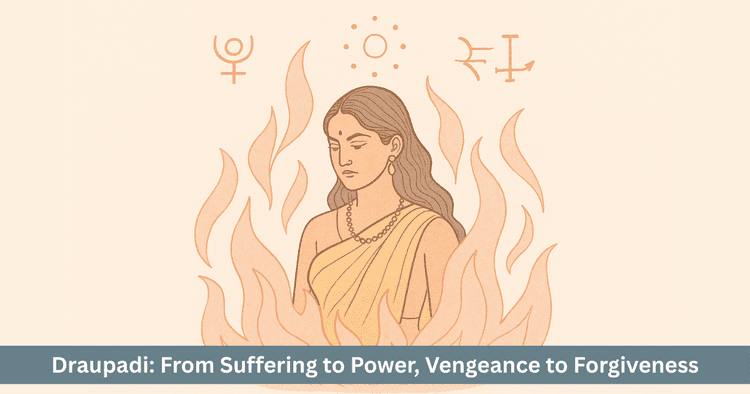
Table of Contents
Draupadi is one of world literature’s most psychologically nuanced, complex and tragic female characters. Her story is woven of extraordinary contradictions, agency, suffering, resilience, intellect and spiritual maturity. This analysis explores her inner world, trauma, intellectual brilliance, struggle for agency and the cosmic symbolism woven throughout her life.
1. Paradox of Destiny: Born for a Cosmic Role, Denied Individual Agency
Miraculous Birth and Predestination
Draupadi was born from a yajna fire, destined as an instrument of destruction against Drona and the Kauravas. Her supernatural origin marked her as preordained, more force of fate than ordinary woman.
Astrological Symbolism:
Such a fiery birth suggests profound Rahu/Ketu, Saturn (karma and fate) and Mars (warrior, conflict) influences, she was cast as a cosmic tool for justice rather than a free agent.
Denied Agency at Turning Points
- At her swayamvara, she got to choose Arjuna but soon lost all agency to Kunti’s poorly considered command, becoming wife to five without consultation, her own choice erased.
- Her confession about alienation in polyandry, "Known by five, yet fully belonging to none”, reveals the psychological void and duty-bound burden she carried.
Astrological View:
Likely afflicted Venus (relationships), with Saturn and Rahu/Ketu dominating, indicating relationships marked more by duty and hardship than fulfillment.
2. Polyandrous Marriage: Psychological Complexity and Conflict
Forced to share herself, Draupadi suppressed desire and individuality for duty. Deep inside, she experienced divided longing (especially for Arjuna and, in retellings, a fraught suppressed affection for Karna).
- Alienation: She functioned as wife and queen but with an internalized ache for belonging and emotional exclusivity.
- Jealousy and Loss: When Arjuna took Subhadra, Draupadi felt acute heartbreak, her assertiveness a means to safeguard position and respect within instability.
3. Cheer-Haran: Trauma and Identity-Rupture
The dice game humiliation was ultimate violation, wagered as property, stripped of personhood and dignity. Modern psychology recognizes the resulting trauma and PTSD:
- Immediate: Terror, shame, powerlessness, betrayal.
- Enduring: Damaged trust, persistent memories and rage fueling resolve for justice.
Astrological Reading:
Marks of Saturn-Ketu calamity, humiliation, loss, karmic debt, broken identity, offset partially by a protective Jupiter (Krishna’s intervention).
4. The Vow: Turning Trauma into Agency
Draupadi’s vow, to leave hair untied until Dushasana’s blood could wash it, was more than vengeance. She transformed her anguish into a moral and political force, binding the Pandavas to action and reframing her humiliation as a collective mission for justice.
5. Exile: Endurance, Growth and Spiritual Maturity
In thirteen years of exile, Draupadi’s patience, intellect and resilience shone. Her role as Sairandhri the maid during concealment reflects Saturn’s themes of humility and ego-stripping. She became a counselor for the Pandavas, learned philosophy from sages and grew spiritually, turning suffering into inner strength.
6. Draupadi as Philosopher and Political Strategist
From her interrogation in the dice court about whether Yudhishthira had the right to wager her, to informed counsel post-war, Draupadi revealed profound moral and political acumen. She valued agency, action and collective restoration of justice above personal comfort.
7. War, Loss and Forgiveness
She did not compromise on justice, her demand for vengeance drove the war. But, after Ashwatthama killed her five sons, Draupadi asked that he be spared, putting dharma above personal grief. This marked her final transcendence, from victim and avenger to a spiritually aware being.
8. Identity Crisis: “Who Am I?”
Caught between being daughter, queen, poly-wife, servant, avenger and ultimately forgiving soul, Draupadi’s life was a constant negotiation of role and longing. Her yearning for personal love, recognition and authenticity echoes a universal human quest for selfhood.
9. Relationship with Krishna: Divine Anchor
Only Krishna, among all, offered Draupadi unconditional protection and acceptance. Their unique friendship (sakhi-sakha) transcended all social roles, his intervention during the disrobing was both personal and cosmic, teaching her the value of faith and divine justice.
Astrological Note:
Krishna’s role suggests a strong Jupiter in her chart, bestowing grace, wisdom and ultimate protection.
10. Astrological Character: Key Planetary Influences
- Mars: Courage, struggle, assertion, her fiery resolve.
- Venus (challenged): Beauty, relationships with great complexity and unfulfillment.
- Saturn: Endurance, fate, humility, prolonging of suffering for karmic completion.
- Ketu: Loss, identity crises but also transformation and spiritual awakening.
- Jupiter: Divine support, philosophical growth, spiritual mercy.
11. Paradoxes at Her Core
| Paradox | Story Manifestation | Psychological Meaning |
|---|---|---|
| Victim vs. Agent | Polyandry imposed but took vows | Transformed suffering into power |
| Duty vs. Desire | Loyal wife but yearned for Karna | Authentic self denied |
| Rage vs. Forgiveness | Demanded vengeance, then forgave | Maturation beyond hurt |
| Silence vs. Voice | Compliant, yet relentless questioner | Proactive assertion within limits |
| Trauma vs. Resilience | Devastated by disrobing but purposeful | Strength through pain |
| Powerlessness vs. Influence | Formally powerless but determined the epic’s fate | Deep impact in constraint |
12. Assessment: Archetypal Feminine Transformed
Draupadi embodies the sacred feminine not as passive nurturer but as challenger, warrior, justice-seeker and finally, forgiver. Chosen as an instrument of destiny, she spent life negotiating fate and forging agency where she could. Ultimately, she moved from victimhood through righteous anger to spiritual mercy.
Key Lessons:
- Trauma is not destiny: Response, not circumstance, defines character.
- Agency persists amidst constraint: She persistently asserted herself and shaped events.
- Spiritual growth transcends vengeance: Forgiveness outlasts retribution.
- Authentic connection matters: Her longing and complexity reveal the universal need for selfhood beyond societal roles.
Astrologically, Draupadi’s journey is one of fire and endurance, trial and grace, culminating in moksha (liberation). Her life teaches that suffering can be a crucible for wisdom and agency is always possible even within prescribed destinies.
Frequently Asked Questions (FAQs)
1. What was Draupadi’s deepest psychological struggle?
Her perpetual crisis of identity, never being allowed a single, authentic self.
2. Did Draupadi transcend her desire for vengeance?
Yes, her forgiveness of Ashwatthama reveals a spiritual evolution beyond mere revenge.
3. What does her relationship with Krishna symbolize?
Unconditional spiritual friendship and cosmic protection when all else failed.
4. How did exile change her?
It made her resilient, wise and deeply philosophical, turning hurt into strength.
5. Is Draupadi only a victim?
No. She is a survivor, leader, moral philosopher and symbol of the power and complexity of human agency.
What does Nakshatra reveal about me?
My NakshatraDid you like it?
Author

Pt. Amitabh Sharma (56 Years)
Experience: 20
Consults About: Family Planning, Career
Clients In: Punjab, Haryana, Delhi
Share this article with friends and family
About ZODIAQ
ZODIAQ is an online Vedic Astrology platform. It connects clients seeking astrological advice to experienced astrologers with deep knowledge. Our users also generate kundali and perform kundali milan for free. ZODIAQ also offers services to the Astrologers. Astrologers utilize various offerings by ZODIAQ to serve their clients effectively.
If you are a User
Consult with experienced astrologers and seek their guidance. You can also order handwritten Janm Patrika report with life prediction prepared by experienced astrologers. Generate accurate Kundali, perform Kundali Matching and check horoscope and muhurat. Utilize our online library for all the necessary astrological and spiritual information.
If you are an Astrologer
Create accurate kundali for your clients and perform Kundali Matching for up to 5 people at a time. Write comprehensive Janm Patrika report for your clients with ZODIAQ. Check client details anytime by saving it in client directory. Become more productive by tracking how many clients you guide every day.
WELCOME TO
ZODIAQ
Right Decisions at the right time with ZODIAQ
