Duryodhana: Tragedy, Conflict and Valor, A Profound Character Analysis
By Aparna Patni
Psychological, ethical and historical exploration of Mahabharata’s most complex opponent
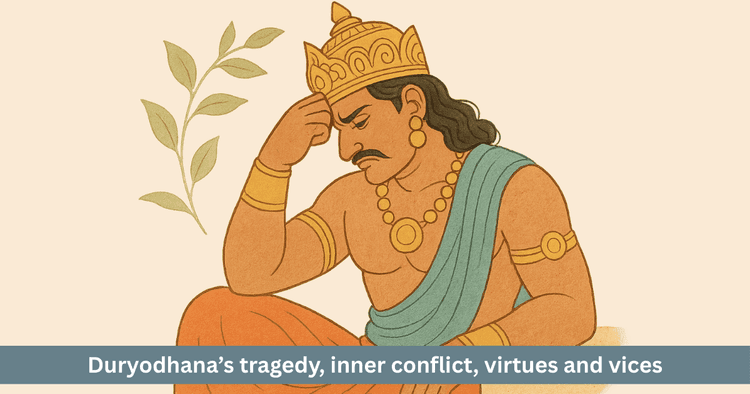
Table of Contents
Duryodhana, the eldest of the Kauravas, occupies a space in the Mahabharata that is neither wholly villainous nor fully victimized. His story, deeply entwined with psychological wounds, misplaced ambition and the consequences of broken relationships, offers a study of the human condition, a lesson for every age.
Part I: The Inner Workings, Duryodhana's Psychology
The Duryodhana Syndrome
Central to Duryodhana’s psychological portrait is the paradox he voices to Krishna: “I know dharma, yet I do not adhere to it; I know adharma, yet I cannot refrain from it.” This struggle, intellectual clarity battling irresistible compulsion, creates a personality both tragic and relatable, making Duryodhana one of world literature’s most memorable anti-heroes.
Insecurity and Inferiority
- Raised amidst royalty, yet perpetually wounded by comparison to the Pandavas
- Ever subject to reminders of being “lesser”
- The transformation from “Suryodhana” (sun-warrior) to “Duryodhana” signified not only social labeling but a self-image shaped by negativity
| Internal Factor | Consequence |
|---|---|
| Feelings of inferiority | Motivation for envy, opposition and rivalry |
| Rejected affection | Search for validation through power |
Part II: Family, Upbringing and Lapses in Guidance
Paternal Blindness
Dhritarashtra’s literal and metaphorical blindness created a moral void. Excessive paternal indulgence paired with lack of accountable discipline allowed Duryodhana’s budding narcissism and entitlement to flourish.
The Insufficient Teacher
Drona’s partiality towards Arjuna and visible disregard for Karna and Duryodhana seeded bitterness and fostered a sense of injustice.
Part III: Influence of Toxic Relationships
Shakuni: Strategist or Destroyer?
Shakuni, acting out personal vendetta under the guise of family loyalty, presented Duryodhana not with lessons of love or growth but taught subterfuge and antagonism as tools for survival.
Karna: The Flawed Friend
Karna’s loyalty was steadfast, yet, instead of providing necessary checks, it fortified Duryodhana’s inclination toward error. The friendship, admirable in surface, was mutually self-destructive beneath.
| Relationship | Impact |
|---|---|
| Shakuni | Fostered vengeful ambition |
| Karna | Emboldened both in wrongdoing |
Part IV: Patterns of Crime and the Descent into Adharma
Duryodhana’s path is marked by repeated, conscious violations:
- Poisoning and attempted murder of Bhima
- Cheating the Pandavas by manipulating the dice game
- Orchestrating Draupadi’s humiliation in open court
- Rejecting settlements, causing devastating war
- Sanctioning the killing of non-combatants, Abhimanyu, Pandava children
Part V: The Context, Discrimination, Dharma and Victimhood
Enduring Prejudice
- Labeled “evil” at birth and nearly discarded
- Favored less by elders, consistently marginalized by peers
The Warrior’s Code
In the context of Kshatriya dharma, refusal to yield, choosing fair combat in the duel with Bhima and insistence on open battle, acquire different weight. Not all violations were unique to Duryodhana; the Pandavas also engaged in subterfuge and rule-bending.
Part VI: Redeeming Traits, Genuine Virtue Within Flawed Character
True Friendship
Crowning Karna as Anga’s king, breaking caste and convention, Duryodhana fostered a deep, trusting and enduring friendship, characterized by loyalty and courage.
Administrative Competence
Hastinapur under Duryodhana’s rule was stable, vibrant and well-managed. Strategic appointments based on merit demonstrated an ability to govern with fairness, except where personal rivalries intervened.
Martial Valor
Duryodhana’s courage in battle never wavered. Even utterly defeated, he chose not to surrender, a reflection of true warrior ethos.
Fairness in Conflict
In his final duel, he could have chosen to fight any Pandava but picked Bhima, choosing a fair contest over easy victory.
Part VII: The Tragic Culmination, Victim and Villain
Duryodhana’s destiny was shaped by both external prejudices and his own conscious choices. While society and kin sowed seeds of insecurity, it was Duryodhana who nurtured them into violence and defiance.
- He remained culpable for his deliberate embrace of adharma
- Rejected countless chances at peace and reconciliation
Part VIII: Meta-Ethical Paradox
Duryodhana is, in one sense, the anti-hero whose refusal to embrace the emerging devotional worldview signals a conflict between old codes and new faiths. His ultimate reception into heaven in the epic shows that victory and defeat, virtue and sin, are far more nuanced than black and white.
| Aspect | Virtue | Failing |
|---|---|---|
| Friendship | Loyalty to Karna | Blindness to Karna’s faults |
| Valor | Stalwart in battle | Ruthlessness, pride |
| Governance | Competence, meritocracy | Nepotism, prejudice toward Pandavas |
| Ethics | Fair fight with Bhima | Unethical plots, repeated deceits |
Part IX: Lessons, Legacy and Human Condition
Duryodhana’s journey teaches:
- Unchecked ambition and unresolved wounds lead to ruin
- Even pronounced villains may bear deep scars of rejection and longing
- True virtue must be practiced, not merely acknowledged
Lasting Message
His story shows that moral failure is not born of one decision but the accumulation of countless small wounds, choices and missed opportunities for redemption.
Frequently Asked Questions (FAQs)
1. Is Duryodhana purely a villain?
No. While responsible for grave wrongs, his actions arise from psychological wounds, difficult circumstances and the failure to overcome his inner darkness.
2. Did the Pandavas also breach dharma?
Yes. They, too, violated ethical boundaries in pursuit of victory, including acts of deceit, tactical ambush and encouragement from Krishna.
3. What was Duryodhana’s greatest strength?
Unwavering loyalty and valor, especially in friendship with Karna and his refusal to surrender despite inevitable defeat.
4. Could his fate have changed?
Yes. With moral guidance and different influences, Duryodhana might have become a just and celebrated king.
5. Why does his death scene matter?
The epic’s depiction of his ascension to heaven forces readers to consider the depth of his struggle and the limits of simplistic moral judgments.
What does moon sign reveal about me?
My Moon SignDid you like it?
Author

Aparna Patni (63)
Experience: 20
Consults About: Family Planning, Career
Clients In: Punjab, Haryana, Delhi
Share this article with friends and family
About ZODIAQ
ZODIAQ is an online Vedic Astrology platform. It connects clients seeking astrological advice to experienced astrologers with deep knowledge. Our users also generate kundali and perform kundali milan for free. ZODIAQ also offers services to the Astrologers. Astrologers utilize various offerings by ZODIAQ to serve their clients effectively.
If you are a User
Consult with experienced astrologers and seek their guidance. You can also order handwritten Janm Patrika report with life prediction prepared by experienced astrologers. Generate accurate Kundali, perform Kundali Matching and check horoscope and muhurat. Utilize our online library for all the necessary astrological and spiritual information.
If you are an Astrologer
Create accurate kundali for your clients and perform Kundali Matching for up to 5 people at a time. Write comprehensive Janm Patrika report for your clients with ZODIAQ. Check client details anytime by saving it in client directory. Become more productive by tracking how many clients you guide every day.
WELCOME TO
ZODIAQ
Right Decisions at the right time with ZODIAQ
