Panchang: The Foundation of Vedic Astrology and Its Role in Life
By Pt. Narendra Sharma
Explore what Panchang is, its five limbs, calculation methods, major systems and and its scientific and spiritual importance in daily life
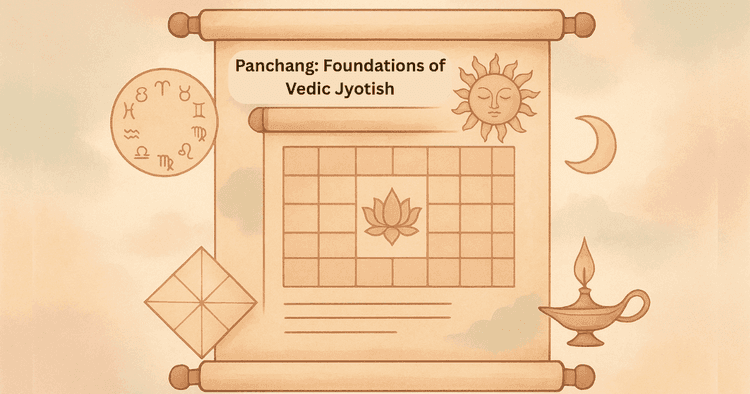
Table of Contents
The word Panchang comes from Sanskrit, where pancha means five and anga means limb. Panchang is the traditional Hindu almanac prepared according to the Indian system of timekeeping. It is used to plan daily activities, festivals, rituals, ceremonies and auspicious timings.
Panchang combines solar and lunar movements to show how each day is charged with specific energies, helping us decide which activities are best supported by time.
The Five Limbs Of Panchang
1.Tithi
Tithi is a lunar day based on the angular distance between the Sun and Moon. There are different tithis in the waxing phase, Shukla Paksha, and the waning phase, Krishna Paksha. Each tithi has its own nature and is considered suitable or unsuitable for certain types of work.
2.Vaar (Weekday)
The seven weekdays, from Sunday to Saturday, are called Vaar. Each day is ruled by a planet that colours the mood and results of actions done on that day. For example Sunday is associated with the Sun and Monday with the Moon.
3.Nakshatra
The Moon moves through 27, sometimes 28, lunar constellations called Nakshatras. Each Nakshatra has a planetary ruler and specific qualities that affect both people born under it and events that occur during its influence. Nakshatras are widely used for muhurta and samskaras.
4.Yoga
Yoga is calculated from the combined longitudes of the Sun and Moon. There are 27 Yogas and each reflects a particular psychological, physical and social influence. Some Yogas are considered highly auspicious while others call for caution and restraint.
5.Karana
Half of a Tithi is called a Karana. There are 11 Karanas, of which four are fixed and seven are movable. Karanas play an important role in muhurta, as they are believed to influence the stability and outcome of actions started under their influence.
The Profound Role of Nakshatras in Vedic Astrology
How Is Panchang Calculated?
Panchang is prepared using precise astronomical calculations. By tracking the exact positions of the Sun and Moon, astrologers determine when each Tithi, Nakshatra, Yoga and Karana begins and ends.
Traditional systems such as Drik calculations and Surya Siddhanta are still used, combining mathematical accuracy with classical rules. This work requires in depth knowledge of mathematics, astronomy and Jyotish to ensure correct planetary positions and timing.
Major Panchang Systems In India
Three main Panchang systems are commonly used across different regions of India
1.Lunar based Panchang
Popular in North India, this system changes the month after a Full Moon or New Moon, depending on the tradition. Festivals and fasts are mostly decided by lunar months.
2.Solar based Panchang
Used in regions such as Kerala, Tamil Nadu and Odisha. Here months change according to the Sun’s entry into zodiac signs. Solar ingress and Sankrantis are key reference points.
3.Nakshatra based Panchang
This form is widely used in Vedic rituals and special ceremonies. It focuses on the movement of the Moon through Nakshatras and is important for yagyas, samskaras and specific spiritual practices.
Importance Of Panchang In Daily And Spiritual Life
1.Muhurta Selection
Panchang is essential for selecting auspicious timings for events like marriage, housewarming, naming ceremonies, business openings, travel and major purchases. Proper muhurta strengthens the chances of success and stability.
2.Astrological Calculations
Birth charts, transits, dashas and annual forecasts all rely on Panchang based timekeeping. Without Panchang, accurate Jyotish calculations are not possible, which is why it is called the backbone of Vedic astrology.
3.Religious Observances
Dates for fasts, festivals, vratas and religious rituals are all determined by Panchang. It tells devotees exactly when to observe Ekadashi, Purnima, Amavasya, Navratri and many other sacred days.
4.Seasons And Agriculture
Traditional Indian agriculture is closely linked with Panchang. Farmers have long used it to plan sowing, irrigation and harvesting, aligning their work with seasons and lunar phases for better yield.
Panchang As A Bridge Between Cosmos And Life
Panchang is not just a religious or cultural tool. It is a refined blend of Vedic philosophy and astronomy. It reflects the rhythm of life, the movement of the cosmos and the most supportive times for human actions. Without Panchang, Vedic astrology and many traditional practices would remain incomplete.
Author’s Suggestion
If you are looking for an auspicious time for important work or seeking astrological guidance, it is wise to consult a well prepared traditional Panchang. Doing so can enhance the probability of success and bring greater harmony, peace and confidence into your life.
FAQ: Panchang In Vedic Astrology (English)
1.How is Panchang different from a regular calendar?
A regular calendar only shows dates and weekdays, while Panchang also reveals Tithi, Vaar, Nakshatra, Yoga and Karana, giving a complete astrological picture of the day.
2.Is it necessary to check Panchang every day?
It is especially useful when planning important decisions, rituals or new beginnings. Regular use helps you understand the nature of each day and align actions with supportive timings.
3.Which Panchang should I trust when there are many versions?
Different regions follow different systems. It is best to use a Panchang that follows your local tradition and is recommended by a knowledgeable priest or astrologer.
4.Are online Panchang tools reliable?
They can be reliable if based on authentic calculation methods and traditional rules. For very important muhurta selection, however, personal consultation with an expert is advisable.
5.Can a horoscope be made without using Panchang?
No, accurate horoscopes require exact planetary positions, dates and timings, all of which are derived from Panchang based astronomical calculations.
6.When is Nakshatra based Panchang especially important?
It is particularly important for Vedic rituals, mantras, special samskaras and advanced spiritual practices, where the Moon’s Nakshatra plays a key role.
7.Can Panchang itself predict a person’s future?
Panchang alone gives general indications about the day, not a detailed personal prediction. For specific future insights, an individual birth chart analysis is required.
8.How does Panchang support farmers and seasonal work?
By indicating seasons, lunar phases and key days, Panchang helps farmers choose better timings for sowing and harvesting, aligning their activities with natural cycles.
Get your accurate Kundali
Generate KundaliDid you like it?
Author
Pt. Narendra Sharma (63)
Experience: 20
Consults About: Family Planning, Career
Clients In: Punjab, Haryana, Delhi
Share this article with friends and family
WELCOME TO
ZODIAQ
Right Decisions at the right time with ZODIAQ
