Annaprashan Muhurat: Feeding Time for Lifelong Health and Prosperity , The Complete Guide
By Pt. Narendra Sharma
Complete methodology for aligning child's first food with cosmic timing and blessings
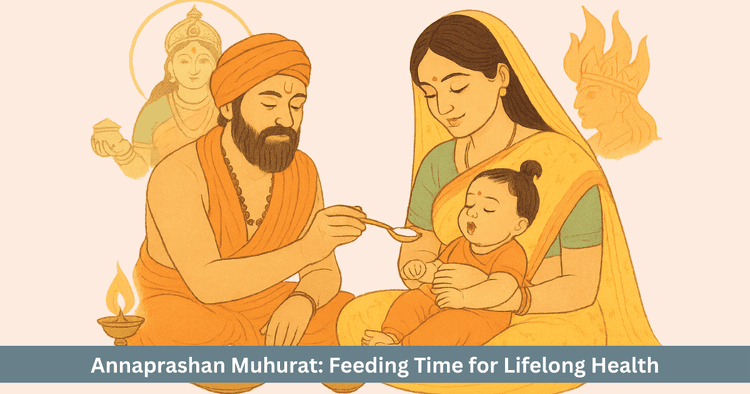
Table of Contents
In the moment when first grain meets the child's lips, not only physical nourishment enters but also spiritual blessing. Annaprashan, derived from Sanskrit words Anna meaning food and Prashan meaning feeding or tasting, is the sixth samskara among the sixteen major Vedic sacraments or Shodasha Samskaras. It celebrates the baby's transition from mother's milk to solid food, symbolizing entry into the world of sustenance, growth and vitality. In essence, it is the ritual of first feeding the child cooked rice often sweetened with honey, ghee or jaggery during an auspicious planetary period, invoking blessings for lifelong health, strength and abundance. This comprehensive guide reveals the elements of Annaprashan Muhurat and shows how nourishment in the foundation of your child's life ensures a powerful beginning supported by cosmic harmony.
Part One: The Spiritual and Scientific Significance of Annaprashan
Annaprashan is not merely a social function or a stage in infant nutrition. It is a profound spiritual transition marking a critical turning point in the child's development. In spiritual understanding, food or Anna is considered Brahma, the divine substance that nourishes all life. When a child is fed for the first time, Annapurna Devi representing abundance and nourishment, Agni Deva representing digestion and transformation and ancestral souls are invited to bestow blessings. This ritual asks them to establish a strong digestive system within the child, grant the capacity to absorb nutrients and enhance physical and mental strength.
In traditional thought, Annaprashan is considered essential for the child's prosperity in life. It is believed that the first food given at the right time, with correct planetary alignment, has a profound impact on the child's lifelong nourishment capacity, immunity and overall wellbeing. This is why ancient Vedic texts emphasize so much the calculation of appropriate astrological muhurat for Annaprashan.
From scientific perspective, Annaprashan marks the child's digestive maturity. By six months of age, most infants have developed intestinal microbiome adequately, digestive enzymes increase sufficiently, chewing and swallowing reflexes mature internally and physical preparation for nutrient absorption is ready. Aligning Annaprashan with this biological preparation alongside astrological compatibility maximizes digestive capacity and ensures optimal nutrient absorption.
From psychological perspective, Annaprashan is a critical moment in the child's sensory development. It is the first time the child experiences new sensations beyond the familiar taste of mother's milk. Exposure to different textures, tastes and flavors develops food tolerance, encourages sensory discrimination and is foundational for future dietary diversity. The shared ceremony of first feeding with family also strengthens the child's social development, deepens family bonds and reinforces community identity.
Elements of Annaprashan
Annaprashan is traditionally performed with the following elements. Anna or rice is the primary food fed to the child, usually cooked rice sweetened with honey, ghee or jaggery. This rice is also offered to the deity and then fed symbolically to the child by mouth. Aarti is the ceremonial waving of a lamp to invite the divine powers of fire and sanctify the ritual space. Blessings are given by family elders offering good wishes for the child's health, long life and prosperity. Prasad or blessed food is distributed and shared by all family members and invited guests.
Part Two: Annaprashan Muhurat Calculation, Step-by-Step Methodology
Step One: Identify the Correct Age Window
Traditional timing shows Annaprashan is usually performed around the child's six-month age, aligning with natural developmental stages. In some regions this can be at five months, seven months or eight months based on regional traditions. Check physical readiness: Has the child developed head control? Are they capable of bringing objects to their mouth? Do they show progress toward sitting? Consider health factors: Avoid any acute illness, teething problems or digestive distress. Ensure family readiness: Confirm time to prepare food, ability to gather family members and priest's availability for ceremony.
In determining child's age, take exact birth date, calculate six-month period (month and date after six months), identify what week this falls within. For example, if child was born on June One, twenty twenty-five, then six months later is December One, twenty twenty-five. Plan Annaprashan within this timeframe.
Step Two: Identify Periods to Absolutely Avoid
Avoid Rahu Kaal approximately ninety-minute inauspicious window each day. Avoid Rikta Tithis or empty days which are inauspicious. Avoid New Moon or Amavasya. Avoid two to three days around Solar or Lunar Eclipses. Avoid any strong Mars influence (Mars day or Moon severely aspected by Mars).
Step Three: Identify Favorable Panchang Elements
Tithi or Lunar Day Selection: Most auspicious Tithis include Dwitiya (second), Tritiya (third), Panchami (fifth), Saptami (seventh), Dashami (tenth), Ekadashi (eleventh), Trayodashi (thirteenth). Full Moon or Purnima may be considered. Avoid Chaturthi (fourth), Navami (ninth), Chaturdashi (fourteenth), Amavasya because these are empty days.
Nakshatra or Lunar Constellation Selection: Most auspicious Nakshatras include Pushya (best for nourishment), Rohini (for growth), Mrigashira (for gentle influence), Hasta (for skill), Anuradha (for success), Chitra (for creativity), Revati (for complete protection). Avoid Ardra, Mool, Ashlesha, Jyeshtha because these carry harsh energy.
Weekday or Vara: Thursday (Jupiter, best for child's development) and Monday (Moon, for emotional support) are best. Friday (Venus, for harmony) is also good. Avoid Tuesday (aggressive energy) and be cautious with Saturday (restrictive influence).
Hora or Planetary Hour: Jupiter hour, Moon hour or Venus hour are best. Avoid Mars hour or Saturn hour.
Lagna or Ascendant: Prefer Movable or Dual signs. Avoid Fixed signs (Taurus, Leo, Scorpio, Aquarius) because these can make food feel obstructed.
Step Four: Identify Favorable Time Windows
Morning (six AM to ten AM): Fresh, pure energy, child's digestion most active. Mid-morning (ten AM to twelve thirty PM): Abhijit Muhurat approximately ten forty-eight AM to eleven forty-eight AM brings peak power. Afternoon (one PM to four PM): Active digestive energy. Avoid evening or night because digestive capacity diminishes.
Step Five: Cross-Verify Against Child's Birth Chart
Check Moon transits: Is Moon in child's birth Nakshatra or nearby aligned Nakshatra (extremely auspicious)? Check strength of dietary planets (Mercury, Venus, Jupiter). Avoid any adverse Mars or Saturn aspects.
Part Three: Annaprashan Ceremony, Sacred Procedure and Food Selection
Pre-Ceremony Preparation Three to Seven Days Before
In home cleaning, thoroughly clean the entire puja area, decorate with flowers, arrange aarti lamps and incense. In food preparation, procure organic rice, extract oil in butter or ghee (better for ritual than processed), collect honey (raw, not heat-treated), consider fruits or vegetables if child is ready. Invite family and coordinate with priest.
Ceremony Procedure Step-by-Step
Step One: Purification (Ten Minutes)
Light incense to sanctify the home. Sprinkle sacred water on family members. Keep windows and doors open for positive energy flow. Light lamps and seat the person holding the child in a comfortable position.
Step Two: Ganesh Puja (Five Minutes)
Offer flowers, rice and water to Ganesh. Chant mantra often Om Gam Ganapataye Namah. Request removal of obstacles.
Step Three: Aarti (Five Minutes)
Wave lamp before the child three or seven times. All family members participate. Sing Aarti Kijhai Bhaiya or family traditional songs.
Step Four: Food Offering (Five Minutes)
Parent or elder first offers food to the deity. Then gently feed the child a second or third small spoonful first very small amount. Observe carefully how the child responds.
Step Five: Blessings (Five Minutes)
Grandparents, parents and other elders place hands on child and bless. Pray for child's good health, long life, wisdom and prosperity.
Step Six: Feast and Prasad Distribution (Twenty Minutes)
All family members and guests share the blessed food. At this time additional food can slowly be given to the child if interested.
Favorable Foods for Annaprashan
Traditional Options: Cooked rice (main food), ghee-extracted oil (for digestion), honey (for immunity but be cautious under one year), yogurt (for probiotics), cooked fruits (apple, banana, pear for initial introduction).
Ayurvedic Principles: Warm food for digestive fire strengthening (not cold). Light, easily digestible food initially (complex later). Mild spices suitable for this life stage light cumin, fennel (for wind relief).
Modern Approach: Use organic, pesticide-free ingredients. At preparation time give single-ingredient foods (no mixing). Introduce new items slowly one by one.
Part Four: Auspicious Annaprashan Dates from Year Two Thousand Twenty-Five to Two Thousand Twenty-Six
November Two Thousand Twenty-Five (For six-month-olds born in June):
- November Eight (Friday), Hasta Nakshatra, Very Good
- November Ten (Sunday), Pushya Nakshatra, Excellent
- November Fifteen (Friday), Revati Nakshatra, Very Good
- November Twenty (Wednesday), Anuradha Nakshatra, Excellent
- November Twenty-Four (Sunday), Purva Bhadrapada Nakshatra, Good
December Two Thousand Twenty-Five (For those born in July):
- December Six (Saturday), Mrigashira Nakshatra, Good
- December Eight (Monday), Chitra Nakshatra, Very Good
- December Thirteen (Saturday), Swati Nakshatra, Good
January Two Thousand Twenty-Six: Favorable dates available throughout month. Most excellent date will be suggested by astrologer based on child's exact birth details.
Part Five: Common Questions About Annaprashan
Question One: What If Child Doesn't Appear Ready at Six Months?
Maintain flexibility between five to seven months of age. Do not force. Child's physical maturity is most important.
Question Two: Use Modern Infant Foods or Only Homemade Food?
Homemade food is traditional but organic, sugar-free infant foods are acceptable. Main thing is purity.
Question Three: Is Honey Use Safe (Botulism Risk)?
Avoid raw honey in infants under one year (botulism risk). Heat-treated honey is generally fine at three to six months.
Question Four: What Food Introduction Rate Should Follow Annaprashan?
First week simple single foods (rice, ghee). Second week slowly add yogurt, cooked fruits. Keep three to five days between new foods.
Question Five: If Ceremony Cannot Be Performed Fully for Some Reason?
No problem. Perform simple puja at home. The intention of ritual is most important.
Conclusion: From Feeding to Lifelong Health
Annaprashan is an act of aligning a muhurat with cosmic time so the child's first food is elevated with divine blessing. When you feed your child for the first time at the right time, with correct planetary alignment, with family love and intention, you are not merely providing nourishment, you are establishing a cosmic foundation supporting lifelong health, strength and prosperity. This is the true power of Annaprashan, from the first grain to lifelong nourishment.
Did you like it?
Author

Pt. Narendra Sharma (63)
Experience: 20
Consults About: Family Planning, Career
Clients In: Punjab, Haryana, Delhi
Share this article with friends and family
WELCOME TO
ZODIAQ
Right Decisions at the right time with ZODIAQ
