The Science of Rahu Kaal: Power of Illusive Time
By Pt. Nilesh Sharma
Calculation and Significance of Rahu Kaal in Vedic Astrology
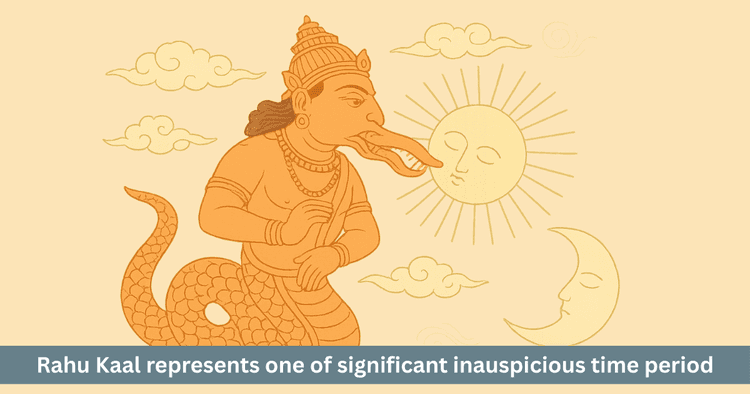
Table of Contents
Rahu Kaal represents one of the most significant inauspicious time periods in Vedic astrology, lasting approximately 90 minutes each day during which initiating new ventures, auspicious activities and important undertakings is traditionally avoided. This daily time segment is intrinsically connected to Rahu, the shadow planet known for its association with illusion, confusion, chaos and material desires.
Understanding Rahu: The Shadow Planet
Rahu is not a physical celestial body but rather the ascending or northern lunar node a mathematical point in space where the Moon's orbit intersects the ecliptic path of the Sun. In Vedic astrology, Rahu is classified as a Chhaya Graha (shadow planet) and together with Ketu (the descending/southern lunar node), forms the Rahu-Ketu axis. Rahu is depicted as the head of a demonic serpent that possesses the power to cause solar and lunar eclipses by symbolically swallowing the Sun or Moon.
Mythological Origins of Rahu
The origin of Rahu is rooted in the legendary episode of Samudra Manthan (churning of the ocean of milk) described in Hindu Puranas. During this cosmic event, the Devas (gods) and Asuras (demons) collaborated to churn the ocean to extract Amrita, the divine nectar of immortality. When the pot of Amrita emerged, Lord Vishnu assumed the enchanting form of Mohini to distribute the nectar exclusively to the gods.
An Asura named Svarbhanu cunningly disguised himself as a Deva and sat among the gods during the distribution. As Svarbhanu received and consumed the nectar, the Sun god Surya and Moon god Chandra recognized the deception and alerted Mohini. Lord Vishnu immediately reverted to his divine form and severed Svarbhanu's head with his Sudarshana Chakra. however since Svarbhanu had already swallowed a few drops of the nectar, he had become immortal. His severed head became Rahu, while his torso became Ketu, both transformed into shadow planets.
This mythological episode explains why Rahu is eternally hostile toward the Sun and Moon, periodically causing eclipses as an act of cosmic vengeance for exposing his deception.
Calculation of Rahu Kaal
Rahu Kaal calculation follows a precise astronomical methodology based on local sunrise and sunset timings. The total duration between sunrise and sunset at any given location is divided into eight equal segments, each lasting approximately 90 minutes, though the exact duration varies daily as sunrise and sunset times change throughout the year.
The first period immediately after sunrise is universally considered auspicious and always free from Rahu's malefic influence. The remaining seven periods are ruled by different planets, with Rahu governing one specific segment that varies according to the weekday.
Weekly Schedule of Rahu Kaal
- Monday: 2nd period (approximately 7:30 AM to 9:00 AM)
- Tuesday: 7th period (approximately 3:00 PM to 4:30 PM)
- Wednesday: 5th period (approximately 12:00 PM to 1:30 PM)
- Thursday: 6th period (approximately 1:30 PM to 3:00 PM)
- Friday: 4th period (approximately 10:30 AM to 12:00 PM)
- Saturday: 3rd period (approximately 9:00 AM to 10:30 AM)
- Sunday: 8th period (approximately 4:30 PM to 6:00 PM)
These timings are approximate and vary significantly based on geographical location and seasonal changes in daylight duration. Rahu Kaal timings and duration are never identical for any two locations due to differences in local sunrise and sunset times, nor are they the same from day to day even for a single location.
Activities to Avoid During Rahu Kaal
Traditional Vedic astrology prescribes avoiding numerous activities during Rahu Kaal, particularly those involving new beginnings or auspicious undertakings. Starting any significant venture during this period is believed to invite obstacles, delays, confusion and unfavorable outcomes due to Rahu's association with illusion and chaos.
Major Activities Traditionally Avoided
- Marriage ceremonies and matrimonial arrangements
- Business transactions, negotiations and launching new enterprises
- Property purchases and vehicle acquisitions
- Religious ceremonies, poojas, yajnas and spiritual rituals intended for auspicious purposes
- Educational admissions and beginning new courses of study
- Elective medical treatments and surgeries (unless emergencies)
- Job interviews and important public appearances
- Initiating court cases or legal matters
- Long-distance travel and journeys
The underlying belief is that anything initiated during Rahu Kaal becomes surrounded by confusion, leading to poor decision-making or unexpected complications.
Exceptions to Rahu Kaal Restrictions
Despite its inauspicious nature, certain activities are exempt from Rahu Kaal prohibitions. Routine activities such as daily chores, regular household duties and ongoing work are not affected by Rahu Kaal's influence. Tasks already in progress before Rahu Kaal begins can be continued without concern.
Emergency situations override Rahu Kaal considerations entirely, as urgent matters requiring immediate attention cannot wait for auspicious timing. In life-threatening medical emergencies or unavoidable circumstances, Rahu Kaal restrictions are disregarded.
Paradoxically, spiritual practices specifically aimed at counteracting Rahu's influence can be initiated during Rahu Kaal. Chanting Rahu mantras, performing Rahu Graha Shanti poojas, conducting havans to appease Rahu and meditation practices designed to overcome the negative effects of this period are considered appropriate and even beneficial during Rahu Kaal.
Activities aligned with Rahu's intrinsic nature can yield favorable results during this time. Research work, investigations, technology-related tasks, problem-solving activities requiring deep analysis and confronting challenging issues are suited to Rahu Kaal's energy. This period provides a conducive environment for introspection, exploring hidden aspects of reality and working through obstacles with persistence.
Related Inauspicious Periods
Rahu Kaal is part of a triad of inauspicious time periods identified in Vedic astrology, alongside Yamaghanta and Gulika Kala.
Yamaghanta
Yamaghanta is the period influenced by Yama, the deity of death and justice. Like Rahu Kaal, Yamaghanta is calculated by dividing the daytime into eight equal segments, with Yama ruling a different segment each weekday. This period is considered particularly inauspicious for starting new ventures, though traditionally it is the time when funeral ceremonies and death-related rituals are performed. Yamaghanta's energy is best utilized for completion, closure, finalizing ongoing tasks and reflective assessment rather than new initiatives.
Gulika Kala
Gulika Kala represents the period influenced by Gulika or Mandi, a malefic sub-planet associated with Saturn. This time period should be avoided for auspicious work, new investments, business-related activities and travel. however like Rahu Kaal, Gulika Kala can be utilized for confronting challenges, making difficult decisions and working through obstacles with focused determination.
Remedies for Rahu's Malefic Effects
Vedic astrology prescribes numerous remedies to mitigate Rahu's negative influence, whether during Rahu Kaal or when Rahu is afflicted in one's birth chart.
Mantra Sadhana
Mantra Sadhana forms the most powerful spiritual remedy. The Rahu Beeja Mantra "Om Bhram Bhreem Bhraum Sah Rahave Namah" should be chanted 108 times daily, preferably during Rahu Kaal or in the evening after sunset, while facing west. The practice should be performed using a Rudraksha or black Hakik (agate) mala.
The Tantric Gayatri for Rahu "Om Kalakaya Vidmahe Sarparajaya Dhimahi Tanno Rahuh Prachodayat" is used during Rahu Mahadasha or eclipses. This mantra originates from Rahu Tantra and was first used by Sage Durvasa, later adopted by Natha Yogis and Kaula practitioners.
Tantric Vidhi
Tantric Vidhi for Rahu involves elaborate rituals ideally performed during Rahu Kaal on Saturday or on Amavasya night. The practice includes using a black woolen asana facing southwest, lighting eight lamps with mustard oil in a circular arrangement, preparing a Rahu Yantra on black paper using ash or sindoor and offering black urad dal, blue flowers and iron pieces. The mantras should be chanted 108 or 1008 times for 11 consecutive days, followed by Rahu Havan using sesame, barley and ghee as offerings.
Integration with Panchanga System
Rahu Kaal constitutes a critical component of the Hindu Panchanga (Vedic calendar), which identifies optimal and inauspicious timings for various life activities. The Panchanga coordinates five essential elements: Tithi (lunar day), Vara (weekday), Nakshatra (lunar mansion), Yoga (luni-solar combination) and Karana (half-tithi), with Rahu Kaal representing an additional temporal consideration for Muhurta selection.
In traditional Vedic practice, consulting the Panchanga to identify and avoid Rahu Kaal before undertaking any significant activity ensures alignment with cosmic rhythms and maximizes the probability of favorable outcomes. This practice remains prevalent even in contemporary urban settings, where individuals consult Rahu Kaal timings before buying vehicles, starting new jobs, shifting residences or initiating business ventures.
Modern Relevance and Psychological Perspective
Despite the advancement of modern science, Rahu Kaal maintains significant cultural and traditional importance, particularly among spiritually-oriented Hindus who follow Vedic astrology, Vastu Shastra and Ayurveda. The practice of timing events according to Rahu Kaal continues to influence decision-making patterns across both rural and urban India.
Contemporary psychological research acknowledges that traditional cultural beliefs can profoundly influence human behavior and mental states. If an individual strongly believes that Rahu Kaal is inauspicious, initiating a task during this period may adversely affect their confidence level, potentially leading to self-sabotage and inadvertently causing the anticipated failure. This psychological dimension suggests that Rahu Kaal's influence operates not merely through supernatural forces but also through the power of belief and expectation shaping human performance and outcomes.
The Illusive Nature of Time
The designation of Rahu Kaal as "illusive time" reflects Rahu's fundamental association with Maya (illusion) in Vedic philosophy. Rahu governs areas related to worldly attachment, material desires, ambition, fame and power all aspects of existence considered illusory from the perspective of ultimate spiritual reality. During Rahu Kaal, this illusory quality intensifies, creating an atmosphere where perception may be distorted, judgment clouded and reality obscured.
This concept positions Rahu Kaal not merely as an unfortunate timing but as a daily reminder of the transient, deceptive nature of material existence and the importance of spiritual discernment when navigating worldly affairs. By consciously avoiding major decisions during Rahu Kaal, practitioners cultivate awareness of temporal influences on consciousness and develop sensitivity to cosmic rhythms governing human experience.
Frequently Asked Questions
What is Rahu Kaal?
Rahu Kaal is an approximately 90-minute daily time period when the shadow planet Rahu's influence is dominant, considered inauspicious for starting new or auspicious activities.
How is Rahu Kaal time determined?
The time between sunrise and sunset is divided into eight equal parts and one specific segment is designated as Rahu Kaal depending on the weekday.
What should not be done during Rahu Kaal?
New ventures, business transactions, property purchases, marriages, travel and important decisions should not be initiated during Rahu Kaal.
Can worship be done during Rahu Kaal?
Yes, special mantras, Rahu Shanti poojas and meditation specifically to mitigate Rahu's effects can be performed during Rahu Kaal.
Is Rahu Kaal the same time everywhere?
No, Rahu Kaal timing varies based on local sunrise and sunset times and is different for each location.
Get your accurate Kundali
Generate KundaliDid you like it?
Author

Pt. Nilesh Sharma (63)
Experience: 20
Consults About: Family Planning, Career
Clients In: Punjab, Haryana, Delhi
Share this article with friends and family
WELCOME TO
ZODIAQ
Right Decisions at the right time with ZODIAQ
