Role of Puranas in Regional Panchangs
By Aparna Patni
Integration of Puranic Narratives with Astronomical Science
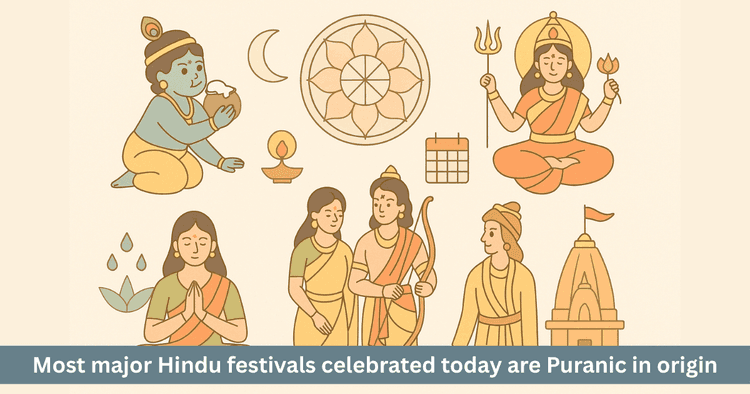
Table of Contents
This article is based on moon sign. To find your moon sign, check the position of the Moon at the time of your birth. The moon sign is the zodiac sign in which the Moon was positioned at birth.
The Puranas play a foundational role in regional Panchangs by providing the mythological and cultural context that transforms a purely astronomical calendar into a guide for religious and daily life. While the Panchang's mathematical framework comes from astronomical texts (Siddhantas), its soul the stories, festivals and rituals is deeply rooted in the Puranas.
The Narrative Soul of the Panchang
The Puranas are vast collections of stories, genealogies and traditions that explain the origins of the universe, the lives of deities and the significance of holy places. They serve as a bridge between the abstract philosophical concepts of the Vedas and the everyday practices of devotion.
The Puranas influence regional Panchangs in several key ways:
Defining Festivals
Most major Hindu festivals celebrated today are Puranic in origin. The stories behind festivals like Diwali (Rama's return to Ayodhya), Janmashtami (Krishna's birth) and Navratri (Durga's victory over Mahishasura) are all detailed in the Puranas. The Panchang provides the specific lunar day for these events but the Puranas explain why they are celebrated.
Assigning Sanctity to Time
The Puranas imbue certain periods with special significance. For example, the month of Kartik is considered particularly holy in Vaishnava traditions due to its association with Krishna's divine plays. Similarly, the extra lunar month is called Purushottam Maas (devoted to Vishnu), a concept popularized by the Puranas to give spiritual purpose to a calendrical adjustment.
Integrating Local Deities and Traditions
The Puranas were instrumental in a process of cultural synthesis, weaving local and tribal deities into the broader Hindu pantheon. Regional Panchangs reflect this by incorporating local temple festivals and the worship of village deities into their calendars, often linking them to Puranic narratives.
Prescribing Rituals and Vratas
The Puranas are a rich source of information on religious observances (vratas), specifying the rituals, mantras and charitable acts to be performed on certain days. Regional Panchangs translate this information into a practical daily guide, telling people when and how to perform these observances.
An Interplay of Science and Story
The relationship between the Panchang and the Puranas is a dynamic interplay between science and narrative. The Panchang provides the "when," using precise astronomical calculations to pinpoint the right moment for a ritual or festival. The Puranas provide the "why," giving that moment meaning and connecting it to a larger cosmic and cultural story.
For example, the Panchang can tell you the exact time of the full moon in the month of Shravan but it is the Puranas that tell you this is a day to honor Shiva. This synthesis of the astronomical and the mythological is what makes the Panchang a powerful and enduring tool for organizing religious and social life in India.
Regional Expression
This interplay finds unique expression in different parts of India. A Bengali Panjika will be filled with references to Shakti and Durga, drawing heavily on the Devi Mahatmya from the Markandeya Purana. A South Indian Panchangam might emphasize stories from the Skanda Purana or those related to Vishnu's incarnations.
Ultimately, the Puranas transform the Panchang from a mere almanac into a living document that guides the spiritual life of a community, connecting them to their history, their land and their gods.
The Eighteen Major Puranas and Their Roles
Definition and Structure
The eighteen Mahapuranas (major Puranas) are vast Sanskrit texts traditionally attributed to the sage Vyasa, though modern scholars recognize them as composite works developed over centuries. Each Purana typically contains narratives organized into multiple sections, addressing creation mythology, genealogies of deities and kings, cosmological cycles and practical knowledge including astronomy and calendrical science.
Puranic Contributions to Calendrical Science
One: Surya Purana The Solar Cycles Authority
The Surya Purana (also known as Aditya Purana) stands as the primary Purana dedicated to solar knowledge and timekeeping.
Astronomical Content:
- Detailed descriptions of the Sun's apparent movement through the twelve zodiac signs
- Comprehensive explanations of Mesha Sankranti (Sun's entry into Aries), the foundational solar marker for calendrical systems
- Descriptions of Uttarayan (northward path) and Dakshinayan (southward path) the Sun's apparent six-month cycles determining season transitions
- Detailed calculations of solar months based on the Sun's transit through zodiac signs
Influence on Panchang: The Surya Purana's emphasis on solar movements directly shaped the calculation methodologies of solar calendars used in various regions. Its detailed descriptions of how the Sun's position determines seasonal transitions provides the theoretical foundation for solar month determination in Panchangs across India.
Two: Vishnu Purana The Cosmic Cycles Framework
The Vishnu Purana, believed to date back to the 1st century BCE, ranks among the oldest Puranas and provides crucial cosmological frameworks essential for understanding calendar cycles.
Key Contributions to Calendrical Systems:
- Detailed descriptions of Manvantara (cycles of creation and destruction spanning millions of years)
- Explanation of Maha Yugas (grand cycles of four ages: Satya, Treta, Dvapara, Kali) as the foundational temporal structure
- The four Varnas (classes) and four Ashramas (life stages), which traditionally determined auspicious timing for life events
- Documentation of solar and lunar dynasties of ancient Indian kings, embedded within these cosmic cycles
Panchang Integration: The Vishnu Purana's cosmological framework provides the philosophical underpinning for the 60-year Samvatsara cycle and the broader concept of cyclical time that governs all Hindu calendars. Its descriptions of cosmic cycles validate the need for Adhik Masa (intercalary months) and other calendar adjustments to maintain synchronization with celestial reality.
Three: Matsya Purana The Calendrical Authority
The Matsya Purana, containing approximately 14,000 verses across 290 chapters, explicitly addresses astronomical and calendrical knowledge.
Astronomical Content:
- Detailed descriptions of the five limbs of Panchang (Tithi, Nakshatra, Yoga, Karana, Vara)
- Calculations of lunar months based on the Moon's phases and its relation to the Sun
- Detailed constellation descriptions including their astrological significance and proper pronunciation
- Instructions for determining auspicious timing (muhurtas) based on specific tithi-constellation combinations
- Tables of planetary positions and their movements through the zodiac
Direct Panchang Influence: The Matsya Purana's explicit technical details about Panchang components make it a primary reference text for Panchang makers and astrologers preparing annual almanacs. Many regional Panchang traditions cite Matsya Purana chapters when justifying their specific calculation methodologies.
Four: Markandeya Purana Time Cycles and Calendars
The Markandeya Purana provides crucial information about calendrical computations based on Yuga cycles.
Astronomical Contributions:
- Detailed explanations of how to count time in Yugas, Kalpas and Brahma's day/night cycles
- Descriptions of the periodicity of eclipses and how they relate to Rahu and Ketu (the shadow planets)
- Prescriptions for determining religious festival dates based on specific cosmic configurations
- Integration of mythological narratives with astronomical events, showing how eclipses and planetary transits were understood as manifestations of divine will
Calendrical Role: The Markandeya Purana's systematic approach to computing time cycles has influenced how modern Panchangs calculate the Kali Yuga date and determine the dating system for calendar years.
Five: Vayu Purana Cosmological and Temporal Cycles
The Vayu Purana, containing 24,000 verses in two parts, provides extensive cosmological information relevant to calendrical systems.
Astronomical Content:
- Descriptions of the four Yugas and their durations, providing the temporal framework for all Hindu calendars
- Explanations of how time cycles influence earthly events and karma
- Details about planetary movements and their significance in determining auspicious periods
- Lists of Vedavyasas (sages who compiled the Vedas in different cosmic cycles), each associated with specific time periods
Panchang Influence: The Vayu Purana's systematic approach to cosmic cycles validates the cyclical nature of the Hindu calendar and provides philosophical justification for periodic calendar adjustments and the need for intercalary months to maintain synchronization with cosmic reality.
Six: Brahma Purana Creation and Calendrical Knowledge
The Brahma Purana provides foundational information about creation and the emergence of calendar systems as part of divine cosmic order.
Key Contributions:
- Descriptions of how Brahma (the Creator) established the original divisions of time
- Explanations of the six seasons (Ritus) as manifestations of divine order
- Detailed descriptions of temple rituals and the auspicious timings (tied to calendar dates) for performing them
- Integration of moral and ethical teachings with astronomical knowledge, showing how proper timekeeping supports righteousness
Seven: Padma Purana Brahma's Temporal Cycles
The Padma Purana, specifically its Prabhasa section, provides unique information about cosmological timekeeping.
Specific Contribution:
Detailed explanation of Brahma's day and night cycles, where:
- 30 days of Brahma = 1 month of Brahma (from full moon to new moon)
- 12 months of Brahma = 1 year of Brahma
- 50 years of Brahma = 1 Parardha (half the life of Brahma)
This framework provides the macrocosmic context for understanding why Hindu calendars operate on cyclical principles with periodic adjustments.
Eight: Garuda Purana Medical and Astronomical Integration
The Garuda Purana, containing 19,000 verses and presented as a dialogue between Lord Vishnu and his vehicle Garuda, integrates astronomy with medicine and gemstone knowledge.
Astronomical Content:
- Descriptions of how planetary positions influence health and medical conditions
- Correlations between lunar phases and healing practices
- Integration of astrological timing with medical treatments and remedies
- Connections between constellation influences and physical constitution
Panchang Application: The Garuda Purana's integration of astronomy with practical health knowledge has influenced how modern Panchangs incorporate health recommendations based on current planetary positions and lunar phases.
Nine: Linga Purana Astronomical Tables and Periods
The Linga Purana, containing 11,000 verses across 163 chapters, addresses astronomical periods and cosmic eras.
Contribution to Calendar Systems:
- Descriptions of Kalpa tables showing the duration and sequence of various cosmic periods
- Information about King Ambarisha's dynasty, providing historical context for dating purposes
- Detailed descriptions of how astronomical knowledge evolved through different cosmic ages
Puranic Influence on Specific Panchang Elements
Tithi (Lunar Days) Philosophy
Puranas provide the philosophical foundation for understanding why the Panchang divides the lunar month into 30 tithis of variable duration (19-26 hours). This seemingly complex system emerges from the Puranic description of the Moon's relative position to the Sun as the fundamental measure of lunar time rather than fixed astronomical periods.
Nakshatra Significance
The 27 Nakshatras (lunar constellations) described in detail in various Puranas especially the Matsya and Garuda Puranas provide not only astronomical data but also mythological narratives and spiritual significance for each constellation, which practitioners consult when determining auspicious dates for important life events.
Yuga Cycles and Calendar Dating
The Puranic descriptions of the four Yugas provide the philosophical and mythological justification for the cyclical understanding of time in Hindu calendars. The current position in Kali Yuga (the final age, traditionally dated to 3102 BCE) determines how different calendar systems date their years.
Integration of Puranic Mythology with Astronomical Reality
Eclipse Mythology and Rahu-Ketu
Rather than mere mythology, Puranic descriptions of Rahu (the ascending lunar node) and Ketu (the descending lunar node) represent sophisticated astronomical understanding encoded in narrative form. The Puranic story of Rahu and Ketu demons who swallow the Sun or Moon causing eclipses provides mnemonic devices for remembering the precise mathematical relationships that determine when eclipses occur.
Seasonal Transitions as Divine Events
The Surya Purana's descriptions of Uttarayan and Dakshinayan present seasonal transitions not merely as mechanical solar movements but as manifestations of divine will. This philosophical framework encourages practitioners to align human activities with cosmic rhythms, a foundational principle of Panchang-guided living.
Puranic References to Specific Calendrical Concepts
The 19-Year Cycle
While not explicitly named the "Metonic cycle" in Puranic texts, the 19-year period emerges from Puranic descriptions of how Jupiter (19-year orbital period) and Saturn (30-year orbital period) interact, with their combined cycle yielding 60 years the basis of the 60-year Samvatsara cycle found in all Hindu calendars.
Adhik Masa (Intercalary Month) Justification
Puranic descriptions of Brahma constantly recreating the universe and cosmic cycles provide philosophical justification for calendar adjustments. Just as Brahma periodically recalibrates cosmic order, the insertion of extra months maintains calendrical order.
Puranic Calendrical Controversies
Conflicting Yuga Dates
Different Puranas sometimes provide conflicting information about the duration of Yugas and their relationship to current time. The Vishnu Purana dates Kali Yuga's beginning to 3102 BCE, while some scholars cite slightly different Puranic references suggesting different dates. These variations influenced how different regional Panchangs arrived at their respective year-dating systems.
Textual Interpolations and Modifications
Modern scholarship recognizes that Puranic texts underwent centuries of interpolation and modification by successive scholars and reciters. This creates situations where later additions to Puranic texts sometimes include astronomical data that contradicts earlier sections, requiring Panchang scholars to distinguish between original astronomical content and later interpolations.
Modern Panchang Applications of Puranic Knowledge
Festival Date Determination
When Panchang makers determine dates for Hindu festivals, they reference Puranic prescriptions that link specific festivals to astronomical configurations:
- Diwali tied to Amavasya (new moon) in specific months
- Navratri tied to Chaitra or Ashwin Shukla Pratipada (specific lunar dates)
- Makara Sankranti tied to the Sun's transition into Capricorn
All of these prescriptions originate from Puranic descriptions of how celestial events correlate with divine manifestations and mythological narratives.
Muhurt (Auspicious Timing) Calculations
The Puranic principle that specific combinations of Tithis, Nakshatras and Yogas carry particular spiritual and practical significance remains central to how Panchangs recommend auspicious moments for weddings, ceremonies and business inaugurations.
Frequently Asked Questions:
How do the Puranas influence regional Panchangs?
They supply festival narratives, vows and local deity traditions that Panchangs map onto precise astronomical dates.
What is the religious basis of Adhik Maas (Purushottam Maas)?
Puranas dedicate it to Vishnu and extol enhanced merit for japa, vrats, charity and scriptural recitation.
What is the traditional start date of Kali Yuga?
Tradition places it at 3102 BCE, widely cited across textual and calendric references. What underlies the 60-year Samvatsara cycle?
The relative cycles of Jupiter (~12 years) and Saturn (~30 years) align to an ~60-year least-common multiple.
How are dates for festivals like Navratri and Diwali determined?
Panchangs compute the timing via tithi/yoga and planetary criteria, while Puranas supply the theological rationale and rites.
Get your accurate Kundali
Generate KundaliDid you like it?
Author

Aparna Patni (63)
Experience: 20
Consults About: Family Planning, Career
Clients In: Punjab, Haryana, Delhi
Share this article with friends and family
WELCOME TO
ZODIAQ
Right Decisions at the right time with ZODIAQ
