Telugu Panchang and the Shalivahana Shaka System
By Pt. Abhishek Sharma
Vedic Timekeeping Tradition of the Deccan Region and the Significance of Ugadi
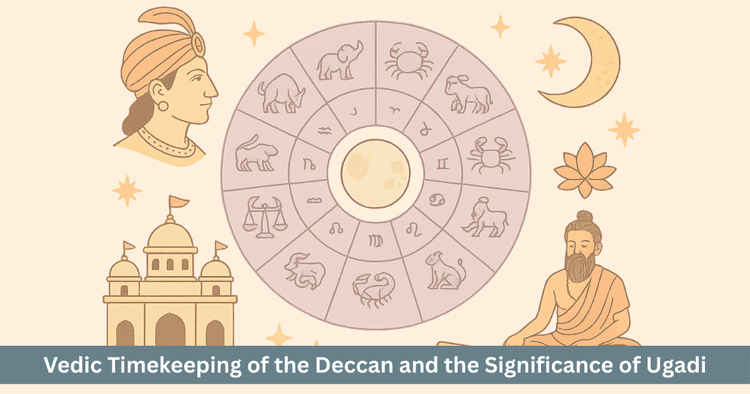
Table of Contents
This article is based on moon sign. To find your moon sign, check the position of the Moon at the time of your birth. The moon sign is the zodiac sign in which the Moon was positioned at birth.
The Telugu Panchang represents one of the most vibrant and meticulously maintained calendar traditions in India, embodying centuries of Vedic astronomical knowledge and cultural practices rooted in the Deccan region. Followed by the Telugu-speaking populations of Andhra Pradesh, Telangana and the enclave of Yanam, this lunisolar calendar is based on the Shalivahana Shaka system and serves as the temporal framework for religious, agricultural and social life throughout the region. The Shalivahana Shaka system provides a unique synthesis of infinite Vedic knowledge, superior astronomical precision and regional cultural significance that remains relevant in modern times.
Historical Foundation Shalivahana Shaka Era
Origin in 78 CE
The Telugu Panchang follows the Shalivahana Shaka calendar, also called Saka Samvat, which was established in 78 CE. The era commemorates King Gautamiputra Satakarni, also known as Shalivahana, the 23rd ruler of the Satavahana dynasty who reigned from approximately 78-102 CE.
According to historical accounts, King Shalivahana achieved significant military victories over the Saka (Scythian) invaders and established a new era to commemorate his triumph. The Satavahana dynasty, based in the Deccan region with its capital at Pratishthana (modern Paithan in Maharashtra), was one of the most powerful empires of ancient India, controlling vast territories across central and southern India.
India's National Calendar
The significance of the Shalivahana Shaka system extends beyond regional usage. The Government of India officially adopted it as the National Calendar of India on March 22, 1957, following recommendations by the Calendar Reform Committee. This recognition acknowledges the calendar's scientific structure, historical importance and widespread usage across the Deccan region.
Era Calculation
The Shalivahana Shaka era is 78 years behind the Gregorian calendar. To convert Gregorian years to Shaka Samvat, subtract 78; conversely, add 78 to Shaka years to obtain Gregorian equivalents. The current Gregorian year 2025 corresponds to Shaka Samvat 1947-1948.
Lunisolar Calendar Structure
Hybrid Framework
The Telugu Panchang is a lunisolar calendar that integrates both lunar phases for determining festival dates and solar movements for tracking seasonal changes. This dual structure ensures synchronization with both agricultural cycles crucial to the Deccan region and religious observances tied to lunar phases.
The calendar recognizes both lunar months (Chandramana) based on the Moon's phases and solar months (Sauramana) based on the Sun's transit through zodiac signs. Most festivals and religious observances follow the lunar calendar, while agricultural activities and seasonal markers align with the solar year.
Amanta Lunar System
The Telugu calendar follows the Amanta (Amavasyanta) tradition, where the lunar month ends on Amavasya (new moon day) and begins the day after. This system is characteristic of peninsular coastal states including Andhra Pradesh, Telangana, Karnataka, Maharashtra and Goa.
Paksha Structure
Each lunar month is divided into two Pakshas (fortnights):
Shukla Paksha (Bright Fortnight): Consisting of 15 tithis from Amavasya (new moon) to Purnima (full moon). This waxing moon phase is considered highly auspicious for beginning new ventures, conducting weddings and performing positive rituals.
Krishna Paksha (Dark Fortnight): Consisting of 15 tithis from Purnima to Amavasya. This waning moon phase is considered less favorable for initiating new activities but appropriate for introspection, spiritual practices and certain rituals.
In the Amanta system, Shukla Paksha precedes Krishna Paksha in every lunar month, structurally distinguishing it from the Purnimanta system of North India where Krishna Paksha comes first.
Twelve Lunar Months
The Telugu calendar year begins with Chaitra and concludes with Phalguna, with month names derived from Sanskrit reflecting their Vedic origins:
| No. | Telugu Month | Devanagari | Romanization | Gregorian Period | Season |
|---|---|---|---|---|---|
| 1 | Chaitra | चैत्र | Chaitra | March-April | Vasanta |
| 2 | Vaisakha | वैशाख | Vaisakha | April-May | Vasanta |
| 3 | Jyeshtha | ज्येष्ठ | Jyeshtha | May-June | Grishma |
| 4 | Ashadha | आषाढ | Ashadha | June-July | Grishma |
| 5 | Sravana | श्रावण | Sravana | July-August | Varsha |
| 6 | Bhadrapada | भाद्रपद | Bhadrapada | August-September | Varsha |
| 7 | Asvayuja | आश्विन | Asvayuja | September-October | Sharad |
| 8 | Kartika | कार्तिक | Kartika | October-November | Sharad |
| 9 | Margasira | मार्गशीर्ष | Margasira | November-December | Hemanta |
| 10 | Pushya | पौष | Pushya | December-January | Hemanta |
| 11 | Magha | माघ | Magha | January-February | Shishira |
| 12 | Phalguna | फाल्गुन | Phalguna | February-March | Shishira |
Each month holds specific religious significance, with particular deities and festivals associated with it. For example, Sravana (the 5th month) is considered especially sacred and is devoted to Lord Shiva worship, while Kartika is dedicated to Lord Vishnu and Goddess Lakshmi.
The 60-Year Samvatsara Cycle
Cyclic Year Names
One of the most distinctive features of the Telugu calendar is the 60-year cycle (Shashtipoorthi), where each year is assigned a specific name based on astronomical and astrological influences. This cycle is common to all traditional Hindu calendars and is based on the relative positions of Jupiter (12-year orbital period) and Saturn (30-year orbital period) in the sky. The least common multiple of these two periods yields the 60-year cycle.
Mythological Origin
According to Telugu mythology, the 60 year names are those of Maharshi Narada's children. The legend states that to teach a lesson to the celestial sage Narada about vanity and attachment, Lord Vishnu presented him with an illusion of a lady who gave birth to 60 children all destined to die in a war. After Narada learned his lesson through this painful experience, Vishnu offered a boon that his children's names would become the names of the cyclic years and their specific characteristics would carry over to those years.
The 60 Year Names
Each year's name reflects predicted characteristics agricultural abundance, prosperity, challenges, conflicts or natural disasters for that year. The cycle begins with Prabhava and concludes with Akshaya, then repeats.
Notable Years:
- 2024: Krodhi "anger-inducing"
- 2025: Vishvaavasu "wealth will be abundant"
- 2026: Parabhava "defeats/failures"
The current year name and its predicted characteristics are announced during the Panchanga Shravanam ceremony on Ugadi, the Telugu New Year.
Ugadi The Telugu New Year
Date and Significance
Ugadi, also spelled Yugadi, is the Telugu New Year celebrated on Chaitra Shukla Pratipada the first day of the bright fortnight (Shukla Paksha) in the month of Chaitra. This typically falls in late March or early April according to the Gregorian calendar. In 2025, Ugadi falls on March 30.
The name "Ugadi" derives from Sanskrit "Yuga-adi", meaning "the beginning of a new era" or "epoch". The festival marks multiple significant transitions: the beginning of the new lunar year, the arrival of spring season, the end of winter and the onset of new agricultural cycles.
Cosmic Creation
According to Hindu mythology, Lord Brahma (the Creator in the Trimurti) created the universe on this auspicious day. Thus, Ugadi represents not merely a calendrical New Year but a cosmic renewal the annual re-creation of the universe and regeneration of life.
Historical Royal Proclamations
Historically, Ugadi was the day when kings announced new plans, policies, budgets and declarations that would influence the prosperity and welfare of their subjects in the coming year. This tradition emphasized the administrative and governance significance of the New Year beyond its religious aspects.
Ugadi Rituals and Celebrations
House Cleaning and Decoration
Preparations begin almost a week before Ugadi with thorough house cleaning symbolizing the removal of negativity and making space for positive energy. Doorways are decorated with toranams (garlands) made from fresh mango leaves and vibrant flowers, signifying good crops and general well-being. Mango leaves are believed to symbolize new beginnings, prosperity and happiness.
The floor outside the front door and courtyards are sprinkled with fresh cow dung water to purify the environment, followed by drawing colorful rangolis (decorative floor patterns) to embellish the entrance.
Special Oil Bath (Abhyanga Snanam)
On Ugadi morning, all family members wake up at dawn and take a traditional oil bath, typically with sesame oil mixed with herbal paste. This ritualistic bath is believed to cleanse not only the body but also purify the mind and spirit, preparing individuals for a fresh start.
New Clothes
After the purification bath, family members dress in new traditional clothes sarees for women, dhotis or traditional attire for men. Wearing new clothes symbolizes the fresh start of the New Year and renewal of life.
Temple Visits and Prayers
Families visit nearby temples to offer prayers and seek divine blessings for prosperity, health and happiness in the coming year. Special pujas are conducted at homes with offerings to various deities, particularly Lord Brahma, Lord Ganesha and family deities.
Ugadi Pachadi The Six-Taste Preparation
Sacred Culinary Symbol
The most significant ritual of Ugadi is the preparation and consumption of Ugadi Pachadi, a unique dish that embodies profound philosophical symbolism. This special chutney-like preparation blends six distinct flavors, each representing a different emotion or life experience.
Six Ingredients and Their Symbolism
| Ingredient | Taste | Life Experience Symbolized |
|---|---|---|
| Neem flowers | Bitter | Sadness, difficulties, challenges |
| Jaggery | Sweet | Joy, happiness, success |
| Tamarind | Sour | Surprise, unexpected events |
| Raw mango | Tangy | Disgust, rejection |
| Salt | Salty | Fear, anxiety |
| Green chili | Spicy | Anger, passion |
Philosophical Significance
Ugadi Pachadi represents the philosophy that life is a mixture of different experiences sweet, salty, bitter, tangy, sour and spicy joy, sorrow, anger, fear, disgust and surprise. By consuming all six tastes together on the first day of the year, devotees symbolically accept and embrace the inevitable complexities of life with equanimity.
The tradition teaches that just as these contrasting flavors blend harmoniously in Ugadi Pachadi, individuals should accept life's ups and downs with grace, maintaining balance and composure through all circumstances. This profound message of acceptance and resilience forms the spiritual core of the Ugadi celebration.
Prasad Distribution
Ugadi Pachadi is consumed by all family members immediately after morning prayers and is also distributed to neighbors and relatives as prasad (blessed food).
Panchanga Shravanam The Almanac Reading
Astrological Predictions
One of the most important and distinctive rituals of Ugadi is Panchanga Shravanam the ceremonial reading of the new Panchang (almanac) for the coming year. This ritual typically takes place at temples where priests (purohits) read out the Panchang publicly.
Content of Panchanga Reading
The Panchanga Shravanam provides comprehensive astrological information for the year ahead, including:
- The Samvatsara name (from the 60-year cycle) and its predicted characteristics
- Auspicious and inauspicious periods (muhurtas) throughout the year
- Planetary positions and their influences on different zodiac signs
- Important festivals and their exact dates
- Eclipses (solar and lunar) and their timings
- Agricultural predictions regarding rainfall, crops and harvest
- Economic forecasts for trade, business and prosperity
- Social and political predictions for the region
Community Participation
Families gather at temples or community centers to listen attentively to the Panchanga Shravanam, taking notes of important dates for weddings, housewarmings, thread ceremonies and other significant life events. This shared community experience strengthens social bonds and provides a collective framework for planning the year ahead.
The Panchanga reading helps individuals align their activities and actions according to astrological forecasts, scheduling important undertakings during favorable periods while avoiding inauspicious timings.
Traditional Festive Foods
Beyond Ugadi Pachadi, several traditional Telugu dishes are prepared to celebrate the festival:
- Bobbatlu (Puran Poli): Sweet flatbread stuffed with jaggery and lentils, symbolizing sweetness and prosperity
- Pulihora (Tamarind Rice): Tangy rice preparation made with tamarind, considered auspicious
- Vada: Crispy lentil fritters served as snacks
- Payasam: Sweet rice pudding prepared with milk, jaggery and cardamom
These traditional foods are shared generously with family, friends, neighbors and the needy, embodying the spirit of community and generosity that characterizes Ugadi.
Major Telugu Festivals Throughout the Year
The Telugu Panchang determines dates for numerous festivals celebrated throughout the year:
Vasanta (Spring) Chaitra-Vaisakha:
- Ugadi: Telugu New Year
- Sri Rama Navami: Lord Rama's birth anniversary
Grishma (Summer) Jyeshtha-Ashadha:
- Vaikunta Ekadashi: Dedicated to Lord Vishnu
Varsha (Monsoon) Sravana-Bhadrapada:
- Varalakshmi Vratam: Worshipping Goddess Lakshmi
- Vinayaka Chavithi (Ganesh Chaturthi): Lord Ganesha's birthday
- Krishna Janmashtami: Lord Krishna's birth
Sharad (Autumn) Asvayuja-Kartika:
- Navaratri/Dussehra: Nine nights of goddess worship
- Deepavali: Festival of lights
- Karthika Masam: Entire month dedicated to Lord Vishnu
Hemanta (Pre-winter) Margasira-Pushya:
- Bhogi: Bonfire festival
- Sankranti: Harvest festival
Shishira (Winter) Magha-Phalguna:
- Maha Shivaratri: Great night of Shiva
Six Seasons (Shadharitu)
The Telugu calendar follows the traditional Vedic division into six seasons, adapted to the Deccan region's climate:
- Vasanta (Spring): Chaitra-Vaisakha (March-May) Pleasant weather, blooming flowers
- Grishma (Summer): Jyeshtha-Ashadha (May-July) Intense heat, mango season
- Varsha (Monsoon): Sravana-Bhadrapada (July-September) Heavy rainfall, paddy cultivation
- Sharad (Autumn): Asvayuja-Kartika (September-November) Clear skies, festival season
- Hemanta (Pre-winter): Margasira-Pushya (November-January) Harvest time, moderate cool
- Shishira (Winter): Magha-Phalguna (January-March) Cool season, spring preparations
Agricultural Integration
The Telugu Panchang is deeply integrated with the agricultural cycles of Andhra Pradesh and Telangana:
Kharif Season: Sowing begins with monsoon rains in Ashadha-Sravana (June-August), with paddy, cotton and millets being principal crops. Harvest occurs in Asvayuja-Kartika (September-November), celebrated during festivals like Bathukamma and Dasara.
Rabi Season: Sowing occurs in Kartika-Margasira (October-December) after monsoon withdrawal, with crops like wheat, pulses and oilseeds. Harvest occurs in Chaitra-Vaisakha (March-May), celebrated during Ugadi and Sankranti.
The Five Limbs of the Telugu Panchangam
Like all Vedic almanacs, the Telugu Panchangam is structured around five core astronomical components called Pancha-anga, which are used to determine auspicious and inauspicious timings for all activities.
Tithi: The lunar day, with 15 tithis in each fortnight.
Vaaram: The day of the week.
Nakshatram: The 27 lunar mansions or constellations the Moon transits through.
Yogam: A period determined by the combined longitudes of the Sun and the Moon.
Karanam: A half-day segment within a tithi, used for detailed time analysis.
In addition to these, the Telugu Panchangam provides timings for periods to be avoided, such as Rahu Kalam, Gulika Kalam and Yamagandam, as well as auspicious windows like Amruta Ghatialu.
Contemporary Significance
The Telugu Panchang remains central to determining auspicious timings (muhurtas) for marriages, housewarmings, business inaugurations and educational initiations. Traditional astrologers (Jyotishis) prepare annual Panchangs providing comprehensive astronomical data and families consult these before scheduling major life events.
The Shalivahana Shaka calendar's adoption as India's National Calendar underscores its scientific precision and cultural significance, ensuring the Telugu Panchang tradition continues to thrive in the 21st century as a living bridge connecting contemporary society with its profound Vedic heritage.
Frequently Asked Questions
What is the Telugu Panchang and how is it based on the Shalivahana Shaka? The Telugu Panchang is a lunisolar calendar based on the Shalivahana Shaka era established in 78 CE. It follows the Amanta system and guides religious and cultural life in Telugu regions.
When is Ugadi celebrated and what is its significance? Ugadi is celebrated on Chaitra Shukla Pratipada, typically in March or April. It marks the beginning of the new lunar year, arrival of spring season and commencement of new agricultural cycles.
What is Panchanga Shravanam? Panchanga Shravanam is a ritual performed on Ugadi where priests publicly read the Panchang for the coming year, providing astrological predictions, important dates and muhurtas.
Why is Ugadi Pachadi prepared? Ugadi Pachadi is made from six flavors representing different life experiences. The tradition teaches that life is a mixture of varied experiences that should be embraced with balance and equanimity.
What is the significance of the 60-year Samvatsara cycle? This cycle is based on the relative positions of Jupiter and Saturn and assigns predicted characteristics to each year, providing guidance for planning and decision-making.
Get your accurate Kundali
Generate KundaliDid you like it?
Author

Pt. Abhishek Sharma (63)
Experience: 20
Consults About: Family Planning, Career
Clients In: Punjab, Haryana, Delhi
Share this article with friends and family
WELCOME TO
ZODIAQ
Right Decisions at the right time with ZODIAQ
