What is Sundarakanda and why to read it
By Pt. Nilesh Sharma
Detailed explanation of the meaning of Sundarakanda, its place in the Ramayana, its link with Hanuman, the method of Sundarakanda parayana and the main benefits
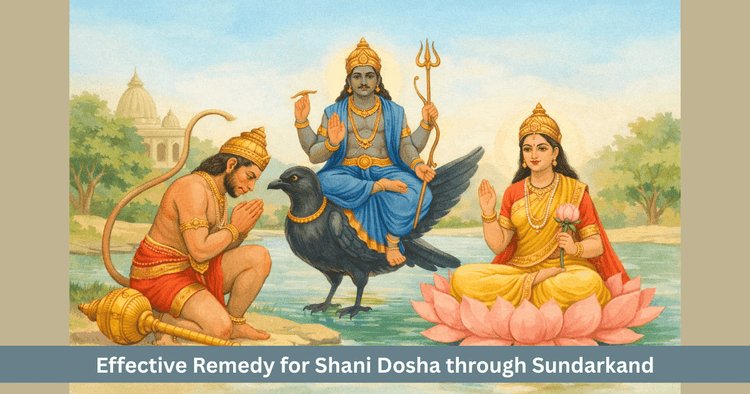
Table of Contents
Why Sundarakanda holds a special place
In the vast ocean of spiritual texts there is one section that feels like a direct hand of support on the shoulder of a troubled devotee. That section is Sundarakanda. For many people it is not just a chapter, it is a companion during difficult phases of life.
Sundarakanda is the fifth book of the Sanskrit Ramayana composed by Maharishi Valmiki. On the same foundation Goswami Tulsidas created the Ramcharitmanas in Awadhi and its fifth book also bears the name Sundarakanda. This part of the Ramayana Sundarakanda narrates the journey of Hanuman to Lanka, his search for Sita and his acts of courage, devotion and intelligence.
Many seekers ask what is Sundarakanda and why it is treated separately from the whole Ramayana. The answer lies not only in scripture but also in its living impact. When a person feels fear, confusion or pressure, this chapter can work like a shield for the mind and a reminder that strength and grace still surround the soul.
Why is this chapter called Sundarakanda
The name Sundarakanda carries more than simple beauty. It gathers several meanings and traditional explanations.
One view says that when Hanuman reached Lanka in search of Sita, he finally saw her in the Ashoka grove on the hill called Sundara. Since the central event of this chapter is that discovery and the assurance given to Sita, the book itself came to be known as Sundarakanda.
Another view points toward the childhood of Hanuman. It is said that his mother Anjani lovingly called him “Sundara”. The chapter that describes the most beautiful expressions of his courage, humility and devotion was therefore called Sundarakanda.
In both cases the name connects directly with Hanuman’s nature. This is why so many devotees use Hanuman Sundarakanda as a separate and regular path of worship and reflection.
Sundarakanda, Ramayana and the role of Hanuman
Sundarakanda enters the story at a very sensitive moment. Sita has been taken away. Rama and Lakshmana are searching. The entire camp carries worry and longing. At that point Hanuman alone jumps across the ocean, reaches Lanka, meets Sita, gives her hope and then returns with a clear message.
In this movement Hanuman expresses a rare blend of qualities. There is immense strength yet deep humility. There is sharp intelligence yet no pride. There is unwavering focus on the goal yet steady patience in every step.
When a devotee recites Sundarakanda slokas or verses, the voice is not only repeating words. The mind is also absorbing these qualities. Courage, loyalty, service, clarity and surrender to dharma slowly become more real, not only as ideas but as guiding forces in day to day life. That is why Sundarakanda Ramayana recitation is regarded as one of the most effective forms of Hanuman worship in the present age.
Sundarakanda and relief from Saturn related troubles
In many traditional accounts Saturn is shown as grateful to Hanuman. There is a story where Saturn tries to test Hanuman and ends up humbled and from that point he promises to go gentle on those who sincerely worship Hanuman.
Because of this, Sundarakanda is often recommended as a strong remedy for people who are under strain from Saturn. When a person is going through Sade Sati, Dhaiya or other difficult Saturn phases, steady recitation of Sundarakanda on Tuesdays and Saturdays is considered very helpful.
The link between sundarakanda and Saturn is not magic in isolation. When the mind turns towards the qualities of Hanuman, such as honesty, effort, discipline and selfless service, the karmic lessons that Saturn brings become easier to accept and integrate. The recitation then works along with improved conduct.
Sundarakanda slokas and structure of the text
Curious readers often ask about the number of slokas in Sundarakanda. The exact count differs slightly among editions of Valmiki Ramayana because of transmission and commentary traditions, yet it remains a substantial section with many hundreds of verses. Its structure carries Sarga by Sarga the detailed journey and deeds of Hanuman.
In the Ramcharitmanas of Tulsidas, Sundarakanda appears in the form of dohās, chaupāīs and chhands. That poetic style makes recitation easy for everyday devotees, even those who are not trained in Sanskrit. For many families this is the most commonly heard form of Ramayana Sundarakanda during group recitation.
Someone who wishes to take up regular recitation can choose one authentic text in a language they understand, then follow that same version with discipline. Repeating the same sundarakanda slokas gradually deepens understanding and connects the heart more firmly with the narrative.
How to perform Sundarakanda path step by step
The effect of Sundarakanda becomes clearer when method and emotion both are respected. Traditional guidance favours Tuesday and Saturday for special recitation, although sincere recitation on any day can be beneficial.
The following steps are a simple outline of Sundarakanda path.
- Wake up early, bathe and wear clean clothing
- Place images or idols of Lord Rama, Sita, Lakshmana and Hanuman on a clean altar or wooden seat
- Offer tilak, flowers, fruits and sweets such as laddus or jaggery based offerings
- Offer seven pipal leaves before Hanuman and light a ghee lamp
- First bow to Lord Rama, then begin the recitation of Sundarakanda with a calm mind
- After completing the text, sing Hanuman Aarti or Hanuman Chalisa as per your tradition and then distribute the prasad
Most important is inner respect. The rituals are channels. The real flow begins when the mind feels connected with the qualities and presence of Hanuman while reciting each section.
Spiritual and psychological benefits of Sundarakanda recitation
People often ask about the benefits of Sundarakanda with the hope of some visible change in their outer life. Yet its most lasting gifts often unfold quietly inside.
From a spiritual point of view, Sundarakanda brings a sense of shelter under the grace of Rama and Hanuman. During phases of loss or fear the story reminds the heart that divine help can arrive in unexpected ways, just as Hanuman reached Sita when all seemed dark.
On the psychological side regular recitation can lift confidence. A person who reflects on Hanuman’s perseverance and humility draws strength to face personal problems with more steadiness. Worries and repetitive negative thoughts can slowly lose their hold because the mind gets anchored in a brighter narrative.
Many households notice that when Sundarakanda is recited regularly, the environment grows gentler. Arguments tend to soften. Children feel calmer. The home gains an undercurrent of faith and goodwill that is hard to measure yet easy to feel.
Sundarakanda as support for planetary afflictions
From the viewpoint of jyotish, Sundarakanda is often suggested as a remedy for certain planetary afflictions. It is especially connected with Saturn, Rahu and Mars and, in a more subtle way, Ketu.
When Saturn is strong in a challenging way or when Rahu clouds the mind with fear and confusion, steady recitation of Sundarakanda can give mental relief and strength. It does not erase karma but it gives courage and clarity to walk through it.
The table below links some common planetary concerns with the supportive role of Sundarakanda.
| Planetary issue | Role of Sundarakanda | Key focus for the devotee |
|---|---|---|
| Saturn stress | Softens pressure through Hanuman’s grace | Honest work, patience, integrity in duties |
| Mars related anger | Helps channel energy into courage rather than conflict | Control over temper, avoidance of violence |
| Rahu anxiety | Reduces fear and confusion by strengthening faith | Staying away from addiction and unhealthy company |
| Ketu related restlessness | Supports inner balance and trust | Letting go of bitterness and excess suspicion |
When a person uses Sundarakanda as a remedy, it helps to remember that the text is inviting a change in attitude and choices. As the mind becomes more like Hanuman, the planets also seem less hostile.
Key benefits of regular Sundarakanda path
The blessings that flow from Sundarakanda touch many sides of life. Some of the central benefits of Sundarakanda can be gathered in clear points.
- Growth in intelligence and discernment, which improves decision making
- Support for sincere wishes when they are aligned with dharma and goodwill
- Relief from certain types of planetary affliction as the mind becomes steadier
- Greater courage and patience while facing obstacles and delays
- Increase in positive energy, peace and cooperation within the home
- Stronger self confidence and a clearer sense of one’s own abilities
- Emotional resilience, so the heart does not break easily during pain or loss
- A gentle removal of negative and harmful influences from personal and family life
Regular recitation of Ramayana Sundarakanda slowly turns the text into a close friend. Its verses become available in memory at just the right moments and offer quiet guidance.
Life lessons to adopt from Sundarakanda
Sundarakanda is rich in teachings that fit directly into modern situations. Two episodes especially stand out as practical guides.
Why firm commitment to the goal matters
When Hanuman sets out over the ocean in search of Sita, the mountain Mainaka rises from the water and offers him rest and welcome. Hanuman touches the mountain with respect yet moves forward, saying that until Rama’s task is completed rest would not be right.
This scene teaches that comforts will invite us away from our purpose. Saying a gentle no to unnecessary comfort, while keeping respect for those who offer it, is an art. When a person holds to a worthy goal with this kind of clarity, success becomes much more likely.
How to stay away from useless arguments
After crossing Mainaka, Hanuman is stopped by the demoness Surasa who demands that he enter her mouth. Instead of fighting, he alters his size, satisfies her condition through intelligence and passes through without prolonged conflict.
This episode shows that not every obstacle needs a fight. Many problems can be solved with calm thinking and flexible strategy. Sundarakanda teaches that a wise person chooses solutions, not endless debate.
How Sundarakanda showers blessings on the devotee
By the final sections of Sundarakanda, a quiet understanding grows in the heart. When a person genuinely dedicates effort, honesty and service to a higher purpose, grace finds its own way to respond. Hanuman returns from Lanka not only with news of Sita but also with a living example of what pure devotion looks like in action.
The blessings that flow from reciting Sundarakanda are not limited to material gain. They include the expansion of qualities like compassion, courage, humility and trust. These qualities themselves become a kind of invisible protection and wealth.
For those who are still wondering what is Sundarakanda and how to begin, the simplest step is to choose one or two days in a week, sit with a calm mind and start reading slowly with understanding. Over time the narrative begins to speak back and the devotee realises that this is not just a book, it is a living bridge between the heart of the seeker and the heart of Hanuman.
Frequently asked questions
1. What is Sundarakanda in Ramayana
Sundarakanda is the fifth book of the Ramayana. It focuses on Hanuman’s journey to Lanka, his meeting with Sita and the assurance he brings back to Rama. It highlights Hanuman’s courage, wisdom and devotion.
2. On which days is Sundarakanda recitation considered most beneficial
Tuesday and Saturday are especially favoured for Sundarakanda path, performed after a morning bath with clean clothes and a peaceful state of mind. Still, sincere recitation on other days is also meaningful.
3. How does Sundarakanda help with Saturn related problems
Because of the bond between Hanuman and Saturn, recitation of Sundarakanda can ease the mental and emotional strain of difficult Saturn periods. The effect becomes stronger when the devotee also improves discipline, honesty and patience.
4. What is the number of slokas in Sundarakanda
Different editions of Valmiki Ramayana count the number of slokas in Sundarakanda with slight variation, yet all agree that it is a substantial section. For a devotee the structural count matters less than steady and respectful recitation.
5. Is Sundarakanda meant only for removing problems
No. Removing problems is only one side. Sundarakanda is equally meant to build inner strength, devotion, clarity and kindness. It shapes character, not just circumstances, when read with understanding and regularity.
Get your accurate Kundali
Generate KundaliDid you like it?
Author

Pt. Nilesh Sharma (63)
Experience: 20
Consults About: Family Planning, Career
Clients In: Punjab, Haryana, Delhi
Share this article with friends and family
About ZODIAQ
ZODIAQ is an online Vedic Astrology platform. It connects clients seeking astrological advice to experienced astrologers with deep knowledge. Our users also generate kundali and perform kundali milan for free. ZODIAQ also offers services to the Astrologers. Astrologers utilize various offerings by ZODIAQ to serve their clients effectively.
If you are a User
Consult with experienced astrologers and seek their guidance. You can also order handwritten Janm Patrika report with life prediction prepared by experienced astrologers. Generate accurate Kundali, perform Kundali Matching and check horoscope and muhurat. Utilize our online library for all the necessary astrological and spiritual information.
If you are an Astrologer
Create accurate kundali for your clients and perform Kundali Matching for up to 5 people at a time. Write comprehensive Janm Patrika report for your clients with ZODIAQ. Check client details anytime by saving it in client directory. Become more productive by tracking how many clients you guide every day.
WELCOME TO
ZODIAQ
Right Decisions at the right time with ZODIAQ
