7 Chiranjeevis: Immortal Beings & Their Stories
By Pt. Sanjeev Sharma
Stories of Immortal Beings and Their Modern Significance
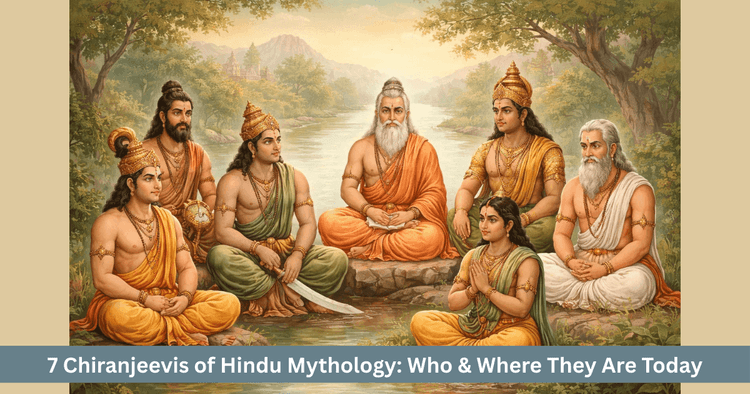
Table of Contents
Chiranjeevis are seven eternal beings in Hindu scriptures. These immortals live until Kali Yuga's final moments. Our ancient texts describe their divine blessings. Each Chiranjeevi carries special powers and wisdom. They guide humanity through difficult times. Grandparents share their stories during bedtime. These eternal beings protect dharma on Earth even now. Their presence gives hope to devotees. Many temples honor these legendary figures.
The Meaning and Significance of Chiranjeevis
The word Chiranjeevi comes from two Sanskrit words: chiram meaning long and jeevi meaning living. Chiranjeevi literally means one who lives forever or eternally. According to Hindu doctrine, Chiranjeevis are immortal beings who will walk the Earth through this Kali Yuga till the end of time. These seven immortal beings are from different ages and remain on Earth to protect dharma. References to these Chiranjeevis appear in the Ramayana, Mahabharata and various Puranas. They are warriors of multiple Satyugs. They continue to exist and they will be till the next Satya Yuga begins.
Purpose of the Chiranjeevis
The main purpose of the Chiranjeevis' presence is to establish and protect dharma on Earth. These seven immortal beings ensure that righteousness continues through the ages. At the end of Kali Yuga, when Kalki, the tenth avatar of Lord Vishnu arrives, these seven Chiranjeevis will assist him. The Kalki avatar will end adharma and establish Satya Yuga and the Chiranjeevis will play a crucial role in this transition.
List of 7 Chiranjeevis in Hindu Scriptures
The seven immortals which are called Chiranjeevis are Ashwatthama, King Mahabali, Veda Vyasa, Hanuman, Vibhishana, Kripacharya and Parashurama. Each received immortality through different circumstances. Some got blessings while others received curses. Their stories appear in Puranas and epics. These figures represent various aspects of divinity. They continue influencing Hindu culture today.
Identifying the Chiranjeevis
Each Chiranjeevi has their own unique identity and qualities. Ashwatthama represents valor and the consequences of wrongful actions. Mahabali symbolizes generosity and sacrifice. Veda Vyasa represents knowledge and preservation. Hanuman embodies devotion and service. Vibhishana represents dharma and morality. Kripacharya symbolizes education and knowledge transmission. Parashurama represents warrior spirit and justice.
Where Are The Chiranjeevis Now
Ashwatthama wanders in dense forests still. His forehead wound never heals completely. People report hearing his moans in remote areas. King Mahabali visits Kerala every Onam festival. His spirit blesses his former kingdom's people. Veda Vyasa meditates in Himalayan caves.
Hanuman lives in Gandhamadana mountain and He chants Rama's name continuously. Vibhishana rules his invisible Lanka kingdom. He helps people choose right over wrong. Kripacharya travels across India secretly. He shares wisdom with deserving students. Parashurama stays in Mahendragiri mountains. He appears during great cosmic crises.
Current Status of Chiranjeevis
Since the Chiranjeevis are immortals in Hindu mythology, it is impossible to pinpoint exactly where they are at this time. however scriptures and folklore mention their dwelling places. It is believed that all seven Chiranjeevis are present on Earth in true body and blood to serve each of their different purposes. They will continue to fulfill their roles until the arrival of the Kalki avatar.
Stories and Significance of Chiranjeevis
Ashwatthama: The Immortal Warrior
Ashwatthama was Dronacharya's mighty son. He fought in the Kurukshetra war bravely. He used deadly weapons against Pandavas. Krishna cursed him for killing sleeping princes. His immortality became his greatest suffering. He represents consequences of wrongful actions.
Ashwatthama fought on the Kaurava side and attacked the Pandava camp at the end of the war when everyone was asleep. He killed the five sons of the Pandavas. When Krishna learned of this adharma, he cursed Ashwatthama to wander the Earth for three thousand years. The wound on his forehead will always bleed and he will always be in pain. This curse proved worse than death for him.
King Mahabali: The Generous Demon King
King Mahabali was a generous demon king. His popularity threatened the gods. Vishnu appeared as Vamana the dwarf. Mahabali granted three feet of land. Vamana covered the universe in two steps. Mahabali offered his head for the third step and Vishnu granted him immortality and underworld rule.
Mahabali was such a generous and righteous king that his subjects loved him dearly. He had conquered all three worlds. When Lord Vishnu came as Vamana, Mahabali donated despite warnings from his wife and guru Shukracharya. Pleased with his generosity and commitment to his word, Vishnu made him king of the underworld and granted him permission to visit his subjects once a year. This is the Onam festival.
Veda Vyasa: The Preserver of Knowledge
Veda Vyasa compiled the four Vedas. He wrote the Mahabharata epic. He divided sacred knowledge for common people. His work preserves Hindu wisdom forever. He represents knowledge and preservation.
Vyasa was the son of sage Parashara and Satyavati. He not only composed the Mahabharata but also created the eighteen Puranas. He divided the Vedas into four parts so that common people could understand them. Vyasa is remembered on Guru Purnima. It is believed that he still meditates in the Himalayas and provides knowledge to worthy disciples.
Hanuman: The Symbol of Devotion
Hanuman served Lord Rama completely. He lifted mountains and fought demons. Rama granted him eternal life. He represents devotion and service.
Hanuman is the great hero of the Ramayana. He crossed the ocean in search of Sita, entered Lanka and dedicated everything to Rama's work. His devotion was so deep that Rama granted him the boon of being a Chiranjeevi. Even today, Hanuman is worshipped throughout India. It is believed that wherever the Rama Katha is recited, Hanuman is surely present.
Vibhishana: The Advocate of Dharma
Vibhishana chose dharma over family. He opposed brother Ravana's wrong actions. Rama made him Lanka's immortal king. He represents righteousness over relations.
Vibhishana was Ravana's younger brother but he chose the path of dharma. When Ravana abducted Sita, Vibhishana tried to convince him otherwise. But when Ravana did not listen, Vibhishana took refuge with Rama. After Rama's victory in the war, he made Vibhishana the king of Lanka and granted him the boon of being a Chiranjeevi. Vibhishana still rules Lanka in his invisible form.
Kripacharya: The Symbol of Education
Kripacharya taught Kauravas and Pandavas. He represents knowledge transmission. Kripacharya was the son of Shardwan and Janapadi and was raised alongside his sister Kripi. He became the royal teacher of the Kuru princes. During the Kurukshetra war, he fought on the side of the Kauravas due to his duty as their teacher but he did not hesitate to criticize them when they deviated from dharma.
After the war, Kripacharya was one of the few warriors who survived. Due to his impartiality and commitment to dharma, he was granted the boon of being a Chiranjeevi. It is believed that he still roams the Earth and provides knowledge to worthy students.
Parashurama: The Warrior Sage
Parashurama received Shiva's blessings. He destroyed corrupt kings twenty-one times. He represents warrior spirit and justice.
Parashurama is the sixth avatar of Lord Vishnu. He was born in Dwapara Yuga. When Kshatriya kings increased their tyranny, Parashurama freed the Earth from Kshatriyas twenty-one times. Lord Shiva blessed him with the axe which made him invincible in battle. Parashurama received the boon of immortality from Lord Shiva. It is believed that he will be the martial arts teacher of the Kalki avatar.
Why Chiranjeevis Matter
These immortals teach important life lessons. Their stories guide moral decision making. They show different paths to spiritual growth. They remind us about life's higher purpose. They connect modern Hindus to ancient wisdom.
Cultural and Spiritual Impact
Children learn values through their stories. Devotees find comfort in their eternal presence. Cultural traditions keep their memories alive. Festivals celebrate their contributions regularly. Worshiping the Chiranjeevis helps eradicate all diseases and ailments and grants longevity.
Religious Teachings
Each Chiranjeevi teaches a different lesson. Ashwatthama shows the dangers of anger and revenge. Mahabali teaches the greatness of generosity and sacrifice. Vyasa shows the importance of knowledge. Hanuman displays the power of devotion. Vibhishana teaches the need for moral courage. Kripacharya represents the importance of education. Parashurama teaches the protection of justice and dharma.
Modern Relevance of these Ancient Immortals
Parents name children after these figures. Hanuman temples attract millions yearly. Onam festival celebrates Mahabali's return. Vyasa's birthday honors teachers nationwide. Their qualities remain relevant in modern life.
Lessons in Modern Life
Hanuman's devotion teaches loyalty today. Vyasa's work encourages continuous learning. Mahabali's generosity inspires charity work. Ashwatthama's story warns against anger. Vibhishana's choice teaches moral courage. Kripacharya shows the importance of education. Parashurama inspires fighting for justice.
Message for the Future
Visit temples dedicated to these immortals. Read their original stories in scriptures. Understand their deeper philosophical meanings. Apply their lessons in daily life situations. Their eternal presence comforts believers during difficulties. Their legendary stories will inspire future generations forever. These seven immortals continue protecting dharma always.
Chiranjeevi Mantra and Worship Method
There is a special verse for worshiping the Chiranjeevis that pronounces all their names. Regular chanting of this mantra brings longevity, good health and spiritual knowledge. Each Chiranjeevi can be worshiped through different methods. Worshiping Hanuman on Tuesdays and Saturdays is especially beneficial. Special worship is performed for Vyasa on Guru Purnima.
Frequently Asked Questions
What are the 7 Chiranjeevi names?
The names of the seven Chiranjeevis are: Ashwatthama, King Mahabali, Veda Vyasa, Hanuman, Vibhishana, Kripacharya and Parashurama.
Where are the sapta Chiranjeevis now?
All seven Chiranjeevis are present on Earth in true body and blood to serve each of their different purposes. They reside in various locations and await the arrival of the Kalki avatar.
Who will help Kalki?
Parashurama, the sixth avatar of Lord Vishnu, is believed to help Kalki. All seven Chiranjeevis will assist Kalki in ending Kali Yuga and bringing Satya Yuga.
Why should we worship the Chiranjeevis?
Worshiping the Chiranjeevis helps eradicate all diseases and ailments and grants longevity. Their stories provide religious and moral education.
Are the Chiranjeevis actually alive?
According to Hindu scriptures and belief, the Chiranjeevis are still alive on Earth. They live in invisible forms or in remote places and protect dharma.
Get your accurate Kundali
Generate KundaliDid you like it?
Author

Pt. Sanjeev Sharma (63)
Experience: 20
Consults About: Family Planning, Career
Clients In: Punjab, Haryana, Delhi
Share this article with friends and family
About ZODIAQ
ZODIAQ is an online Vedic Astrology platform. It connects clients seeking astrological advice to experienced astrologers with deep knowledge. Our users also generate kundali and perform kundali milan for free. ZODIAQ also offers services to the Astrologers. Astrologers utilize various offerings by ZODIAQ to serve their clients effectively.
If you are a User
Consult with experienced astrologers and seek their guidance. You can also order handwritten Janm Patrika report with life prediction prepared by experienced astrologers. Generate accurate Kundali, perform Kundali Matching and check horoscope and muhurat. Utilize our online library for all the necessary astrological and spiritual information.
If you are an Astrologer
Create accurate kundali for your clients and perform Kundali Matching for up to 5 people at a time. Write comprehensive Janm Patrika report for your clients with ZODIAQ. Check client details anytime by saving it in client directory. Become more productive by tracking how many clients you guide every day.
WELCOME TO
ZODIAQ
Right Decisions at the right time with ZODIAQ
