Did You Know Diwali Existed Even Before Rama Returned to Ayodhya?
By Pt. Abhishek Sharma
Diwali’s Infinite History, Role in Faith and Society
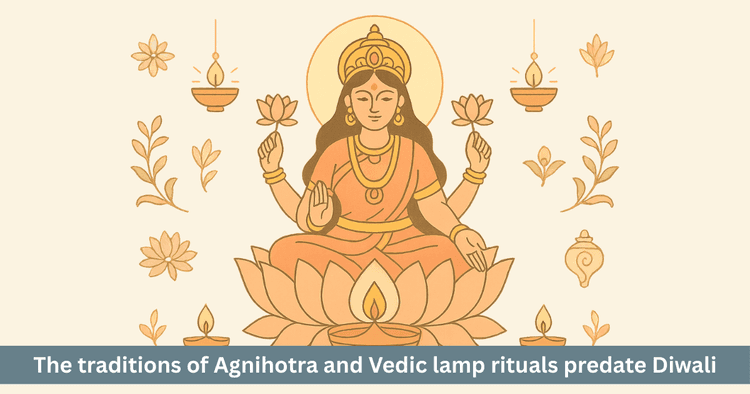
Table of Contents
Antiquity of Diwali and Its Vast References
When Diwali comes, its multifaceted history and role in society returns to popular conversation. While most people now see it as the celebration of Rama’s return to Ayodhya, the depth and breadth of its tradition is far greater. The festival is not just a symbol of triumph and reunion but has long been a celebration of transformative change, the significance of knowledge over ignorance, social harmony and the joy woven into human life.
Every region of India honors Diwali with unique beliefs and ceremonies but the main date remains near the new moon of Kartik. Villages, towns and cities, everywhere, make special preparations and ornate decorations for the festival. For centuries, Diwali has symbolized good fortune, auspicious wishes and social unity. Its forms have changed over time but its essence has always been tied to hope, positivity and the welcome of light.
Diwali Before the Ramayana and Ayodhya
Looking into the Padma Purana, Skanda Purana, Rig Veda and other ancient texts makes it clear that Diwali is not just a marker of Rama’s return. In Rig Veda, “jyoti,” light, is described as the end of ignorance and beginning of new consciousness. The traditions of Agnihotra and Vedic lamp rituals predate Diwali and were celebrated as symbols of positive spiritual growth and awareness in the community.
“Tamaso mā jyotir gamaya” - Lead me from darkness to light - has been the essence of every form of Diwali.
Samudra Manthan and Other Ancient Narratives
Padma Purana and Vishnu Purana mention that on the night of Amavasya, during the cosmic churning of the ocean (Samudra Manthan), Lakshmi was manifested. The gods marked the occasion with rows of lamps, songs and diverse offerings. Along with nectar, jewels and Lakshmi, balance and abundance flowed into creation. Diwali thus stood for much more than material wealth - it was about spiritual balance and positive energy.
This ancient festival appears in many cultures and religions. In South India, there is Bali Padyami, for Jains it marks Mahavira’s Nirvana, for Sikhs Bandi Chhor Divas and for some, Krishna’s defeat of Narakasura is associated with Diwali as a sign of joy and victory.
Different Historical, Mythological and Cultural Facets of Diwali - A Table
| Tradition / Event | Scripture or Place | Main Message | Practice |
|---|---|---|---|
| Vedic Lamp Rituals | Rig Veda, Upanishads | Victory of Knowledge, Purification | Fire worship, lamp offerings |
| Worship of Lakshmi and Samudra Manthan | Padma, Vishnu Purana | Collective Abundance, Balance | Lighting lamps, worship rituals |
| Bali’s Return | Skanda Purana | Humility, Celebration of Balance | Diwali, Welcoming traditions |
| Narakasura’s Defeat and Victory | Bhagavata Purana | Triumph over Fear, Ethics | Celebrations with lamps |
| Mahavira’s Liberation | Kalpa Sutra | Self-realization, Liberation | Light festivals, Jain worship |
| Bandi Chhor Divas | Sikh tradition | Freedom, Release from Bondage | Lamps, temple decorations |
| Rama’s Ayodhya Welcome | Adhyatma Ramayana, Folk Legends | Devotion, Social Joy | Rows of lamps, welcoming rituals |
The Religious, Social and Cultural Significance of Diwali
Today, every part of India observes Diwali in unique colors, diversity and social purpose. In villages, people worship cattle and offer lamps with songs, while in cities, dazzling lights, exchanging gifts and fireworks draw crowds together. Women decorate homes with rangoli, alpana and fresh flowers. For traders, it is the most auspicious day of the year to open new ledgers.
Community feasts, family gatherings, reconciliation between old enemies and the playful energy of children all add together to enrich the festival. The involvement of elders, parents and every family member underlines the festival, for it is not just a matter of assets or success but a celebration of welcome, connection and joy.
The Deep Message Behind Diwali’s Lamps
Each lamp lit during Diwali is more than part of the celebration; it inspires us to remove darkness from life. Lamps symbolize patience, discernment, the search for the light within and the courage to initiate change. Their brightness illuminates not just streets, alleys and homes but fills all consciousness with hope.
Without words, these lamps and the energy they emit foster positivity, inspiration and the spirit of continual renewal for everyone. Every year, Diwali reminds us that material wealth alone is not enough but true value lies in inner radiance, mental awareness and balance.
Diwali and Inner Awareness: What Is Its Real Goal?
The real goal of Diwali is not just outward abundance but reaching the divine within. Whether it is welcoming Rama, the emergence of Lakshmi, Mahavira’s liberation or Guru Hargobind’s release - in every tradition, the lamp stands for light, wisdom, morality and freedom.
The festival inspires all to recognize divine qualities within, abandon bondage and with love, justice and goodness, overcome ignorance and smallness. Even a single lamp can lessen great darkness - this is the fundamental message of Diwali.
Five Major Questions and Their Answers
- Is Diwali a festival more ancient than the Ramayana?
- Yes, its references are found in Vedic, Puranic, Jain and Sikh traditions, all predating the Ramayana.
- What was the most original method of Diwali celebrations?
- Ancient fire worship, water vessels and house decor with lamps were the earliest forms.
- For which religions and traditions does Diwali hold special importance?
- It is important for Hindus, Jains, Sikhs and diverse communities across the country.
- What do lamps symbolize and what do they show?
- Lamps destroy despair, ignorance and negativity and bring personal growth, awareness and love.
- How much have Diwali’s forms changed with time?
- Though rituals and customs have evolved, the essential message of Diwali remains light over darkness, inclusiveness and self-awareness.
Unbroken Awareness Through Centuries: The Importance of Light in Diwali and Life
In every era, society and community, Diwali’s meanings - whether consciousness, desire, prosperity or liberation - have evolved but its core image - rows of lamps, welcoming light and awakening - remains as relevant as ever. Each year, the festival arrives bearing new meaning, new energy and fresh hope. Every lamp unites the most ancient traditions and the aspirations of every being. Such tradition, such optimism and such is the truest definition of Diwali.
Get your accurate Kundali
Generate KundaliDid you like it?
Author

Pt. Abhishek Sharma (63)
Experience: 20
Consults About: Family Planning, Career
Clients In: Punjab, Haryana, Delhi
Share this article with friends and family
About ZODIAQ
ZODIAQ is an online Vedic Astrology platform. It connects clients seeking astrological advice to experienced astrologers with deep knowledge. Our users also generate kundali and perform kundali milan for free. ZODIAQ also offers services to the Astrologers. Astrologers utilize various offerings by ZODIAQ to serve their clients effectively.
If you are a User
Consult with experienced astrologers and seek their guidance. You can also order handwritten Janm Patrika report with life prediction prepared by experienced astrologers. Generate accurate Kundali, perform Kundali Matching and check horoscope and muhurat. Utilize our online library for all the necessary astrological and spiritual information.
If you are an Astrologer
Create accurate kundali for your clients and perform Kundali Matching for up to 5 people at a time. Write comprehensive Janm Patrika report for your clients with ZODIAQ. Check client details anytime by saving it in client directory. Become more productive by tracking how many clients you guide every day.
WELCOME TO
ZODIAQ
Right Decisions at the right time with ZODIAQ
