Krishna’s Battle With Narakasura: The Prelude to Diwali’s Light
By Pt. Nilesh Sharma
The Divine Victory of Purity Over Darkness
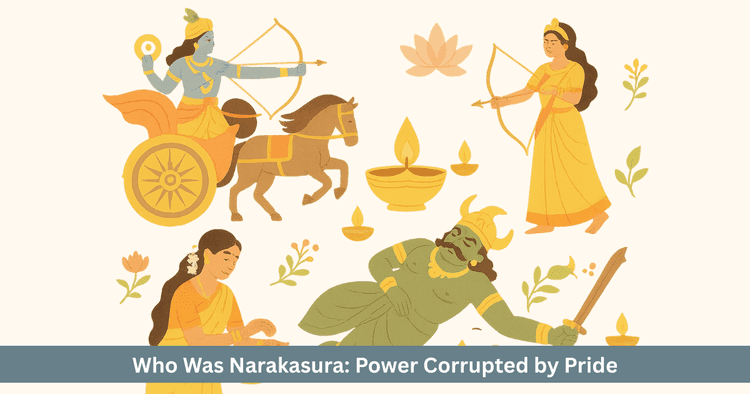
Table of Contents
A day before the luminous night of Diwali, Bharat remembers the divine battle between Lord Krishna and the demon Narakasura. Known as Naraka Chaturdashi or Chhoti Diwali, this day is the soul’s preparation for illumination, the victory of virtue before celebration.
Who Was Narakasura: Power Corrupted by Pride
According to the Puranas, Narakasura, son of Bhudevi (Earth Goddess) and Vishnu’s Varaha incarnation, was born of divine heritage but ruined by arrogance. Ruling Pragjyotishapura (in modern Assam), he subjugated gods and sages, seized celestial domains and stole Aditi’s divine earrings. His cruelty culminated in imprisoning 16,100 women, innocence enslaved by tyranny.
Divine Intervention: The Union of Dharma and Shakti
The gods sought Krishna’s help and prophecy declared that only Naraka’s mother or her incarnation, could end his life. Satyabhama, Krishna’s consort and Bhudevi’s incarnation, thus became the destined force.
Mounted on Garuda, Krishna breached layers of Narakasura’s fortress, stone walls, rings of fire and water defenses. After defeating Mura, Naraka’s fierce general, he faced the demon himself.
In their combat, Naraka struck Krishna’s chest with a trident. Feigning unconsciousness, Krishna allowed Satyabhama, Shakti in motion, to fulfill the prophecy by piercing Naraka’s heart with her divine arrow.
Naraka Chaturdashi: Liberation Before Light
As Naraka lay fallen, he repented before Krishna. The Lord granted that his death would be celebrated as freedom from fear and ignorance. Thus was born Naraka Chaturdashi, a day when humanity rejoices in liberation before the arrival of light.
Legend says that people lit lamps to welcome Krishna returning from battle, marking the symbolic origin of Diwali’s diyas, the first glow after darkness.
Spiritual Meaning: The Inner Battle
Narakasura personifies ego, greed and ignorance within. His downfall mirrors the soul’s release from illusion. Krishna’s victory represents divine wisdom conquering shadow; Satyabhama’s act embodies active courage and awareness. This is not just myth but an awakening lesson, that before celebrating light, we must destroy the darkness within.
Satyabhama: The Power of Awakened Consciousness
Satyabhama represents the goddess principle, Shakti, divine balance and moral courage. Her decisive act affirms that the conquest of evil is neither passive nor merely symbolic. The festival honors her energy as Bhudevi and Mahakali, recognizing that Shakti sustains Dharma and triumphs over darkness.
Regional Rituals and Celebrations
| Region | Rituals and Meaning |
|---|---|
| South India (Tamil Nadu, Karnataka andhra Pradesh) | Considered the main Diwali day. Devotees rise before dawn, take the sacred oil bath (Abhyanga Snanam), light lamps and burst crackers to celebrate victory over darkness. |
| Maharashtra and Gujarat | Celebrated as Chhoti Diwali with oil bath, lamp offerings and worship of Yama for health and protection. |
| Assam and East India | Deeply connected to Pragjyotishapura. Kamakhya Temple honors Bhudevi and Satyabhama as embodiments of divine feminine energy. |
The collective message is universal, purify before illumination.
Purification and Renewal Rituals
- Oil Bath (Abhyanga Snanam): Before sunrise, sesame oil massage and herbal cleansing signify release from inner negativity.
- Lighting Diyas: Represents Krishna’s triumph turning darkness into consciousness.
- Fasting and Prayer: Symbolize devotion, reflection and renewal of intent.
These acts affirm that light is sacred only when purity precedes it.
The Order of Festivals: Divine Harmony
The Diwali sequence reveals cosmic rhythm:
- Naraka Chaturdashi: Cleansing and inner transformation
- Diwali: Celebration of illumination and grace
- Govardhan Puja: Reintegration with nature and balance in creation
Krishna’s victory prepares moral ground for light, just as Rama’s return prepares hearts for joy. Both affirm a single truth, evil must fall before light can rise.
Frequently Asked Questions
Q1: Why is Krishna’s battle with Narakasura remembered before Diwali?
A: It symbolizes the purification of spirit before the celebration of divine light.
Q2: What does Narakasura represent?
A: He represents inner forces, ego, lust and ignorance, that must be conquered for enlightenment.
Q3: What does Satyabhama’s role teach?
A: That divine justice requires action, courage and balance, a union of strength and compassion.
Q4: Why is the oil bath significant on Naraka Chaturdashi?
A: It signifies cleansing of the body and karma, preparing for spiritual rebirth.
Q5: How does this festival connect to Diwali?
A: It serves as Diwali’s spiritual dawn, cleansing darkness before welcoming light.
Get your accurate Kundali
Generate KundaliDid you like it?
Author

Pt. Nilesh Sharma (63)
Experience: 20
Consults About: Family Planning, Career
Clients In: Punjab, Haryana, Delhi
Share this article with friends and family
About ZODIAQ
ZODIAQ is an online Vedic Astrology platform. It connects clients seeking astrological advice to experienced astrologers with deep knowledge. Our users also generate kundali and perform kundali milan for free. ZODIAQ also offers services to the Astrologers. Astrologers utilize various offerings by ZODIAQ to serve their clients effectively.
If you are a User
Consult with experienced astrologers and seek their guidance. You can also order handwritten Janm Patrika report with life prediction prepared by experienced astrologers. Generate accurate Kundali, perform Kundali Matching and check horoscope and muhurat. Utilize our online library for all the necessary astrological and spiritual information.
If you are an Astrologer
Create accurate kundali for your clients and perform Kundali Matching for up to 5 people at a time. Write comprehensive Janm Patrika report for your clients with ZODIAQ. Check client details anytime by saving it in client directory. Become more productive by tracking how many clients you guide every day.
WELCOME TO
ZODIAQ
Right Decisions at the right time with ZODIAQ
