The 12 Powerful Names of Hanuman for Strength and Clarity
By Pt. Amitabh Sharma
Chanting the twelve names of Hanuman strengthens inner peace and confidence
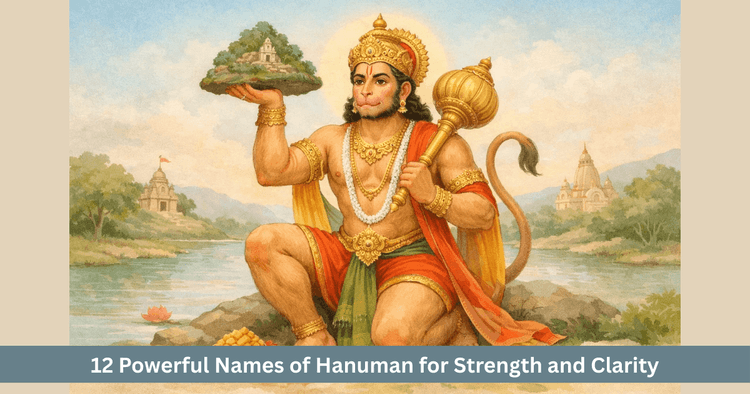
Table of Contents
In today’s fast-paced world, not everyone can devote hours to meditation or long rituals. Yet, Sanatan Dharma offers timeless ways to connect with divinity even amidst busy lives. One such sacred practice is the Hanuman Dwadasha Naam Stotra, the recitation of the twelve divine names of Lord Hanuman. This short but powerful chant takes only a couple of minutes and brings balance to the mind and energy to the spirit.
Sit comfortably, relax your breath and chant each name slowly with focus. After chanting each one, visualize Hanuman in that form. This simple act works as a spark that rekindles inner steadiness, faith and strength.
Hanuman - Symbol of Controlled Speech and Steadfast Will
The name “Hanuman” means “the one with a strong jaw,” recalling his childhood moment when he tried to swallow the Sun, thinking it was a fruit. When struck by Indra’s thunderbolt, his jaw was injured and from that came his name. This reminds us that true strength lies in restraint. The name inspires measured speech and thoughtful action guided by awareness.
Anjaniputra - Remembering the Divine Origin
Hanuman is the son of Devi Anjana, a celestial being devoted to tapasya. Visualizing her holding infant Hanuman brings the awareness that our life too originates from a sacred intention. This name anchors us to our divine source and fills the heart with devotion and purity.
Vayuputra - Awakening the Energy of Breath
As the son of Vayu, the god of wind, Hanuman embodies prana, the life force itself. Chanting this name reconnects us with the movement of breath and vitality within. It symbolizes the union of energy, motion and consciousness, which forms the foundation of yogic practice.
Mahabala - Invoking the Inner Warrior
“Mahabala” means “the immensely strong one.” Visualize Hanuman preparing to leap over the ocean toward Lanka. This is not only physical power but moral and emotional resilience. The name inspires courage and discipline when faced with challenges.
Rameshta - Devotion That Wins the Lord’s Heart
“Rameshta” means the beloved of Rama. Visualize Rama embracing Hanuman with gratitude and tears of love. The name reflects selfless service, humility and pure devotion. It inspires surrender that is filled with warmth and sincerity.
Phalguna Sakha - Symbol of Divine Friendship and Loyalty
Hanuman, as the friend of Arjuna (known as Phalguna), stood invisibly on the banner of his chariot during the Mahabharata war. This name reminds us that unseen divine forces stand beside us in our difficult battles. It represents trust and friendship based on Dharma.
Pingaksha - Eyes of Insight and Determination
The name “Pingaksha” refers to Hanuman’s golden-brown eyes filled with spiritual fire. His gaze embodies awareness and perception. Meditating on this name helps in developing clarity and one-pointed attention that illuminates the path ahead.
Amita Vikrama - Unwavering Courage and Faithful Strength
“Amita Vikrama” means “unlimited valor.” Visualize Hanuman in his majestic form, unstoppable and spirited. This name teaches that courage emerges from faith and righteousness, not pride or ego.
Udadhi Kraman - The One Who Crossed the Ocean of Fear
“Udadhi Kraman” recalls Hanuman’s flight across the ocean to find Sita. The ocean stands for the vastness of fear and doubt. The name inspires faith that no challenge is too great when intention is pure and determination steady.
Sita Shoka Vinashana - The Healer of Sorrow
In Lanka, Hanuman comforted Sita by giving her Rama’s ring. Her sorrow eased instantly. This name symbolizes compassion, assurance and the ability to bring hope to others. It teaches us to be gentle healers of pain around us.
Lakshmana Prana Daata - The Restorer of Life and Hope
When Lakshmana lay unconscious during the war, Hanuman brought the Sanjivani mountain. The name “Lakshmana Prana Daata” signifies the power to revive life, hope and spirit. It inspires us to lift others when they fall and to serve with courage and faith.
Dashagreeva Darpaha - Destroyer of Ego and Injustice
Ravana, with his ten heads, represented arrogance and delusion. Visualize Hanuman alongside Rama as humility triumphs over pride. The name “Dashagreeva Darpaha” reminds us to conquer our inner ego and uphold truth and justice in all actions.
Two Minutes to Uplift the Soul
Reciting these twelve names daily, even for just two minutes, can awaken clarity and strength. Wherever you are, call upon Hanuman through these names. They serve as seeds of devotion, instilling courage, focus and faith in the heart.
Frequently Asked Questions (FAQ)
1. What is the Hanuman Dwadasha Naam Stotra?
It is a short but potent prayer comprising twelve names of Hanuman that invoke power, courage and stability.
2. When should one chant the twelve names?
Early morning during Brahma Muhurta or before sleep in the evening is ideal.
3. How should the twelve names be practiced?
Sit relaxed, chant each name attentively and visualize Hanuman in that form.
4. Do these names help reduce fear and anxiety?
Yes, chanting them calms the mind and restores faith and emotional steadiness.
5. Does this practice require much time?
No, it can be completed in about two minutes yet has lasting spiritual effects.
Get your accurate Kundali
Generate KundaliDid you like it?
Author

Pt. Amitabh Sharma (56 Years)
Experience: 20
Consults About: Family Planning, Career
Clients In: Punjab, Haryana, Delhi
Share this article with friends and family
About ZODIAQ
ZODIAQ is an online Vedic Astrology platform. It connects clients seeking astrological advice to experienced astrologers with deep knowledge. Our users also generate kundali and perform kundali milan for free. ZODIAQ also offers services to the Astrologers. Astrologers utilize various offerings by ZODIAQ to serve their clients effectively.
If you are a User
Consult with experienced astrologers and seek their guidance. You can also order handwritten Janm Patrika report with life prediction prepared by experienced astrologers. Generate accurate Kundali, perform Kundali Matching and check horoscope and muhurat. Utilize our online library for all the necessary astrological and spiritual information.
If you are an Astrologer
Create accurate kundali for your clients and perform Kundali Matching for up to 5 people at a time. Write comprehensive Janm Patrika report for your clients with ZODIAQ. Check client details anytime by saving it in client directory. Become more productive by tracking how many clients you guide every day.
WELCOME TO
ZODIAQ
Right Decisions at the right time with ZODIAQ
