The Unique Naming of Lava and Kusha: A Tale from Uttara Kanda
By Pt. Narendra Sharma
The Remarkable Naming Ritual of Sita’s Sons at Valmiki Ashram
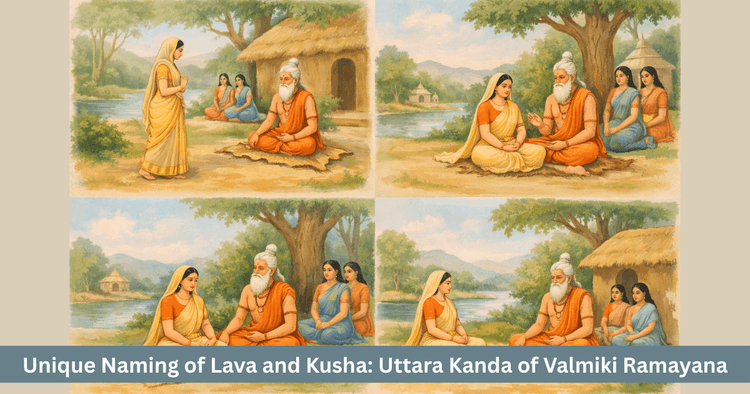
Table of Contents
The naming of Lava and Kusha, the twin sons of Sita and Rama, is a fascinating legend from the Uttara Kanda of Valmiki's Ramayana. This story is much more than a simple naming it reflects the depth of ancient Indian traditions, spiritual symbolism and the wisdom of sage Valmiki.
Sita’s Exile and Arrival at Valmiki’s Ashram
After Lord Rama’s return to Ayodhya and the establishment of his kingdom, Sita was, due to public scrutiny, sent into exile while pregnant. During this painful but dutiful period, Sita found refuge in the ashram of sage Valmiki, a haven of spiritual learning, Vedic recitation and compassionate protection, especially for women.
Birth of the Divine Twins and Ritual for Protection
Within Valmiki’s hermitage, Sita gave birth to twins. As per the customs of the time, it was believed that newborn children required sacred protection rituals to safeguard them from evil forces and negative energies. The sages and hermit women, acknowledging these traditions, requested Valmiki to perform rites for the twins’ safety.
The Sacred Ceremony: Kusha Grass and Symbolism
Valmiki decided to use the sanctified kusha grass for the ritual. Kusha grass holds profound significance in Vedic ceremonies symbolizing purity, protection and auspiciousness. It is often used in rituals, yajna and rites of passage for its ability to ward off negativity and bless the participants.
The Unique Naming Ritual
Valmiki took a single stalk of kusha grass and carefully split it into two distinct parts:
- With the upper part (viewed as spiritually more potent), he cleaned and blessed the elder child, giving him the name “Kusha.”
- With the lower part, he cleansed the younger child, naming him “Lava.”
This act was not just physical purification; it was a symbolic gesture imparting spiritual protection and imbuing the children with unique attributes.
Meaning and Symbolism in Their Names
Kusha: In Sanskrit, “Kusha” stands for purity, resilience and ascetic practice. Valmiki’s choice suggests a child blessed with strength, righteousness and spiritual protection.
Lava: The word “Lava” means a particle, resolve or an essence of love and sensitivity. The name denotes warmth, affection and gentle vitality.
Valmiki’s wisdom ensured that each boy, though born together, received a name and ritual infusing them with distinct qualities a balance of spiritual strength and loving gentleness.
Cultural and Scriptural Significance
This naming is deeply rooted in the ancient Indian belief that a child’s name and the manner of its bestowal can shape their destiny, character and spiritual path. Kusha grass remains integral to many Hindu ceremonies even today, associated with purification, protection and sanctity.
Childhood and Education of Lava and Kusha
In the nurturing atmosphere of Valmiki’s ashram, Lava and Kusha received comprehensive education. Valmiki personally imparted knowledge of the Vedas, martial arts, music and poetry. Both twins grew to be renowned for their unique talents and virtues firmness, compassion, spiritual devotion and scholarly acumen. Their upbringing symbolized the ideals of ancient Indian pedagogy wise mentorship, holistic learning and moral values seeded through sacred rituals.
Summary Table: Names and Attributes
| Name | Kusha Grass Reference | Ritual Type | Key Qualities | Symbolism |
|---|---|---|---|---|
| Lava | Lower part | Ritual cleansing | Gentleness, affection | Love, sensitivity |
| Kusha | Upper part | Spiritual blessing | Strength, righteousness | Purity, ascetic power |
Enduring Legacy
The story of Lava and Kusha’s naming provides inspiration for modern Hindu naming ceremonies, where purity, spiritual intent and heritage are celebrated. The tale is a reminder that every name may carry with it the hope, blessings and traditions of generations past.
Frequently Asked Questions
How were Lava and Kusha named?
Valmiki used kusha grass, split it into two and cleansed each child with a different part, naming the elder “Kusha” and the younger “Lava.”
Why was kusha grass used?
Kusha grass is a symbol of purity and sanctity in Vedic tradition, believed to offer protection and spiritual blessings.
Who educated Lava and Kusha?
Sage Valmiki himself taught them the Vedas, martial arts, music and poetry at his hermitage.
What is the symbolism behind their names?
“Kusha” denotes purity and strength, while “Lava” represents love, warmth and sensitivity.
Is kusha grass still used in Hindu ceremonies?
Yes, kusha grass continues to be important in rituals for purification, protective rites and auspicious occasions.
Get your accurate Kundali
Generate KundaliDid you like it?
Author

Pt. Narendra Sharma (63)
Experience: 20
Consults About: Family Planning, Career
Clients In: Punjab, Haryana, Delhi
Share this article with friends and family
About ZODIAQ
ZODIAQ is an online Vedic Astrology platform. It connects clients seeking astrological advice to experienced astrologers with deep knowledge. Our users also generate kundali and perform kundali milan for free. ZODIAQ also offers services to the Astrologers. Astrologers utilize various offerings by ZODIAQ to serve their clients effectively.
If you are a User
Consult with experienced astrologers and seek their guidance. You can also order handwritten Janm Patrika report with life prediction prepared by experienced astrologers. Generate accurate Kundali, perform Kundali Matching and check horoscope and muhurat. Utilize our online library for all the necessary astrological and spiritual information.
If you are an Astrologer
Create accurate kundali for your clients and perform Kundali Matching for up to 5 people at a time. Write comprehensive Janm Patrika report for your clients with ZODIAQ. Check client details anytime by saving it in client directory. Become more productive by tracking how many clients you guide every day.
WELCOME TO
ZODIAQ
Right Decisions at the right time with ZODIAQ
