When Shiva Wore the Skins of Elephants and Tigers
By Pt. Narendra Sharma
The Spiritual Symbolism of Shiva’s Skins, Ashes and Humility
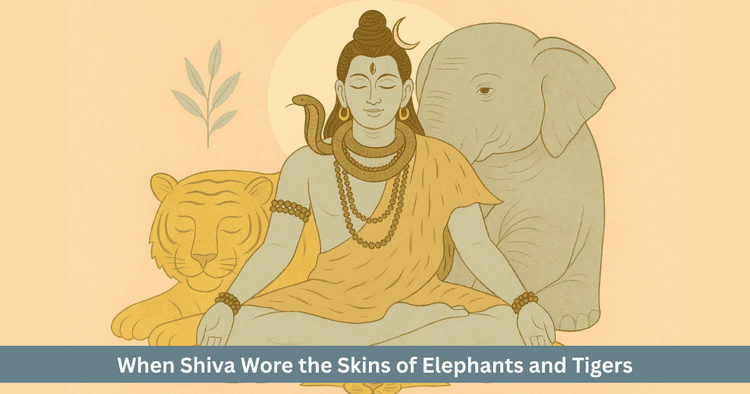
Table of Contents
Namah Shivaya Shantaya Karanaaya Krutatmane,
Nirgunaya Nishkalaya Chidghanaya Namo Namah.
Amid the remote, snow-clad peaks of Kailasa sits Shiva, the enigma of divinity and detachment. While most gods are adorned in golden crowns, silk robes and dazzling jewels, Shiva transcends such ornamentation. He wears animal skins, adorns serpents as jewels and covers himself with sacred ashes. Far from palatial grandeur, he resides in the wilderness, silent yet vibrant with cosmic energy.
In his iconic form, clad in tiger skin and draped in the hide of a mighty elephant, Shiva embodies a paradox. Seemingly fierce and untamed, yet deeply serene, his vesture is not a mark of savagery but a profound spiritual allegory. It signifies mastery over the inner beasts, pride, lust and desire.
The Tiger Skin , Conquest of Desire
In Vedic symbolism, the tiger represents untamed desire and unrestrained passion. In the lore of Darukavana, arrogant sages attempted to ensnare Shiva by invoking a mystical tiger. Shiva, effortlessly calm, subdued the creature and sat upon its skin.
The tiger, thus, embodies desire that hunts humanity. Sitting upon its skin, Shiva signifies victory over craving. Insight and detachment alone still this inner wildness.
- The tiger symbolizes unchecked longing.
- Sitting upon it denotes self-mastery over desire.
- True strength arises not from indulgence but from restraint.
The Elephant Hide , Defeat of Pride
The tale of Gajasura, the elephant demon from the Shiva Purana, teaches of the subjugation of arrogance. Overwhelmed by intoxication of power, Gajasura terrorized the worlds until Shiva conquered and wore his hide. The elephant, emblem of mada, delirious pride, became a cloak of humility in the hands of the Lord.
Shiva as Gajacharmambara-dhara, the wearer of elephant hide, embodies transcendence: pride dissolves before truth.
Ashes and Skins , Lessons of Impermanence
Why would the Lord of creation forsake splendor for ashes and skins? These forms are not symbols of rejection but of illumination.
- Ashes remind us that every form perishes.
- Skins whisper that might and wealth are temporary.
- Simplicity reveals the essence of life, stripped of illusion.
In their austerity lies the most radiant clarity of truth.
The Tiger Skin in Yogic Tradition
Ancient texts like the Hatha Yoga Pradipika prescribe meditation upon a tiger skin. The choice carries both physical and spiritual significance.
| Purpose | Practical Meaning | Spiritual Meaning |
|---|---|---|
| Prevents dampness, repels insects | Comfort and focus | Mastery over the “tiger” of the restless mind |
As Adiyogi (the first yogi), Shiva’s seat upon the tiger skin instructs seekers to tame their inner wilderness before attaining stillness.
The Elephant Hide , A Cosmic Allegory
Gajasura is not merely a demon; he represents ignorance, attachment and delusion. Shiva’s act of tearing his hide symbolizes destruction of ignorance and wearing it shows transformation of suffering into wisdom.
This gesture teaches that no experience, however painful, is wasted, it can all become part of enlightenment’s fabric.
Shiva and Vishnu , The Divine Balance
The contrast between Vishnu’s opulent form and Shiva’s austere presence symbolizes complementary forces of the cosmos.
| Deity | Attire | Message | Realm |
|---|---|---|---|
| Vishnu | Silks, crown, jewels | Preservation and order | Oceanic palaces |
| Shiva | Ashes, serpents, skins | Dissolution of illusion | Cremation grounds, mountains |
Vishnu sustains; Shiva awakens. Together they preserve the universe’s equilibrium.
Shedding Skins , Overcoming Ego and Attachment
As serpents shed old skins, so too must humans shed ego, attachment and longing.
Shiva’s act transforms what is primal into holy.
- Tiger skin , mastery over desire.
- Elephant hide , conquest of pride.
- Wearing the discarded , transformation of weakness into wisdom.
Shiva redeems, not destroys, teaching that liberation arises from transformation, not suppression.
Enduring Relevance for Modern Life
Even now, amid material pursuits, Shiva’s simplicity resonates. Every craving is a tiger to conquer; every pang of pride an elephant to subdue. True strength lies not in what we own but what we overcome. Yogis and seekers who emulate his simplicity bear the reminder that renunciation is the greatest form of power.
Eternal Message of the Skins and Ashes
Shiva’s attire is not a negation of the world but an affirmation of truth. He exposes the transient so that seekers may find the eternal. The ashes and hides on his divine body mirror the lessons of humility, impermanence and timeless transformation. Through every ritual and meditation, Shiva’s essence endures, guiding souls toward victory not over others but over themselves.
Frequently Asked Questions
1. Does Shiva’s wearing of animal skins symbolize violence?
No, it symbolizes victory over inner instincts, not external destruction.
2. Why is the tiger skin significant?
It represents the conquest of desire and craving through awareness and balance.
3. What does the elephant hide signify?
It reflects the overcoming of arrogance and the realization of humility.
4. Why does Shiva wear ashes?
Ashes remind all beings of mortality and the transient nature of worldly life.
5. What is the modern relevance of Shiva’s attire?
It is a reminder that spiritual strength and peace arise from simplicity and self-mastery.
Get your accurate Kundali
Generate KundaliDid you like it?
Author

Pt. Narendra Sharma (63)
Experience: 20
Consults About: Family Planning, Career
Clients In: Punjab, Haryana, Delhi
Share this article with friends and family
About ZODIAQ
ZODIAQ is an online Vedic Astrology platform. It connects clients seeking astrological advice to experienced astrologers with deep knowledge. Our users also generate kundali and perform kundali milan for free. ZODIAQ also offers services to the Astrologers. Astrologers utilize various offerings by ZODIAQ to serve their clients effectively.
If you are a User
Consult with experienced astrologers and seek their guidance. You can also order handwritten Janm Patrika report with life prediction prepared by experienced astrologers. Generate accurate Kundali, perform Kundali Matching and check horoscope and muhurat. Utilize our online library for all the necessary astrological and spiritual information.
If you are an Astrologer
Create accurate kundali for your clients and perform Kundali Matching for up to 5 people at a time. Write comprehensive Janm Patrika report for your clients with ZODIAQ. Check client details anytime by saving it in client directory. Become more productive by tracking how many clients you guide every day.
WELCOME TO
ZODIAQ
Right Decisions at the right time with ZODIAQ
