Why South India Celebrates Narakasura Chaturdashi Before Diwali
By Pt. Amitabh Sharma
Spiritual Cleansing and Victory of Dharma
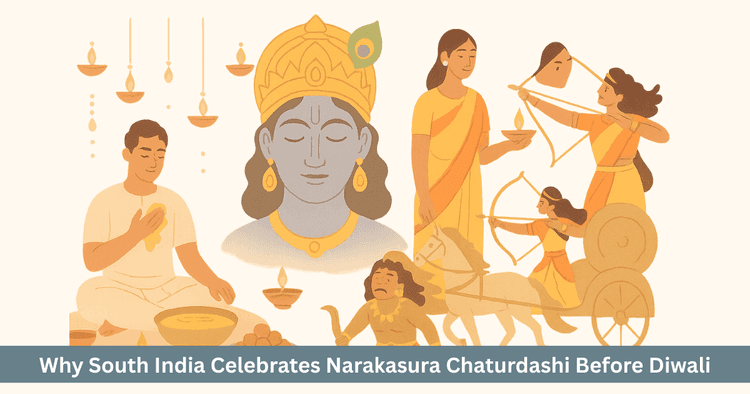
Table of Contents
Before the vibrant nights of Diwali, South India awakens to Narakasura Chaturdashi, a dawn of purification, devotion and victory. As the first light touches the land, people bathe in sesame oil, apply turmeric, light lamps and prepare for the divine dawn. The aroma of sacred oils and sweet delicacies fills homes, echoing with prayers dedicated to Krishna and Satyabhama. The festival commemorates the fall of the tyrant demon king Narakasura, marking the triumph of righteousness, wisdom and awareness.
In the South, this festival is not just a prelude to Diwali, it is its inner purification. It signifies conquering inner darkness before celebrating the external light.
The Legend of Narakasura: The Demon Who Knew No Fear
Narakasura, son of Bhudevi (the Earth Goddess) and Lord Varaha, was blessed with divine power but consumed by arrogance and desire for domination. His reign of terror spanned all realms, he seized kingdoms, hoarded treasures and imprisoned thousands of women. The gods, powerless against his boons, turned to Lord Krishna for deliverance. Since Narakasura could die only at his mother’s hand, fate united Krishna and Satyabhama, Bhudevi’s incarnation.
As thunderous chariots clashed in the heavens, Krishna and Satyabhama embodied cosmic balance, strength joined with compassion. Satyabhama’s arrow struck with divine force, restoring justice and harmony to creation. This was more than victory; it was the reinstatement of Dharma.
Satyabhama: The Divine Feminine Warrior
In this legend, Satyabhama represents equilibrium and spiritual strength. When Krishna collapsed in battle, she rose in fearless purpose and destroyed Narakasura. Her act symbolizes the harmony between awareness and courage, compassion and conviction. It is a reminder that virtue and justice transcend gender; they are the timeless expressions of cosmic balance.
A Festival of Inner Cleansing
Narakasura Chaturdashi, celebrated on the day before Diwali, serves as a ritual purification before illumination. The core message is profound, one must cleanse the mind and spirit before inviting the light of prosperity.
- Abhyanga Snanam (Oil Bath): A pre-dawn ritual using sesame oil and herbal scrubs, symbolizing release of negativity.
- Lighting of Lamps: Lamps are lit before sunrise to dispel darkness within and without.
- Temple Worship: Prayers to Krishna, Bhudevi and Satyabhama renew humility and inner strength.
In Tamil Nadu, Karnataka andhra Pradesh and Goa, people begin celebrations at dawn with these sacred rituals, continuing into the evening’s Lakshmi Puja, blending purification, victory and prosperity.
Oil Baths and New Dawn
The pre-dawn oil bath, known in South India as Deepavali Thalai Snanam, is not mere ritual hygiene, it is symbolic gratitude to the body as a divine vessel. Herbs like turmeric, sandalwood and gram flour are applied to rejuvenate both body and spirit. Breaking the bitter fruit (karit) after the bath signifies the destruction of ego and ignorance.
Afterwards, homes are decorated with kolams (rangoli) and traditional sweets, murukku, adhirasam, laddus and payasam, are prepared as symbols of sweetness born from virtue’s victory.
The Spiritual Essence of Narakasura Chaturdashi
Narakasura personifies ego, greed and ignorance, while Krishna represents divine insight and compassion. Their battle mirrors our inner struggle between awareness and shadow.
Every lamp lit, every bath taken and every prayer uttered on this day represents the progressive cleansing of the soul. Thus, Narakasura’s fall becomes an inward awakening.
The Celestial Harmony Before Diwali
Chaturdashi, the fourteenth lunar day, is celebrated just before Amavasya, the new moon of Diwali. Its timing symbolizes the expulsion of ignorance before receiving light. Spiritually, Narakasura Chaturdashi prepares the path for Lakshmi, purity must precede prosperity. The two festivals together affirm that wealth without virtue is hollow and celebration without introspection is incomplete.
Regional Traditions Across India
- Tamil Nadu and Karnataka: Naraka Chaturdashi and Diwali are celebrated concurrently with oil baths, new garments and worship.
- Andhra Pradesh and Telangana: Effigies of Narakasura are burnt before sunrise, symbolizing destruction of evil.
- Goa: Gigantic idols of Narakasura are paraded and burned amid rejoicing and fireworks.
- Kerala: The observance is serene, featuring oil baths and quiet lamps.
- Bengal: A related Bhoot Chaturdashi lights fourteen lamps to honor ancestral spirits.
Lessons of the Ritual
Narakasura’s fall reflects the fall of ignorance. Even divine gifts can lead to downfall if misdirected. The festival teaches that:
- Courage and clarity must walk together.
- Purity is both physical and spiritual.
- Light gains meaning only when darkness is confronted and transformed.
Like Satyabhama, every soul carries the innate strength to vanquish inner shadows and restore harmony.
The Passage Into Diwali’s Light
Narakasura Chaturdashi completes the cycle of transformation, cleansing before illumination. Once the inner purification is achieved, Diwali’s lights embody deeper awareness, celebrating both earthly and spiritual rebirth.
In South Indian philosophy, this sequence forms an eternal rhythm:
Cleanse → Conquer → Celebrate → Illuminate.
The dawn baths, the lamps, the prayers, all symbolize the soul’s journey from ignorance to awareness, from chaos to clarity, from darkness to divine radiance.
Inspiring Reflection
Narakasura Chaturdashi is not merely a prelude to Diwali; it is its inner essence. It reminds us that before welcoming external light, one must extinguish inner darkness.
So, when South India greets dawn with oil baths and lamps, it is not just ritual, it is an inner vow renewed yearly:
To conquer the Naraka within and walk into Diwali’s light.
Frequently Asked Questions
Q1: Why does South India celebrate Narakasura Chaturdashi before Diwali?
A: It marks the cleansing of body and spirit before welcoming prosperity and divine light during Diwali.
Q2: What is the deeper meaning of the story of Narakasura and Satyabhama?
A: It symbolizes the triumph of awareness and compassion over arrogance and ignorance.
Q3: Why is the oil bath an essential ritual on this day?
A: It signifies purification of both body and mind, preparing one for spiritual renewal.
Q4: How are Narakasura Chaturdashi and Diwali connected?
A: The former purifies and prepares; the latter celebrates illumination and prosperity.
Q5: What spiritual lesson does the festival convey?
A: That light is meaningful only when born from inner purity and self-awareness.
Get your accurate Kundali
Generate KundaliDid you like it?
Author
Pt. Amitabh Sharma (56 Years)
Experience: 20
Consults About: Family Planning, Career
Clients In: Punjab, Haryana, Delhi
Share this article with friends and family
About ZODIAQ
ZODIAQ is an online Vedic Astrology platform. It connects clients seeking astrological advice to experienced astrologers with deep knowledge. Our users also generate kundali and perform kundali milan for free. ZODIAQ also offers services to the Astrologers. Astrologers utilize various offerings by ZODIAQ to serve their clients effectively.
If you are a User
Consult with experienced astrologers and seek their guidance. You can also order handwritten Janm Patrika report with life prediction prepared by experienced astrologers. Generate accurate Kundali, perform Kundali Matching and check horoscope and muhurat. Utilize our online library for all the necessary astrological and spiritual information.
If you are an Astrologer
Create accurate kundali for your clients and perform Kundali Matching for up to 5 people at a time. Write comprehensive Janm Patrika report for your clients with ZODIAQ. Check client details anytime by saving it in client directory. Become more productive by tracking how many clients you guide every day.
WELCOME TO
ZODIAQ
Right Decisions at the right time with ZODIAQ
