Ten Lesser-Known Names of Shiva: Hidden Meanings and Divine Aspects
By Pt. Narendra Sharma
Exploring rare names that reveal Shiva’s consciousness, yogic power and infinite attributes
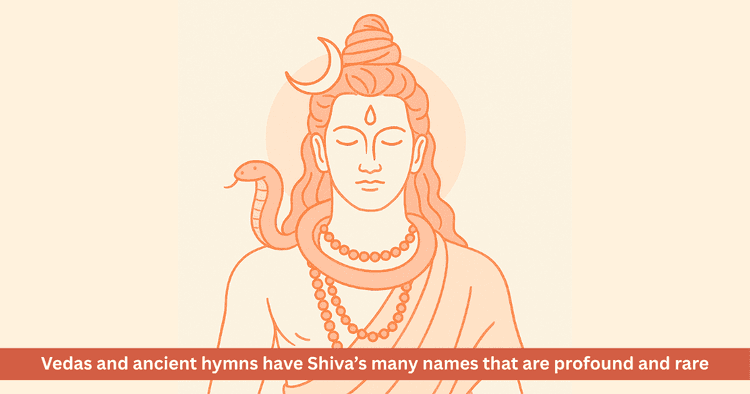
Table of Contents
In Sanatana Dharma, Shiva is not merely a deity but an eternal, formless, transcendental principle. Beyond popular names, the Vedas and ancient hymns mention uncommon names that reveal subtle dimensions of Shiva’s infinite nature.
1. Hara – The remover of illusion
Derived from “hṛ,” meaning to take away, Hara removes ignorance, ego and bondage. This name opens the path to liberation.
2. Bhava – The source of all beings
Mentioned in the Shri Rudram, Bhava signifies the origin-point of existence. Shiva is not only the dissolver but also the subtle seed of creation.
3. Sharva – The fierce destroyer
Sharva represents the mighty force that dissolves outdated structures, making way for renewal. Warriors once invoked this name before battle.
4. Umapati – The consort of Uma
Umapati signifies the divine companionship of Shiva and Uma, symbolising unity of energy and consciousness.
5. Mrityunjaya – Conqueror of death
This name, central to the Mrityunjaya Mantra, represents freedom from the fear of death and the blessing of liberation.
6. Chandrapala – Protector of the moon
Shiva holds the moon on his crest. The moon represents mind, emotions and time cycles. This name symbolises mental balance.
7. Vishveshvara – Lord of the universe
Known widely through Kashi Vishwanath, this name portrays Shiva as the supreme ruler of cosmic order.
8. Aja – The unborn
Aja signifies the unborn, eternal and transcendent form beyond birth and death.
9. Sthanu – The immovable and steadfast
Sthanu refers to the unchanging and motionless centre of the cosmic wheel.
10. Maheshvara – The great Lord
Maheshvara expresses the supreme divinity of Shiva endowed with knowledge, compassion and renunciation.
Significance of These Names
- Hara – Removes inner obstacles
- Bhava – Reveals unity of life
- Sharva – Inspires transformative renewal
- Umapati – Shows harmony of Shiva–Shakti
- Mrityunjaya – Offers freedom from fear
- Chandrapala – Encourages emotional balance
- Vishveshvara – Recognises cosmic oneness
- Aja – Reminds of eternal consciousness
- Sthanu – Cultivates inner stability
- Maheshvara – Awakens awareness of the supreme
Reference Table
| Name | Meaning / Role |
|---|---|
| Hara | Destroyer of illusion |
| Bhava | Source of creation |
| Sharva | Fierce destroyer |
| Umapati | Consort of Uma |
| Mrityunjaya | Conqueror of death |
| Chandrapala | Guardian of the moon |
| Vishveshvara | Lord of the universe |
| Aja | Unborn, eternal |
| Sthanu | Immovable principle |
| Maheshvara | Supreme Lord |
Conclusion
Meditating on these uncommon names helps seekers discover deeper layers of Shiva’s infinite presence. These names purify, stabilise and elevate consciousness.
FAQ
1.Are these names found in Vedic and ancient texts?
Yes, many appear in the Rudram, Upanishads and Puranas.
2.Do these names have spiritual benefits when chanted?
Yes, each name carries a unique spiritual vibration.
3.Can these names be used during meditation?
Absolutely, they deepen concentration and clarity.
4.Is Umapati connected to the Shakti principle?
Yes, it reflects the inseparable unity of Shiva and Shakti.
5.Does Sthanu literally mean unmoving?
Yes, it signifies Shiva as the unchanging centre of existence.
Get your accurate Kundali
Generate KundaliDid you like it?
Author

Pt. Narendra Sharma (63)
Experience: 20
Consults About: Family Planning, Career
Clients In: Punjab, Haryana, Delhi
Share this article with friends and family
About ZODIAQ
ZODIAQ is an online Vedic Astrology platform. It connects clients seeking astrological advice to experienced astrologers with deep knowledge. Our users also generate kundali and perform kundali milan for free. ZODIAQ also offers services to the Astrologers. Astrologers utilize various offerings by ZODIAQ to serve their clients effectively.
If you are a User
Consult with experienced astrologers and seek their guidance. You can also order handwritten Janm Patrika report with life prediction prepared by experienced astrologers. Generate accurate Kundali, perform Kundali Matching and check horoscope and muhurat. Utilize our online library for all the necessary astrological and spiritual information.
If you are an Astrologer
Create accurate kundali for your clients and perform Kundali Matching for up to 5 people at a time. Write comprehensive Janm Patrika report for your clients with ZODIAQ. Check client details anytime by saving it in client directory. Become more productive by tracking how many clients you guide every day.
WELCOME TO
ZODIAQ
Right Decisions at the right time with ZODIAQ
