Five Remarkable Temples in India Where Gods Are Believed to Reside Eternally
By Pt. Narendra Sharma
Discover temples in India known for being eternal abodes of the divine beyond time
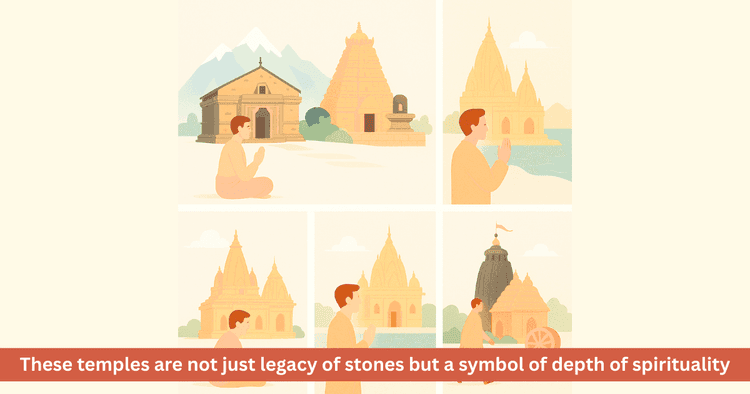
Table of Contents
Across the passage of time everything changes, yet some places in India are believed to be timeless. Certain temples are considered not only places of worship but abodes where the divine presence remains eternally. These temples represent stability, devotion and the depth of spiritual continuity.
Kedarnath: Shiva’s Eternal Sanctuary in the Himalayas
Located in the mighty Himalayas, Kedarnath is regarded as the place where Shiva resides eternally. Despite severe natural disasters, snowstorms and the harshest conditions, the temple stands firm. Shiva’s silent presence here symbolizes endurance, acceptance and eternal calm. Kedarnath teaches that patience is the quiet strength that withstands all ages.
Brihadeeswara Temple: A Monument Carved in Immortality
The Brihadeeswara Temple in Thanjavur is not just an architectural marvel but a symbol of permanence. For more than a thousand years it has witnessed rises and falls of kingdoms. Shiva resides here in the form of a lingam and represents the unchangeable truth that time cannot touch. Each stone seems to ask whether permanence lies in matter or in devotion.
Kashi Vishwanath: The City Where Shiva Forever Dwells
Varanasi, regarded as Shiva’s own city, is the living expression of eternity. Shiva in his Vishwanath form is believed to always be present here. The city offers a direct experience of the cycle of birth and death. On the ghats of the Ganga time slows and one realizes that amidst change something eternal remains.
Dwarkadhish Temple: The Eternal Presence of Krishna
The Dwarkadhish Temple in Gujarat is considered the everlasting center of Krishna’s divine consciousness. Though ancient Dwarka sank into the sea, the spiritual energy of this temple continues to thrive. It teaches that certain values such as love, truth and devotion remain untouched by change.
Jagannath Temple: A Symbol of Divine Movement
The Jagannath Temple of Puri represents not only timelessness but the vibrant movement of divinity. Jagannath, Balabhadra and Subhadra are believed to always reside here. The famous Rath Yatra shows that God does not remain confined to the sanctum but walks with devotees. Devotion is not static but ever flowing.
Summary Table
| Temple | Location | Main Deity | Unique Feature |
|---|---|---|---|
| Kedarnath | Uttarakhand | Shiva | Stands unshaken despite extreme natural challenges |
| Brihadeeswara Temple | Thanjavur, Tamil Nadu | Shiva | More than a thousand years of uninterrupted presence |
| Kashi Vishwanath | Varanasi, Uttar Pradesh | Shiva | Eternal presence within the cycle of birth and death |
| Dwarkadhish Temple | Dwarka, Gujarat | Krishna | Center of Krishna’s timeless consciousness |
| Jagannath Temple | Puri, Odisha | Jagannath, Balabhadra, Subhadra | Symbol of dynamic devotion through the Rath Yatra |
Eternality and Change Together
These temples reflect both permanence and transformation. They remind us that while the world shifts, the essence of faith and devotion remains steady. Visiting them is not merely a pilgrimage but a journey toward inner identity and spiritual permanence.
FAQ
1. Why are these temples considered eternal
Because they are believed to house the uninterrupted presence of divine energies across time.
2. Is Kedarnath’s divinity only due to its location
No. Its endurance, spiritual strength and the presence of Shiva make it sacred.
3. Why is Varanasi called the city of Shiva
It is believed that Shiva eternally dwells in Varanasi and grants liberation.
4. What is the central belief of the Dwarkadhish Temple
That Krishna’s divine consciousness remains forever active here.
5. Why is the Jagannath Temple linked with movement
The Rath Yatra symbolizes that the divine walks with devotees and remains active in every age.
Get your accurate Kundali
Generate KundaliDid you like it?
Author
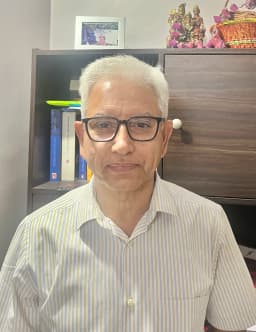
Pt. Narendra Sharma (63)
Experience: 20
Consults About: Family Planning, Career
Clients In: Punjab, Haryana, Delhi
Share this article with friends and family
About ZODIAQ
ZODIAQ is an online Vedic Astrology platform. It connects clients seeking astrological advice to experienced astrologers with deep knowledge. Our users also generate kundali and perform kundali milan for free. ZODIAQ also offers services to the Astrologers. Astrologers utilize various offerings by ZODIAQ to serve their clients effectively.
If you are a User
Consult with experienced astrologers and seek their guidance. You can also order handwritten Janm Patrika report with life prediction prepared by experienced astrologers. Generate accurate Kundali, perform Kundali Matching and check horoscope and muhurat. Utilize our online library for all the necessary astrological and spiritual information.
If you are an Astrologer
Create accurate kundali for your clients and perform Kundali Matching for up to 5 people at a time. Write comprehensive Janm Patrika report for your clients with ZODIAQ. Check client details anytime by saving it in client directory. Become more productive by tracking how many clients you guide every day.
WELCOME TO
ZODIAQ
Right Decisions at the right time with ZODIAQ
