What Are the Three Gates to Hell According to the Gita
By Pt. Nilesh Sharma
A detailed analysis of the three vices explained in the Gita
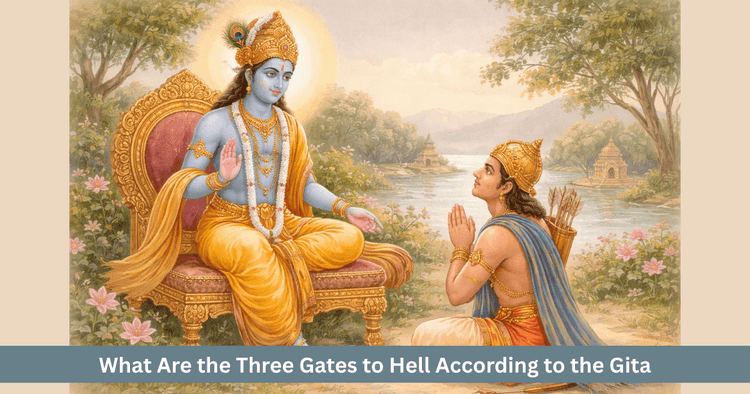
Table of Contents
The Balanced Path of Human Life
The Bhagavad Gita is one of the most enlightening scriptures of Indian philosophy. It not only reveals the spiritual depth of life but also provides a practical guide to balanced living. The words of Lord Krishna to Arjuna are not merely about victory in war but about conquering the struggles within. In its sixteenth chapter, Krishna identifies three traits that lead a person toward self-destruction. He describes them as the “three gates to hell.” Understanding them is crucial since they continue to shape the suffering and imbalance of modern human life.
The Three Gates to Hell
According to Lord Krishna, one cannot journey toward self-realization unless these three tendencies are overcome. These are desire, anger and greed.
1. Uncontrolled Desire: The Root of Restlessness
Desire is a natural force that motivates action. Yet, when it spirals beyond control, it blinds the mind. In today’s consumer-oriented world people constantly chase new possessions and luxuries. This endless craving leads to confusion and dissatisfaction. Once the sense of moderation is lost, judgment fails and peace disappears. The Gita teaches that the mastery over desire is the first step toward a stable mind.
2. Anger: The Enemy of Wisdom
Anger scorches not only others but also the one who carries it. Krishna cautions that when anger dominates, intellect is destroyed. A decision taken in haste or a harsh word spoken in fury can ruin years of effort. In families, workplaces or streets, the source of conflict often lies in uncontrolled anger. The Gita guides that only serenity and inner calm can rescue one from this destructive emotion.
3. Greed: The Endless Chain
Greed traps the human mind in constant dissatisfaction. No matter how much a person owns, it never feels enough. Krishna explains that greed binds the soul and distances it from genuine peace. In present times, corruption, deceit and broken relationships arise primarily from this unending craving for more. The one entangled in greed loses the ability to enjoy what already exists.
Where Is This Teaching Found in the Gita
This wisdom appears in the sixteenth chapter of the Bhagavad Gita, known as Daivasura Sampad Vibhaga Yoga. In this discourse, Krishna distinguishes between divine and demonic traits found in human nature. The teaching is given in verse 21 of the same chapter:
"Trividham narakasyedam dvaram nashanamatmanah | Kaamah krodhastha lobhastasmadetattrayam tyajet ||"
Meaning - “Desire, anger and greed are the three gates that lead to hell and destroy the soul. therefore one must renounce all three.”
How Can One Overcome These Traits
Krishna advised Arjuna that renouncing these vices benefits the soul and leads to ultimate peace and happiness. The Gita teaches that hell is not a physical place but an inner condition born from negative habits. When one learns to control desire, tame anger and give up greed, clarity and harmony naturally arise. Then, the individual begins to move toward the highest stage of realization.
Practical Ways to Avoid These Traits
| Trait | Effect | Way to Overcome |
|---|---|---|
| Desire | Confusion and discontent | Gratitude, awareness, moderation |
| Anger | Mental unrest | Forgiveness, reflection, calm reaction |
| Greed | Restlessness and attachment | Contentment, charity, simplicity |
When these tendencies are mastered, the mind becomes tranquil and the essence of the self shines forth. This is the true awakening described in the Gita.
Frequently Asked Questions
1. Are the gates to hell symbolic or literal?
They are symbolic expressions for destructive mental states rather than physical locations.
2. Should desire be entirely renounced?
No. Desire must be regulated, not suppressed. Controlled desire directs life toward constructive goals.
3. How can one manage anger effectively?
Pause before reacting, speak gently and assess the situation calmly.
4. How can one be free from greed?
Practice gratitude and nurture the habit of sharing with others.
5. Are these teachings relevant to modern life?
Yes. These principles are timeless and guide individuals to maintain peace in the complexity of contemporary living.
Get your accurate Kundali
Generate KundaliDid you like it?
Author

Pt. Nilesh Sharma (63)
Experience: 20
Consults About: Family Planning, Career
Clients In: Punjab, Haryana, Delhi
Share this article with friends and family
About ZODIAQ
ZODIAQ is an online Vedic Astrology platform. It connects clients seeking astrological advice to experienced astrologers with deep knowledge. Our users also generate kundali and perform kundali milan for free. ZODIAQ also offers services to the Astrologers. Astrologers utilize various offerings by ZODIAQ to serve their clients effectively.
If you are a User
Consult with experienced astrologers and seek their guidance. You can also order handwritten Janm Patrika report with life prediction prepared by experienced astrologers. Generate accurate Kundali, perform Kundali Matching and check horoscope and muhurat. Utilize our online library for all the necessary astrological and spiritual information.
If you are an Astrologer
Create accurate kundali for your clients and perform Kundali Matching for up to 5 people at a time. Write comprehensive Janm Patrika report for your clients with ZODIAQ. Check client details anytime by saving it in client directory. Become more productive by tracking how many clients you guide every day.
WELCOME TO
ZODIAQ
Right Decisions at the right time with ZODIAQ
