Directions related to planets and houses in Kundali
By Pt. Nilesh Sharma
Detailed guide to twelve house directions, planets and directions, Mars, Venus, Saturn, Jupiter directions and their link with Vastu
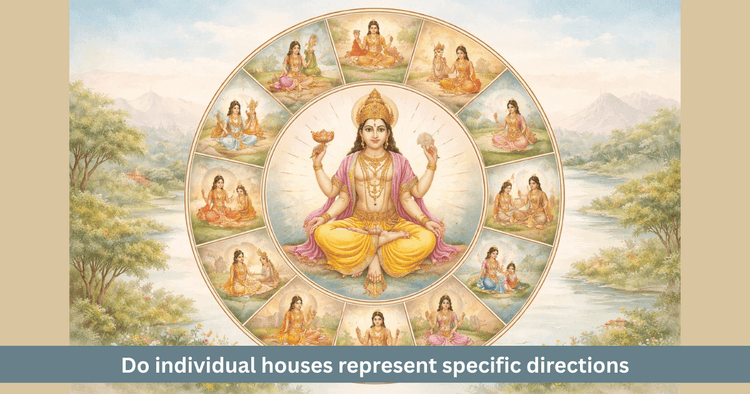
Table of Contents
Basic structure of twelve houses and directions
In Vedic astrology a horoscope is not seen only as a picture of time. It is also understood as a map of space. The twelve houses represent different areas of life and each house is linked with a direction. Within this framework the direction of planets in astrology and the idea of directional strength find their place.
The twelve houses and their directions can be viewed together in a simple table.
| House | Direction | Main themes |
|---|---|---|
| First house | East | Body, personality, beginnings |
| Second house | North East | Wealth, speech, family |
| Third house | North East | Courage, writing, siblings |
| Fourth house | North | Home, mother, emotional base |
| Fifth house | North West | Children, intellect, creativity |
| Sixth house | North West | Health, service, routines |
| Seventh house | West | Marriage, partnerships, public ties |
| Eighth house | South West | Change, longevity, hidden matters |
| Ninth house | South West | Dharma, fortune, teacher |
| Tenth house | South | Karma, career, status |
| Eleventh house | South East | Gains, friends, desires |
| Twelfth house | South East | Expenditure, retreat, path to moksha |
On this base the direction chart and astrological directions become easier to understand. When planets occupy these houses, they activate not only life areas but also their related directions. That is how the real movement in a kundali begins to reveal itself.
East, First house and the Sun’s direction
In Vedic thought the East is honoured as the most auspicious direction. It is the place of sunrise, where the day begins and where light returns after night. In astrology this direction links naturally with the First House, the house of self, body, health, confidence and new beginnings.
The Sun governs the East in direction based thinking. As the karaka of vitality and inner awareness the Sun gives power, identity and illumination to this space. Just as the Sun brings visibility to the world, the First House brings visibility to the native. It marks the start of the horoscope and sets the tone for all that follows.
In practice, a strong First House or a benefic planet rising in the East often grants clarity of purpose and natural leadership. Such people are usually noticed, respected and able to lead from the front. Everyday habits based on this understanding include:
- Facing East during morning prayer or meditation
- Turning to the East while taking important vows or sankalpa
- Beginning new work or sacred rituals while oriented to the East
In Vastu the East side of a home is kept open and clean so that sunlight can enter freely. A blocked or heavy East can symbolically reduce motivation and personal clarity.
North East, Second and Third houses and Jupiter
The North East, known as Ishanya Kona, is considered the most sacred zone in Vastu. It is ruled by Jupiter, the planet of wisdom, wealth and dharma. This direction is connected with the Second House and Third House. The Second House covers wealth, speech, early family, food and personal values. The Third House rules communication, courage, writing, self effort and younger siblings.
Both houses relate strongly to early development. The sattvic nature of the North East supports clean habits, clear speech and moral growth in these areas. Jupiter’s rulership brings blessings when this direction is used well. Strong Second and Third houses or a well placed Jupiter influencing them, often show people who grow up with firm ethics, a love for learning and a natural ability to speak or teach.
| Direction | Houses | Planet | Life areas |
|---|---|---|---|
| North East | Second, Third | Jupiter | Wealth, speech, learning, courage |
In Vastu this direction is preferred for puja rooms, libraries or meditation spaces. It should be kept open, pure and free from unnecessary weight. Misusing it for heavy storage, kitchens or toilets is believed to block fortune and clarity. In daily practice, facing North East while chanting mantras, especially those related to Guru, helps align with this gentle yet powerful zone.
North, Fourth house and Mercury
The North is linked with Mercury, the planet of intellect, analysis, trade and communication. In the chart this direction corresponds closely with the Fourth House, the house of home, emotions, mother, property, comfort and formal education.
The Fourth House is one of the pillars of stability in life. It shows where one feels rooted and safe. Mercury adds sharpness and discrimination to this part of the chart, influencing how a person thinks, studies and takes decisions in domestic and foundational matters. The North supports mental balance and practical intelligence.
- North facing entrances often favour clarity in business and mental work
- Study rooms and home offices placed in this direction can support concentration
- This side of the home is best kept well lit and free from heavy blockages
During study, research, scripture reading or financial planning, facing North helps bring calm focus and sattvic thoughts. In the broader framework of 12 houses in Vedic astrology, a well placed Mercury in or aspecting the Fourth House often grants a good learning environment and mental steadiness.
North West, Fifth and Sixth houses and the Moon
The North West direction is governed by the Moon. It is linked with the Fifth House and Sixth House. The Fifth House governs children, intelligence, past life merit, education and creative expression. The Sixth House governs health, service, enemies, daily work and debts. Together they represent both blessings and responsibilities, soft emotional pursuits and disciplined daily struggles.
The Moon is a planet of emotion, intuition and fluctuation. North West is an air dominant zone and reflects the Moon’s shifting nature. At times it feels supportive and light. At other times it can stir restlessness.
| Direction | House | Planet | Indications |
|---|---|---|---|
| North West | Fifth | Moon | Emotional intelligence, children, creativity |
| North West | Sixth | Moon | Service, stress patterns, health routines |
In Vastu this direction often suits guest rooms or spaces used by people who do not stay permanently. It can also be used for laundry or other transitional activities. Long meditation is usually not advised here, yet emotional journaling or counselling type work can be suitable, since this space mirrors inner movements.
West, Seventh house and Saturn
The West is the direction of the setting Sun. It represents maturity, endings and how one meets the outer world. Saturn, the planet of discipline, time and responsibility, rules this direction. The West aligns naturally with the Seventh House, the house of marriage, partnerships, contracts, business alliances and public engagement.
The Seventh House stands opposite to the First House. While the First speaks of self, the Seventh speaks of others. Saturn’s link with this direction teaches that real relationships need patience, structure, boundaries and endurance.
| Direction | House | Planet | Life area |
|---|---|---|---|
| West | Seventh | Saturn | Marriage, partnership, public image |
When the Seventh House is strong or Saturn is well placed, long term partnerships and stable alliances are common. When damaged, delays in marriage, karmic challenges with others or repeated tests in agreements may appear. In Vastu, west facing rooms that demand discipline, such as elder’s bedrooms or serious workspaces, can benefit from Saturn’s grounding nature. In Saturn direction in astrology related practices, facing West while praying for patience or during demanding Saturn periods can feel supportive.
South West, Eighth and Ninth houses and Rahu
The South West is one of the most complex and intense directions. It is influenced by Rahu, the shadow planet associated with deep desires, confusion and rapid change. This direction links to the Eighth House and Ninth House. The Eighth House covers transformation, longevity, secrets and shared resources. The Ninth House represents dharma, father, fortune, higher learning and long journeys.
Together these houses show deep contrast. The Eighth deals with hidden, difficult and karmic themes. The Ninth shows blessings and higher protection. Rahu’s role here creates inner tension that pushes a person toward maturity.
South West is a direction of power, control and karmic storage. Used wisely, it can grant stability and depth. Used wrongly, for instance by placing strong fire or water features here, it may contribute to accidents, legal trouble or anxiety. In Vastu this direction is best suited for the main bedroom or the room of elders and should be heavy, grounded and well protected.
South, Tenth house and Mars direction in astrology
The South is governed by Mars in direction based thinking. Mars is the fiery warrior among the planets, connected with strength, courage and action. This direction corresponds to the Tenth House, which represents career, public life, karma, recognition and visible contribution.
The Tenth House is the highest point of the chart. It shows where duties are performed in the world. Mars in the South direction inspires ambition and leadership. People with strong Tenth House placements or with Mars influencing this sector, often take decisive actions in their profession. They may rise quickly, provided they control anger and haste.
| Direction | House | Planet | Themes |
|---|---|---|---|
| South | Tenth | Mars | Career, duty, leadership |
In Vastu, South facing homes are not automatically inauspicious. They need firm foundations and disciplined use. Rooms demanding high energy, such as gyms or focused work areas, can be placed here. Meditation or rest zones suit this direction less. Practical use includes facing South when courage or resolve is needed to complete tough tasks.
South East, Eleventh and Twelfth houses and Venus direction in astrology
The South East is ruled by Venus, the planet of beauty, pleasure, relationships, luxury and creativity. It connects with the Eleventh House and Twelfth House. The Eleventh House indicates gains, friends, networks and ambitions. The Twelfth House indicates loss, expenditure, sleep, isolation and the path of letting go.
South East is also the Agni or fire corner in Vastu. It carries a blend of material desire and subtle withdrawal. When balanced, this space supports artistic growth, prosperity and refined spiritual practices.
| Direction | Houses | Planet | Hints |
|---|---|---|---|
| South East | Eleventh, Twelfth | Venus | Gains, spending, art, subtle release |
In Vastu this direction is ideal for kitchens, creative studios or beauty related rooms. Bedrooms placed here need careful design. Lighting and colours should be soft rather than harsh. In daily life, facing South East while working on financial planning or artistic projects aligns with the Venus energy. For direction of Venus in astrology based remedies, such as chanting “Om Shukraya Namah” on Fridays, this direction is often chosen.
Planets and directions in astrology as a practical guide
When planets and directions in astrology are studied together with house directions, an extra depth appears. The usual mapping considered is Sun with East, Jupiter with North East, Mercury with North, Moon with North West, Saturn with West, Rahu with South West, Mars with South and Venus with South East. When a planet occupies a house aligned with its natural direction, its influence tends to become stronger and clearer.
The twelve houses in Vedic astrology can then be seen as different house in kundali with their own directional emphasis. This helps in practical analysis.
- If career feels blocked, attention can be given to the Tenth House, the South direction and Mars related themes
- If relationships are strained, the Seventh House, the West direction and Saturn’s condition deserve study
- If money and speech are issues, the Second and Third Houses, the North East direction and Jupiter’s state become important
In this way astrological directions are not only theoretical. They guide meditation posture, room use and many small choices that align daily life with the chart.
Key questions on astrological directions (FAQ)
1. Do planets change the basic house directions
The basic house directions remain fixed. The First House always marks East, the Seventh West, the Fourth North and the Tenth South. Planets express their energy differently in each direction but they do not shift the house directions themselves.
2. What is Mars direction in astrology and how does it affect life
Mars is associated with the South direction and with the Tenth House. When well balanced it supports courage, career drive and leadership. When imbalanced it may cause conflicts or impulsive actions in professional life.
3. How does Venus direction in astrology influence gains and losses
Venus is linked with the South East, connected to the Eleventh and Twelfth Houses. This direction influences gains, friendships, pleasures and spending. A balanced Venus supports prosperity and art, while an unbalanced Venus may increase indulgence and financial drain.
4. What does Saturn direction in astrology tell us
Saturn is tied to the West and the Seventh House. It shapes marriage, partnerships and public image through lessons of patience and responsibility. A strong Saturn can give lasting ties, while a weak or stressed Saturn may bring delays or tests in relationships.
5. How can astrological directions be used in daily practice
Astrological directions can guide which way to face during prayer, study, planning or negotiations. For example South for courage and work, West for serious commitments, North East for learning and mantras. Small adjustments in direction often make inner focus and results steadier.
Get your accurate Kundali
Generate KundaliDid you like it?
Author

Pt. Nilesh Sharma (63)
Experience: 20
Consults About: Family Planning, Career
Clients In: Punjab, Haryana, Delhi
Share this article with friends and family
About ZODIAQ
ZODIAQ is an online Vedic Astrology platform. It connects clients seeking astrological advice to experienced astrologers with deep knowledge. Our users also generate kundali and perform kundali milan for free. ZODIAQ also offers services to the Astrologers. Astrologers utilize various offerings by ZODIAQ to serve their clients effectively.
If you are a User
Consult with experienced astrologers and seek their guidance. You can also order handwritten Janm Patrika report with life prediction prepared by experienced astrologers. Generate accurate Kundali, perform Kundali Matching and check horoscope and muhurat. Utilize our online library for all the necessary astrological and spiritual information.
If you are an Astrologer
Create accurate kundali for your clients and perform Kundali Matching for up to 5 people at a time. Write comprehensive Janm Patrika report for your clients with ZODIAQ. Check client details anytime by saving it in client directory. Become more productive by tracking how many clients you guide every day.
WELCOME TO
ZODIAQ
Right Decisions at the right time with ZODIAQ
