Yam-Yami Dialogue in Rigveda: The Conflict of Attraction, Emotions and Dharma
By Aparna Patni
The Yam-Yami dialogue is a Vedic symbol of the struggle between dharma, dignity and human emotion
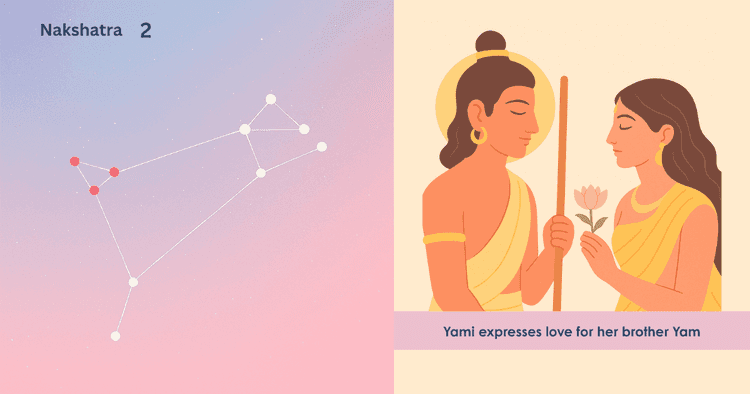
Table of Contents
In the Rigveda Mandala ten Sukta ten the dialogue between Yama and Yami appears as one of the most profound and sensitive passages of Vedic literature. In this dialogue Yami expresses deep affection and attraction toward her brother Yama while Yama responds with discipline, clarity and firm adherence to dharma. This exchange presents a vivid picture of the tension between human emotion, desire and moral duty.
The central episode
At the beginning of creation Yama and Yami were alone. Yami requested Yama to unite with her so that creation could expand. She argued that they were born of the same womb and were closest to each other and that rules of society and dharma were not yet established.
Yami believed that their union would benefit the universe and support the growth of life.
Yama responded with restraint and ethical clarity. He said that the bond of siblings is sacred and cannot be broken. He also said that even if Yami’s affection was deep he would not violate dharma or moral order.
Yam Devta: The Vedic Lord of Death, Dharma and Justice
Philosophical and emotional meaning
This episode is not merely a story about desire or denial. It presents the human struggle between emotion and responsibility. Yami’s longing and Yama’s unwavering discipline reveal that while emotions are powerful, moral order is higher.
The dialogue teaches that when desire and duty conflict moral duty must guide one’s actions.
Teachings from the Rigveda guidance for life
1 Primacy of dharma and moral boundaries
Yama affirms that the bond of siblings is sacred and must not be broken.
Teaching emotions may be strong but morality and restraint must guide life.
2 Balance between desire and duty
Even though Yami insists Yama remains firm in his duty.
Teaching When personal wishes conflict with social responsibility the welfare of society and dharma should come first.
3 Sanctity of social relationships
The dialogue preserves the purity of the sibling bond and emphasizes social order.
Teaching respecting boundaries maintains harmony in society.
4 Symbolic interpretation
Many scholars interpret Yama and Yami as symbols of day and night life and death or two complementary cosmic forces.
Teaching balance and duality sustain creation.
5 Self discipline and wisdom
Yama’s restraint shows the importance of thoughtful decision making in difficult situations.
Teaching Self control is essential for real righteousness.
Overall message
The story shows that attraction and emotion exist but dharma and responsibility must guide human action. This balance makes the dialogue one of the most significant teachings of the Rigveda.
FAQs
• What is the main message of the Yama Yami dialogue
That dharma and moral restraint must remain above emotion and desire.
• What does Yami request from Yama
She requests union for the expansion of creation.
• Why does Yama reject the request
He refuses to violate the sacred boundary of the sibling bond and the laws of dharma.
• Does the dialogue have symbolic meaning
Yes many view it as a symbol of day and night or life and death.
• What does this story teach modern society
That discipline, moral boundaries and clarity in relationships are essential for social harmony.
What does Nakshatra reveal about me?
My NakshatraDid you like it?
Author

Aparna Patni (63)
Experience: 20
Consults About: Family Planning, Career
Clients In: Punjab, Haryana, Delhi
Explore Related Articles
Explore All
Bharani Nakshatra: The Vedic Gateway to Life, Creation and Karma
Four Padas of Bharani Nakshatra: Traits, Career and In-depth Analysis
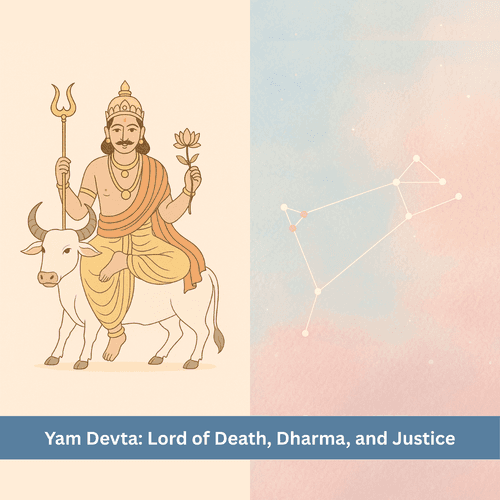
Yam Devta: The Vedic Lord of Death, Dharma and Justice
Yam-Yamuna's Story: A Vedic Symbol of Sibling Love and Liberation
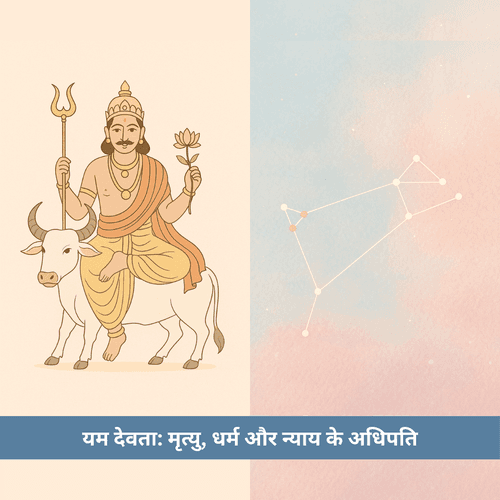
यम देवता: मृत्यु, धर्म और न्याय के वैदिक अधिपति
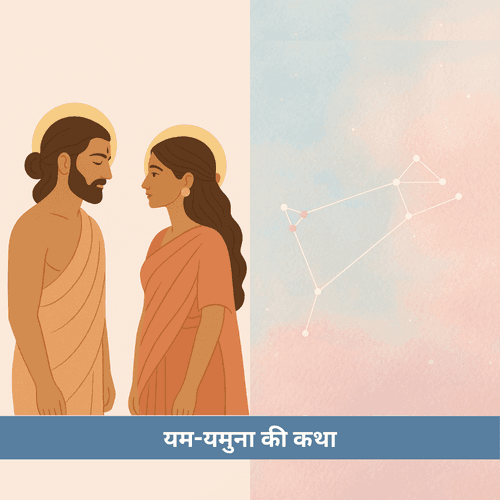
यम-यमुना की कथा: भाई-बहन के प्रेम और मोक्ष का वैदिक प्रतीक
Share this article with friends and family
About ZODIAQ
ZODIAQ is an online Vedic Astrology platform. It connects clients seeking astrological advice to experienced astrologers with deep knowledge. Our users also generate kundali and perform kundali milan for free. ZODIAQ also offers services to the Astrologers. Astrologers utilize various offerings by ZODIAQ to serve their clients effectively.
If you are a User
Consult with experienced astrologers and seek their guidance. You can also order handwritten Janm Patrika report with life prediction prepared by experienced astrologers. Generate accurate Kundali, perform Kundali Matching and check horoscope and muhurat. Utilize our online library for all the necessary astrological and spiritual information.
If you are an Astrologer
Create accurate kundali for your clients and perform Kundali Matching for up to 5 people at a time. Write comprehensive Janm Patrika report for your clients with ZODIAQ. Check client details anytime by saving it in client directory. Become more productive by tracking how many clients you guide every day.
WELCOME TO
ZODIAQ
Right Decisions at the right time with ZODIAQ
