The Seven Types of Nakshatras in Vedic Astrology: An In-Depth Analysis
By Pt. Nilesh Sharma
Explore the origin, legends, naming process and the deep astrological significance of Nakshatras in Vedic tradition
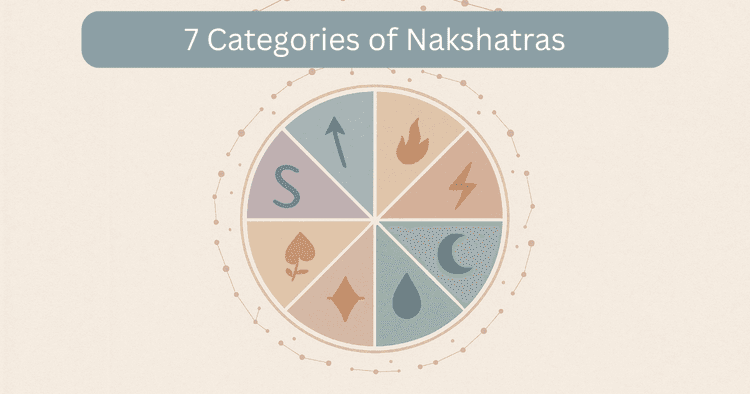
Table of Contents
When the Moon moves across the sky it does more than complete its orbit. It shapes the flow of time for the culture that has followed lunar movement for thousands of years. In Vedic astrology the study of nakshatras reveals this connection between time, action and destiny. The nakshatra system divides the sky into segments that reflect the movement of the Moon. These divisions help decide the quality of each day. They guide choices and influence outcomes. This knowledge has always been considered an intimate bridge between human life and celestial rhythm.
Structure of the Nakshatra System and Its Place in the Panchang
The Moon completes one revolution around the Earth in about 27.3 days. The sky has therefore been divided into 27 parts. Each part spans thirteen degrees and twenty minutes. Every nakshatra contains four padas. These one hundred and eight padas resonate with the hundred and eight beads of the japa mala and with the one hundred and eight sacred vibrations of mantra practice. The nakshatra is placed in the Panchang as the fifth element along with tithi, weekday, yoga and karana. It becomes the foundation to judge the favourability of any day.
Why the Ancients Created Seven Categories of Nakshatras
The sages observed that each nakshatra carries a different nature. Some bring stability while others stimulate movement. Some support gentle actions while others encourage decisive or forceful activity. To help people choose the right time for the right task these natures were classified into seven groups. This system allows a person to act in harmony with the direction of time.
What Are Fixed Nakshatras and How Are They Used
Fixed nakshatras are chosen for long lasting commitments. Actions that require stability or continuity receive strong support during these nakshatras. Marriage, house construction, land purchase, long term investments and the establishment of institutions are suitable.
List of fixed nakshatras
- Rohini
- Uttara Phalguni
- Uttara Ashadha
- Uttara Bhadrapada
The energy of fixed nakshatras is calm and steady. Work completed under their influence tends to last for many years.
For Which Activities Are Movable Nakshatras Best
Movable nakshatras encourage movement and change. These times are ideal for travel, relocation, transport, vehicle purchase, business expansion or any activity that demands flexibility.
List of movable nakshatras
- Ashwini
- Bharani
- Mrigashirsha
- Punarvasu
- Shravana
- Revati
The presence of a movable nakshatra brings immediate motion to new decisions.
Why Fierce Nakshatras Are Reserved for Special Circumstances
Fierce nakshatras represent power, intensity and confrontation. They are not used for auspicious occasions. They are however very effective when a firm stance is required. Legal battles, conflict resolution, opposition, protective measures or strong corrective action can be taken during these nakshatras.
List of fierce nakshatras
- Moola
- Ashlesha
- Jyeshtha
- Bharani
- Purva Ashadha
These nakshatras enhance courage and sharp judgement. They were traditionally linked with protective rituals.
When Are Mixed Nakshatras Useful
Mixed nakshatras contain dual tendencies. They are balanced in nature. Tasks that neither need high auspiciousness nor strong intensity fit well in these periods.
List of mixed nakshatras
- Vishakha
- Krittika
Mixed nakshatras support moderation and practical decisions.
How Fast Moving Nakshatras Influence Quick Tasks
Fast nakshatras are light and swift in nature. Their influence suits activities that must be completed quickly. Social interactions, entertainment, casual purchases, creative experimentation and short term engagements feel natural under these nakshatras.
List of fast nakshatras
- Hasta
- Ashwini
- Pushya
- Abhijit
Abhijit is considered exceptionally auspicious. Swift nakshatras lift enthusiasm and bring ease.
Why Soft Nakshatras Bring Harmony and Creativity
Soft nakshatras carry gentle and graceful energy. Marriage, music, arts, childbirth, decoration and emotional bonding flourish during these periods.
List of soft nakshatras
- Rohini
- Mrigashirsha
- Anuradha
- Revati
These nakshatras enhance affection and serenity.
Nakshatras: Timeless Stories origin and Importance in Vedic Astrology
What Makes Sharp Nakshatras Effective for Specific Actions
Sharp nakshatras are intense and penetrating in nature. They are not meant for joyous ceremonies. They are however suitable for medical procedures, surgery, decisive interventions, occult practices or enemy neutralisation.
List of sharp nakshatras
- Ardra
- Ashlesha
- Moola
- Jyeshtha
Their energy cuts through obstacles and supports difficult tasks.
How Understanding Nakshatras Guides Practical Life
Each nakshatra shapes the tone of the day. This knowledge teaches that success increases when actions align with the quality of time. Panchang is not only a calendar. It is a way of understanding rhythm. Nakshatras form the most refined layer of this rhythm.
FAQs
How many kinds of nakshatras exist
There are seven types which include fixed, movable, fierce, mixed, fast, soft and sharp groups.
Does every task require a different nakshatra
Yes, the nature of the task determines the appropriate nakshatra so that time supports the effort.
Are sharp nakshatras inauspicious
They are not used for general auspicious work, yet they are beneficial for specialised processes.
Are fixed nakshatras suitable for marriage
They are ideal for marriage because they strengthen permanence.
Is Abhijit always auspicious
Abhijit is highly favourable, yet it is selected according to the nature of the work.
What does Nakshatra reveal about me?
My NakshatraDid you like it?
Author

Pt. Nilesh Sharma (63)
Experience: 20
Consults About: Family Planning, Career
Clients In: Punjab, Haryana, Delhi
Explore Related Articles
Explore All
Nakshatras: Origin, Legends, Naming and Their Profound Role in Vedic Astrology

The Nature of Nakshatras in Vedic Astrology: An In-Depth Study

The Origin and Legends of Nakshatras: A Vedic Perspective

Moola Dosha in Vedic Astrology: Insights, Impact and Authentic Remedies

Gandmool Dosha: Vedic Perspectives on Birth Nakshatra Afflictions and Authentic Paths to Peace
नक्षत्रों की उत्पत्ति और उनकी पौराणिक कथा: वैदिक दृष्टि से विस्तार
Share this article with friends and family
About ZODIAQ
ZODIAQ is an online Vedic Astrology platform. It connects clients seeking astrological advice to experienced astrologers with deep knowledge. Our users also generate kundali and perform kundali milan for free. ZODIAQ also offers services to the Astrologers. Astrologers utilize various offerings by ZODIAQ to serve their clients effectively.
If you are a User
Consult with experienced astrologers and seek their guidance. You can also order handwritten Janm Patrika report with life prediction prepared by experienced astrologers. Generate accurate Kundali, perform Kundali Matching and check horoscope and muhurat. Utilize our online library for all the necessary astrological and spiritual information.
If you are an Astrologer
Create accurate kundali for your clients and perform Kundali Matching for up to 5 people at a time. Write comprehensive Janm Patrika report for your clients with ZODIAQ. Check client details anytime by saving it in client directory. Become more productive by tracking how many clients you guide every day.
WELCOME TO
ZODIAQ
Right Decisions at the right time with ZODIAQ
