Hanuman and Prana Energy
By Pt. Narendra Sharma
Shani Rahu air disturbance and Maruti sadhana
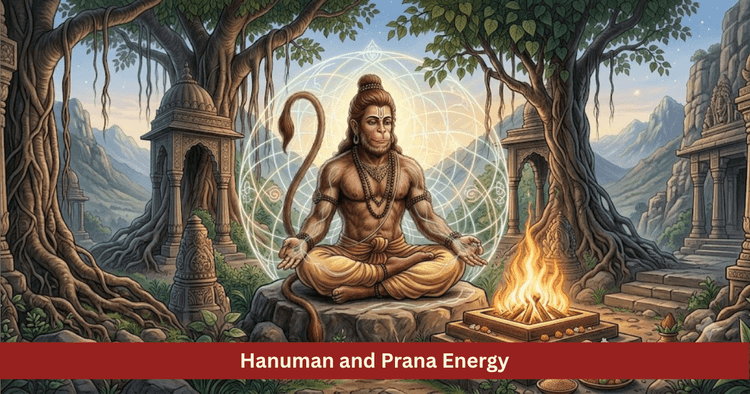
Table of Contents
Saturday Sadhana and Pranayama Summary
In Vedic astrology Shani and Rahu are viewed as forces connected with the air element. Shani indicates time, delay, dryness, labour and long pressure. Rahu may increase excessive thoughts, restlessness, unusual fear and uncontrolled desire. Their influence may be experienced as stress in the mind, breath and nervous system. Vata disease, nerve tension or unusual bodily movement should not be treated only as planetary dosha. Medical examination is necessary.
Hanuman, the son of Vayu, is regarded as the deity of prana, courage and disciplined strength. Maruti Stotra remembers him as Bhimarupi Maharudra, Vajra Hanuman, Ramaduta and Prabhanjana. Pranayama along with Hanuman sadhana can bring rhythm to mind and breath. It may support the handling of the symbolic air disturbance of Shani and Rahu. In serious breathing, heart or mental problems guidance from a qualified doctor and trained yoga teacher is necessary.
| Detail | Special information |
|---|---|
| Principal days | Saturday and Tuesday |
| Suitable time | before sunrise or after sunset |
| Main planets | Shani and Rahu |
| Main deity | Hanuman the son of Vayu |
| Main element | air and prana |
| Main recitation | Maruti Stotra |
| Supporting recitation | Hanuman Chalisa |
| Main mantra | Om Ham Hanumate Namah |
| Prana practice | Nadi Shodhana and Bhramari |
| Main offerings | sindoor jasmine oil and red flowers |
| Main seva | help for the sick elderly and needy |
| Core rule | slow breath truthful speech and discipline |
The first step of prana sadhana is to steady the body. Choose a quiet place on an empty stomach or after light food. Keep the spine upright. After a few normal breaths practise Nadi Shodhana. Then do Bhramari without force. After this recite Maruti Stotra. Do not practise breath retention or intense Kapalabhati without training.
This ordered outline of daily sadhana can be followed with ease at home.
- After the morning bath sit on a clean asana
- Observe natural breathing for 5 minutes
- Practise 5 to 9 cycles of Nadi Shodhana
- Do Bhramari 5 times
- Chant Om Ham Hanumate Namah 108 times
- Recite Maruti Stotra or Hanuman Chalisa
- At the end breathe normally for a few moments
When the Son of Vayu Gives Direction to the Mind
Hanuman is called the son of Vayu. Vayu is not only moving air. It is prana. Breath, movement, energy and communication in the body are understood as forms of prana. When prana is balanced the mind remains steady. When prana is disturbed thoughts may run in many directions at once.
The strength of Hanuman is not only muscular strength. It is the disciplined form of prana Shakti. He crosses the ocean yet not without purpose. He lifts the mountain yet not from pride. He enters Lanka for the work of Rama. This is the message of the son of Vayu. When energy receives a goal it becomes seva.
During the air disturbance of Shani and Rahu a person may feel that the mind is moving by itself. Unnecessary thoughts, old fears and concern about the future continue to increase. Hanuman sadhana joins the mind with one name, one breath and one dharmic action.
The Air Element of Shani and Rahu
Shani is regarded as connected with air and Rahu with shadow and air related restlessness. The influence of Shani can create pressure that continues for a long time. Rahu can turn that pressure into confusion and unstable imagination. Together they may push a person toward mental fatigue, sleep difficulty, nervous tension and irregular routine.
This astrological indication is not a medical diagnosis. Anxiety, insomnia, nerve pain, breathing difficulty and vata symptoms may have many physical causes. Yet at the level of sadhana regularity and breath discipline are extremely useful for balancing Shani and Rahu symbolically.
| Effect | Shani indication | Rahu indication |
|---|---|---|
| Mind | heaviness and despair | confusion and excessive thoughts |
| Body | dryness and stiffness | unusual sensation |
| Time | delay and waiting | sudden change |
| Behaviour | hesitation and loneliness | impatience and risk |
| Sadhana | discipline and seva | awareness and viveka |
Hanuman is the living balance between both planets. He gives courage to the discipline of Shani. He steadies the instability of Rahu through the name of Rama.
Psychological Meaning of Pranayama
Pranayama is not only a technique of breathing. It is practice of awareness toward breath. When a person observes breathing a small distance is created between thought and reaction. This distance becomes the birthplace of viveka.
Nadi Shodhana is considered by some yoga traditions useful for balance of body and mind. Breath is taken through one nostril and released through the other in sequence. The practice should remain gentle. Breath retention is not necessary. Beginners should practise without kumbhaka.
In Bhramari the breath is released with a sound like a bee. This vibration may create a feeling of calm around the face and brain. Closing the ears is not necessary for everyone. Simple Bhramari is also sufficient. Stop immediately if dizziness, anxiety or breathing difficulty occurs.
General rules of pranayama are as follows.
- Practise on an empty stomach or after light food
- Keep the spine comfortably upright
- Do not force the breath
- Do not practise breath retention without training
- Practise intense techniques cautiously during high blood pressure or pregnancy
- Return to normal breathing if discomfort appears
Importance of Maruti Stotra
Maruti Stotra remembers Hanuman in his forms of Vayu, Rudra, strength, intelligence and Ramaduta. Its opening feeling offers salutations to Hanuman as Bhimarupi Maharudra, Vajra Hanuman, son of Anjani, messenger of Rama and Prabhanjana. Prabhanjana is connected with the movement of Vayu.
Recitation of the stotra joins prana with the name. Breath moves. Name moves. The speed of thought can slowly come into one rhythm. This is the path of giving symbolic air energy of Shani and Rahu a direction.
The simple recitation method is as follows.
- Light a lamp before Hanuman after bathing
- Offer sindoor and jasmine oil
- Chant Om Ham Hanumate Namah
- Recite Maruti Stotra clearly
- Read Hanuman Chalisa
- Offer jaggery gram or banana
- Help a person in need
The purpose of Maruti Stotra is not a claim of immediate removal of disease. It creates samskara of courage, awareness of prana and discipline. When treatment and sadhana move together a person becomes more responsible toward body and mind.
Vata Disease and Nervous Tension
In Ayurveda Vata Dosha is considered connected with movement, nerves, breath and communication of the nervous system. When Vata increases dryness, constipation, sleep difficulty, restlessness, bodily pain or nerve tension may be experienced. In modern medicine these symptoms may have different causes. Self diagnosis is therefore not proper.
Give the body rest along with Hanuman sadhana. Take warm and balanced food. Keep sleep regular. Avoid excessive fasting. Do light exercise. Take treatment with advice from a doctor. It is not proper to claim that a serious Vata disease is cured through mantra alone.
Practical methods for balancing the air element are as follows.
- Take food at regular times
- Drink sufficient water
- Avoid excess cold and dry food
- Do not sit in one posture for a long time
- Walk slowly and stretch the body
- Reduce intense mental stimulation before sleep
- See a doctor for pain or numbness
Shani Rahu and Chakra Balance
In yoga traditions chakras are considered subtle centres of energy. Different sadhana methods exist regarding chakras. A chakra experience should not be treated as proof of disease. In Hanuman sadhana a feeling of courage, steadiness and bhakti may be developed from the root to the heart.
The discipline of Shani is like steadiness of the root. The instability of Rahu may be like thoughts rushing upward. Pranayama brings breath to the present. Rama nama awakens maryada in the heart. Chakra balance should therefore be understood as a symbolic and meditative practice.
During Sade Sati of Shani or Rahu Mahadasha regularity is necessary. A little practice every day may be more useful than long practice once a week. Shani observes continuity. Rahu learns clarity.
Tuesday and Saturday Sadhana
On Saturday honour Shani Dev along with Hanuman. Light a mustard oil lamp. Donate black sesame or a blanket. During Shani affliction respect service and labour. During Rahu anxiety stay away from wrong company, addiction and risky decisions.
On Tuesday offer red flowers, sindoor, jasmine oil and jaggery gram. Put the body into exercise and seva. Do not suppress anger. Turn it into disciplined action.
A practical order of sadhana may be kept as follows.
- Read Hanuman Chalisa and Maruti Stotra on Tuesday
- Read Maruti Stotra and Shani mantra on Saturday
- Practise calm breathing for 5 to 10 minutes daily
- Serve a sick or elderly person once a week
- Take a resolve of freedom from addiction
- Respect time and personal promises
What to Do and What to Avoid
Clear limits help Hanuman, Shani, Rahu and prana sadhana.
| Do | Do not |
|---|---|
| Gentle and slow pranayama | forceful breath retention |
| Maruti Stotra and Hanuman Chalisa | desire only for removal of disease |
| Service and dana on Saturday | spread fear of Shani |
| Exercise and discipline on Tuesday | violence in anger |
| Care for sleep and food | excessive fasting |
| Take medical advice | treat disease only as Vata or planetary dosha |
Do not use gems, tantric practices or intense pranayama without qualified guidance. Gomed for Rahu and Neelam for Shani may be considered only after seeing the individual chart. Learn breath and health related practices from a trained teacher.
The True Fruit of Prana Energy
Increase of prana energy through Hanuman grace does not mean only physical excitement. It means choosing the right action even in fatigue. Speaking truth within fear. Returning to breath during a storm of thoughts. Keeping patience during Shani delay. Preserving viveka in the brightness of Rahu.
The greatest fruit is that a person no longer becomes an enemy of body and mind. One listens to fatigue. One seeks treatment on time. One recognises anger. One makes breath a companion. This is the inner teaching of the son of Vayu.
The Breath That Remains in Life
When sadhana ends do not limit Hanuman to the temple. Take one breath before speaking. Pause before replying in anger. Rest during fatigue. Help a person in need. Keep promises. This is the dharma of prana energy.
Shani teaches slowing the air. Rahu makes the air wander. Hanuman puts the air into the work of Rama. When breath, name and karma move in one direction the storm of the mind slowly becomes calm.
FAQ
How should Hanuman sadhana be done for Shani and Rahu air disturbance
On Saturday or Tuesday after bathing chant Om Ham Hanumate Namah 108 times. Recite Maruti Stotra and Hanuman Chalisa. Keep gentle pranayama and seva along with it.
What is the importance of Maruti Stotra
Maruti Stotra remembers Hanuman as son of Vayu, Rudra, source of strength and intelligence and messenger of Rama. It is a practice for courage, prana awareness and discipline.
Which pranayama is useful for Shani and Rahu
Gentle Nadi Shodhana and Bhramari may be useful. Do not practise breath retention or intense methods without training. Take medical advice for health problems.
Does Hanuman sadhana cure Vata disease
Hanuman sadhana may give mental support, breath awareness and discipline. Vata disease, nerve pain or breathing problems require medical examination and treatment.
Should gems be worn for Shani and Rahu Dosha
Gomed and Neelam should not be worn without a chart and qualified advice. Begin with seva, dana, regularity, pranayama and mantra sadhana.
Get your accurate Kundali
Generate KundaliDid you like it?
Author

Pt. Narendra Sharma (63)
Experience: 20
Consults About: Family Planning, Career
Clients In: Punjab, Haryana, Delhi
Share this article with friends and family
About ZODIAQ
ZODIAQ is an online Vedic Astrology platform. It connects clients seeking astrological advice to experienced astrologers with deep knowledge. Our users also generate kundali and perform kundali milan for free. ZODIAQ also offers services to the Astrologers. Astrologers utilize various offerings by ZODIAQ to serve their clients effectively.
If you are a User
Consult with experienced astrologers and seek their guidance. You can also order handwritten Janm Patrika report with life prediction prepared by experienced astrologers. Generate accurate Kundali, perform Kundali Matching and check horoscope and muhurat. Utilize our online library for all the necessary astrological and spiritual information.
If you are an Astrologer
Create accurate kundali for your clients and perform Kundali Matching for up to 5 people at a time. Write comprehensive Janm Patrika report for your clients with ZODIAQ. Check client details anytime by saving it in client directory. Become more productive by tracking how many clients you guide every day.
WELCOME TO
ZODIAQ
Right Decisions at the right time with ZODIAQ
