Ekadashi and Family Meals
By Pt. Sanjeev Sharma
Cooking for the family while fasting is not a sin. It is part of household dharma and service
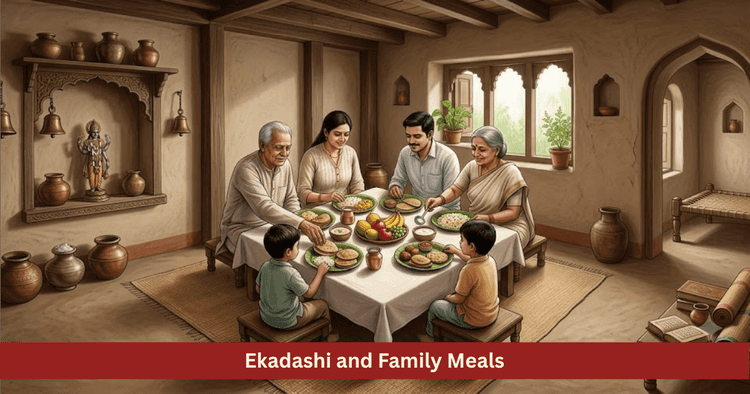
Table of Contents
The Rule of Fast, the Dharma of Duty
Ekadashi is regarded as a day of discipline, restraint and self purification. In the Puranic tradition, it is also said that on this day a portion of Maharishi Medha resides in barley and rice, so the devotee observing the fast should avoid grains. However, extending this rule equally to the entire family is not a scripturally sound view.
Many homemakers remain anxious about this question. If they are observing the fast themselves, will cooking rice for children, sick elders or the husband become a sin? Dharma shastra and practical life give a clear answer. The rule of fasting applies to the person who is fasting. Those who are not fasting or those who cannot fast because of health, age or necessity, are not committing a sin by eating or receiving food.
| Subject | Balanced understanding |
|---|---|
| Ekadashi fast | A rule of restraint for the devotee |
| Rice and barley | Considered forbidden for the fasting person |
| Family members | Not bound by the fast |
| Sick elders | Health comes first |
| Small children | Nutrition and care are necessary |
| Cooking food | An act of duty and service |
The true spirit of Ekadashi is service with restraint, not guilt with fear.
Is Cooking Rice a Sin
Cooking rice is not a sin in itself. Sin is linked only when there is disrespect, ego or deliberate disregard for dharma in the mind. If a homemaker is preparing food for her children, husband or a sick family member, she is fulfilling her duty. That is service, not fault.
The real purpose of dharma is to organise life, not make it difficult. If one family member is fasting and others need regular food, closing the kitchen would not be wise. The scriptures do not mean that hunger, illness or the needs of childhood should be ignored.
Keep these points in mind:
- The fast should be kept by the person observing it.
- The needs of children and sick people should be understood first.
- Do not cook with a feeling of disrespect.
- Do not see service as a fault.
- Avoid unnecessary fear and guilt.
- Give priority to family health.
- The spirit of Ekadashi is purity and remembrance.
Service done with devotion becomes dharma itself.
Balance Between Fast and Duty
Fast is part of spiritual practice but duty is equally important in household life. A person who is carrying family responsibility is also practising dharma when cooking, caring, arranging necessities and managing the home. If a mother or wife is observing Ekadashi but still working in the kitchen for the family, there is nothing against the scriptures in that.
It is necessary to understand that each person has a different physical and mental condition. A small child, a pregnant woman, an elderly person or a patient cannot follow the same fasting rule. In such cases, the essence of dharma is compassion and practical wisdom. Treating rigidity as dharma often creates confusion.
Proper conduct for the fasting person
- Avoid grains yourself if the fast requires it.
- Respect the needs of others.
- Keep the mind calm while cooking.
- See service as a form of practice.
- Do not spread guilt in the family.
- Consider the health condition.
- Practise dharma with compassion.
Dharma is what holds a family together, not what breaks it.
The Right Meaning of the Puranic Teaching
The Puranic story connected with Ekadashi is meant to awaken reverence and restraint. The teaching about avoiding barley and rice for the fasting devotee is about controlling the desire for indulgence. It does not mean that cooking food in the home has become forbidden. The aim of scripture is to strengthen the devotee’s commitment, not make normal family life impossible.
Sometimes people hold only the outer layer of the story and leave its inner meaning aside. Then dharma turns into fear. But real dharma moves with wisdom. Where needed, understanding exceptions is also part of dharma. Cooking normal food for a sick person or a young child is service, not violation.
| Context | Correct understanding |
|---|---|
| Ekadashi fast | Avoidance of grains for the devotee |
| Family meals | A necessity of life |
| Children’s food | Growth and nourishment |
| Patient’s food | Treatment and compassion |
| Household dharma | Service and responsibility |
| Mental feeling | Reverence and calmness |
The essence of the story is restraint, not escape from family duty.
Why Women Carry Unnecessary Burden
In household life, women often carry the weight of both religion and the kitchen. If they are also made to fear that cooking rice for the family is a sin, their mind becomes burdened with unnecessary stress. This stress is neither scriptural nor useful. Dharma should increase peace in the home.
If a mother, wife or any woman in the house is keeping the fast with devotion and still meeting the needs of the family, she is practising her dharma well. There is no sense of sin there, only compassion order and responsibility. Feeding children, caring for elders and preparing food for the husband are natural parts of household duty.
Supportive view for a homemaker
- Understand your own fast and family duty separately.
- Do not carry unnecessary guilt.
- Do not treat service as impure.
- Decide according to health and age.
- Keep clarity in the family.
- Hold the spirit of Ekadashi in the mind.
- Act with reverence, not fear.
Motherhood and dharma are not in conflict.
Sick Elders and Small Children
Dharma shastra takes a very practical view here. Those who cannot fast should not be forced into rigid rules. Sick elders, small children and weak persons are not bound by the same fasting discipline. For them, nourishment, medicine and suitable food are more important.
If rice is needed for a patient, cooking and giving it is not sinful. If a small child cannot be kept hungry, preparing food for the child is dharma. The value of Ekadashi becomes greater when compassion is also included. Dharma without compassion often becomes dry and harsh.
| Person | Need |
|---|---|
| Small child | Regular food |
| Sick elder | Easily digestible meals |
| Patient | Nourishment and medicine |
| Pregnant woman | Diet according to medical advice |
| Fasting devotee | Restraint and discipline |
| Household member | Service and responsibility |
Without compassion, the rule remains incomplete.
How to Keep the Right Mindset
On Ekadashi, the most beautiful state is when a person keeps devotion in the mind and wisdom in action. If someone is cooking for the family, the inner feeling should be that of service. That is the pure view. If intention is clear, the dignity of action remains.
It helps to remind the mind again and again that dharma is not only private practice. It is also connected with protecting the family. When a woman or man fulfils the needs of the home, that too is a form of tapas. Cooking with this feeling is not disrespect. It is worship of responsibility.
Proper mental resolve
- I am observing the fast myself.
- Family need is part of service.
- Cooking is not disrespect.
- Compassion is the essence of dharma.
- Act with reverence, not fear.
- Protect children and patients.
- Dharma and duty can move together.
If the intention is pure, the action remains pure.
What to Do in Practice
If Ekadashi is being observed at home, those who are fasting should keep their own discipline. Those who are not fasting may be given regular food. In the kitchen, cleanliness, calmness and a sattvic atmosphere are desirable. If the family wishes, the fasting person may eat separately and the rest of the members may have regular meals.
It should also be understood that the purpose of Ekadashi is not to harm the body but to control the mind. If a family member needs a different diet, fulfilling that need is not against dharma. Peace, balance and the feeling of service in the home are the most beautiful remedies.
| Situation | Proper conduct |
|---|---|
| Fasting member | Follow the fast |
| Children | Regular food |
| Patient | Necessary diet |
| Elderly person | Food according to health |
| Kitchen work | Service with calm mind |
| Family atmosphere | Compassion and restraint |
The highest practice of Ekadashi is wisdom.
FAQ
Is cooking rice for children on Ekadashi a sin
No, cooking rice for children is not a sin. It is an act of service and responsibility.
Does cooking for sick elders break the fast
No, caring for sick and elderly family members is dharma. The fasting rule applies to the person who is fasting.
Can a woman observing Ekadashi do kitchen work
Yes, if she is fasting herself, she may still cook for the family as needed. There is no sin in that.
Does the Ekadashi rule apply to the whole family
No, the fasting rule applies only to the fasting devotee. It does not apply to children, patients or those who cannot fast.
What is the best feeling on Ekadashi
The best feeling is reverence, service and wisdom. There should be compassion and balance, not fear and guilt.
Get your accurate Kundali
Generate KundaliDid you like it?
Author
Pt. Sanjeev Sharma (63)
Experience: 20
Consults About: Family Planning, Career
Clients In: Punjab, Haryana, Delhi
Share this article with friends and family
About ZODIAQ
ZODIAQ is an online Vedic Astrology platform. It connects clients seeking astrological advice to experienced astrologers with deep knowledge. Our users also generate kundali and perform kundali milan for free. ZODIAQ also offers services to the Astrologers. Astrologers utilize various offerings by ZODIAQ to serve their clients effectively.
If you are a User
Consult with experienced astrologers and seek their guidance. You can also order handwritten Janm Patrika report with life prediction prepared by experienced astrologers. Generate accurate Kundali, perform Kundali Matching and check horoscope and muhurat. Utilize our online library for all the necessary astrological and spiritual information.
If you are an Astrologer
Create accurate kundali for your clients and perform Kundali Matching for up to 5 people at a time. Write comprehensive Janm Patrika report for your clients with ZODIAQ. Check client details anytime by saving it in client directory. Become more productive by tracking how many clients you guide every day.
WELCOME TO
ZODIAQ
Right Decisions at the right time with ZODIAQ
