Washing Hands in Plate
By Pt. Suvrat Sharma
Cleanliness and food respect behind washing hands after meals
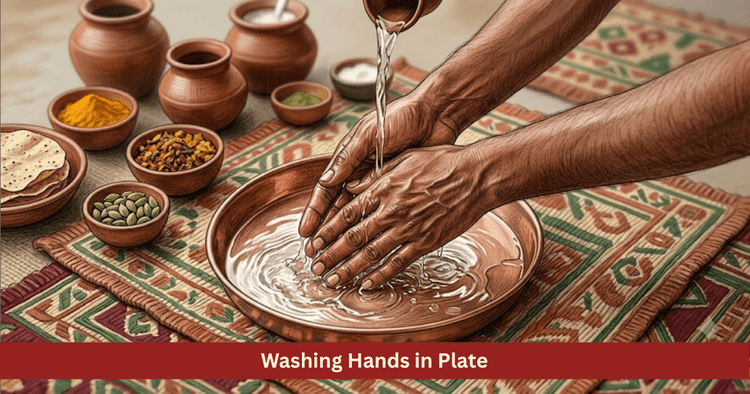
Table of Contents
Respect for Food
The tradition of not washing hands in the same plate after eating is not based only on scolding or fear. It is connected with cleanliness, gratitude and deep respect for food. When elders say that washing hands in the plate sends Lakshmi away or insults food, they point toward a cultured rule of life.
In Sanatana tradition, food is not seen only as a means to fill the stomach. Food is regarded as a form of Brahman, the Supreme Reality, because it gives nourishment, strength and steadiness to life. Mixing dirty water, saliva or the residue of unclean hands into the very vessel that satisfied hunger is considered contrary to the feeling of gratitude.
| Subject | Core meaning |
|---|---|
| Washing hands in the plate | Against cleanliness and respect |
| Food | Foundation of life and nourishment |
| Maa Annapurna | Divine force of nourishment and satisfaction |
| Spirit of Lakshmi | Respect for prosperity |
| Proper conduct | Wash hands outside the plate |
| Main lesson | Gratitude toward food |
A food plate should not be seen as only a utensil. It is a vessel of nourishment.
Is It an Insult to Maa Annapurna
Maa Annapurna is remembered as the divine force of food, nourishment and contentment. Humility during meals and respect for the plate after eating are extensions of the same feeling. When a person washes hands in the meal plate, that person unknowingly makes the vessel excessively dirty after it has served food.
It would be incomplete to treat this as only an outer rule. In religious language, it is called disrespect toward food so that respect for meals remains alive in the mind. The saying that Lakshmi leaves should also not be understood only in terms of wealth. Where food is neglected, the feelings of order, gratitude and prosperity can slowly weaken.
Simple forms of respect for food:
- Do not waste food.
- Serve only as much as is needed.
- Keep the mind calm while eating.
- Do not speak badly about food.
- Do not wash hands in the plate.
- Store leftover food properly.
- Clean the vessel with respect after eating.
Remembering Annapurna brings humility into conduct.
The Practical Reason of Cleanliness
The most direct reason for not washing hands in the plate is hygiene. After eating, hands carry oil, spices, lentils, vegetables and small food particles. If those hands are washed in the plate, dirty water mixes with the remains of food and makes the plate much dirtier. This also makes the plate more difficult to clean.
This habit can increase uncleanliness, especially during shared meals or in family settings. A mixture of leftover food and dirty water may lead to bad odour, germs and disorder. therefore washing hands at a sink, tap or a place separate from the plate is a cleaner and more appropriate practice.
| Conduct | Result |
|---|---|
| Washing hands in the plate | Dirty water and food remains mix |
| Washing hands outside | The plate remains relatively clean |
| Cleaning the plate promptly | Cleanliness is maintained |
| Saving edible leftovers | Food is respected |
| Leaving used utensils for long | Odour and uncleanliness increase |
Cleanliness is also a form of respect for food.
Why Food Is Called Brahman
Indian thought gives food a very high place. Food does not give the body only calories or taste. It is the fruit of labour, the grace of nature, the effort of farmers and the energy of water and the Sun. Every item that reaches the kitchen from the field passes through many efforts and resources. For this reason, food is respected as a visible form of Brahman, the Supreme Reality.
When food is seen through this view, the matter of washing hands in the plate does not remain only etiquette. It becomes a value. A person begins to understand that every grain of food is valuable and the vessel that carries food also has its own dignity.
Main feelings of food respect
- Food sustains life.
- Food is the combined fruit of nature and labour.
- Many people’s effort is connected with every meal.
- The plate is a means of satisfaction.
- It is not proper to make food impure.
- Gratitude makes the mind humble.
- Respect for food brings balance to life.
The feeling of Anna Brahma, food as the Divine, teaches restraint.
The Deeper Meaning of Lakshmi Leaving
Folk tradition says that Lakshmi leaves when hands are washed in the plate. This should not be viewed only as literal fear. Lakshmi also represents prosperity order, cleanliness and auspiciousness. When a person eats carelessly, wastes food or dirties the food vessel, disorder may slowly enter that person’s conduct.
Prosperity does not come only from money. It also grows through good habits, respect for labour and proper use of resources. A person who values food usually values other things as well. This habit slowly becomes a foundation for balance and abundance in life.
| Folk saying | Deeper meaning |
|---|---|
| Lakshmi leaves | Discipline of prosperity becomes weak |
| Disrespect to food | Gratitude decreases |
| Dirtying the plate | Order is neglected |
| Saving food | Resources are respected |
| Keeping utensils clean | Auspiciousness and discipline |
The spirit of Lakshmi is connected with care and respect.
The Right Practice After Meals
After finishing a meal, first look carefully at the food left in the plate. If food remains and can still be used, it may be stored properly. If only small remnants remain, they should be removed in an orderly way. Hands should then be washed outside the plate, near a tap or sink.
This small habit also teaches children respect for food. They learn that the eating place, the hand washing place and the utensil cleaning place are different. In this way, dignity after meals becomes part of family culture.
Simple steps after meals
- Finish the meal with a calm mind.
- Do not leave food unnecessarily in the plate.
- Keep usable leftover food separately.
- Wash hands outside the plate.
- Arrange the vessel after drying hands.
- Clean the plate soon.
- Remain thankful toward those who cooked and served the meal.
Discipline is formed through small habits.
How to Teach Children
Children should not be taught this through fear by saying that something bad will happen if they wash hands in the plate. They should be told that food comes through effort, the plate gives nourishment and cleanliness is necessary in every home. When the reason behind a lesson is explained, the rule does not feel burdensome.
Elders should follow this habit themselves, because children learn more from conduct than words. Washing hands before eating, preventing food waste and washing hands outside the plate after meals are values that develop together.
Simple lessons for children
- Do not let food fall.
- Take only what is needed.
- Do not play while eating.
- Do not spill water in the plate.
- Wash hands outside.
- Learn to express thanks after meals.
- Take part in cleanliness.
Values grow stronger through understanding and example.
Tradition and Conduct Together
The rule of not washing hands in the plate is a beautiful meeting of dharma and daily life. It carries devotion toward Annapurna and the practical wisdom of cleanliness. If only fear remains and meaning is lost, tradition can seem harsh. But when its feeling is understood, the same rule makes life more aware.
Discipline around meals makes a person humble. It reminds us that food does not arrive without effort. Nature, labour, time and grace all contribute to it. therefore washing hands outside the plate is not only a habit. It is a simple practice of giving gratitude a place in life.
FAQ
Is washing hands in the plate considered an insult to Maa Annapurna
In religious feeling, it is considered disrespect toward food and the meal vessel. Its purpose is to preserve gratitude and dignity toward food.
Why should hands not be washed in the plate
Dirty water and food remains mix together, making the plate more unclean and harder to wash.
Does washing hands in the plate make Lakshmi leave
This folk saying is connected with the discipline of prosperity. Its deeper meaning is to respect food, cleanliness and resources.
Where should hands be washed after a meal
Hands should always be washed at a sink, tap or another clean place separate from the plate.
Why is food called Brahman
Food is called Brahman because it is the foundation of life, nourishment, nature, labour and the protection of vital energy.
Get your accurate Kundali
Generate KundaliDid you like it?
Author
Pt. Suvrat Sharma (63)
Experience: 20
Consults About: Family Planning, Career
Clients In: Punjab, Haryana, Delhi
Share this article with friends and family
About ZODIAQ
ZODIAQ is an online Vedic Astrology platform. It connects clients seeking astrological advice to experienced astrologers with deep knowledge. Our users also generate kundali and perform kundali milan for free. ZODIAQ also offers services to the Astrologers. Astrologers utilize various offerings by ZODIAQ to serve their clients effectively.
If you are a User
Consult with experienced astrologers and seek their guidance. You can also order handwritten Janm Patrika report with life prediction prepared by experienced astrologers. Generate accurate Kundali, perform Kundali Matching and check horoscope and muhurat. Utilize our online library for all the necessary astrological and spiritual information.
If you are an Astrologer
Create accurate kundali for your clients and perform Kundali Matching for up to 5 people at a time. Write comprehensive Janm Patrika report for your clients with ZODIAQ. Check client details anytime by saving it in client directory. Become more productive by tracking how many clients you guide every day.
WELCOME TO
ZODIAQ
Right Decisions at the right time with ZODIAQ
