God Remembrance During Sutak and Patak
By Aparna Patni
The true spiritual meaning of name remembrance during birth and grief
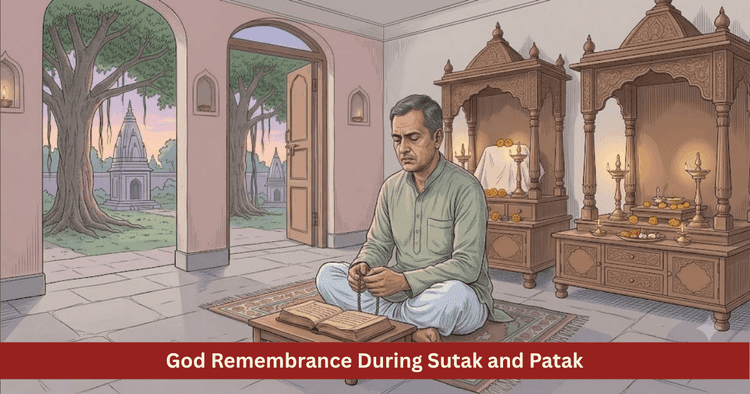
Table of Contents
Support of Name Remembrance in Difficult Times
When a child is born in a family, which is called Sutak or when a loved one dies, which is called Patak, a distinct biological and emotional change comes into the atmosphere of the home. During this period, the family is advised to remain away from social and religious gatherings for some days to protect the health of the Sutika, meaning the mother and child and to recover from the grief of death. It is considered a period of physical purification and mental rest. Yet many people think that taking the name of God during this time brings sin. This belief is not appropriate. Ishwar naam smaran, meaning silent remembrance of God in the mind, cannot be prohibited in any situation. In such difficult moments of grief or separation, mental remembrance of God becomes even more necessary because it gives mental strength.
The Real Meaning of Sutak and Patak
To understand the rules of Sutak and Patak, it is necessary to know their original purpose. They are not about moving away from God but about family care, emotional stability and social discipline.
Sutak is related to birth. A newborn child and the mother who has given birth need rest, hygiene, nourishment and a quiet environment. In earlier times medical facilities were limited, so the family was asked to remain away from outside movement and large gatherings for some time. This reduced the possibility of infection and allowed proper care of the mother and child.
Patak is related to the period of mourning after death. A family goes through deep emotional change after losing someone close. At such a time, more important than rituals is giving space to grief, honouring the memory of relationships and reflecting calmly on the impermanence of life. therefore social celebrations and auspicious ceremonies are postponed for some time.
Main purposes of Sutak and Patak:
- Protecting the health of the mother and newborn.
- Giving the family rest and mental stability.
- Avoiding infection and unnecessary outside contact.
- Giving respectful time for grief.
- Temporarily postponing large religious and social gatherings.
- Understanding the seriousness of both birth and death.
The spirit of these rules is compassion, discipline and sensitivity. They should not become a cause of fear or guilt.
Is Taking God Name During Sutak Patak a Sin
Taking the name of God during Sutak or Patak is not a sin. Remembrance of God is a path of inner purity and no external condition can prohibit the mind. It is necessary to understand the difference between detailed worship rituals and mental naam japa, meaning repetition of a divine name.
When there is Sutak or Patak in a home, new worship installations, festivals, yajna, havan and collective auspicious ceremonies are traditionally paused. The reason is to free the family from extra arrangements. Yet a person can remember their Ishta Dev, meaning chosen deity, in the mind, pray and wish for peace.
Naam smaran does not require touching an idol, worship materials or any outer method. It is the silent call of the heart. therefore there is no question of stopping it. Remembrance during grief does not increase fear. It awakens patience within.
Difference Between Mental Japa and External Worship
In religious life, outer worship and inner spiritual practice both have their place. Understanding their difference during Sutak and Patak removes confusion.
| Subject | Balanced view during Sutak and Patak |
|---|---|
| Detailed worship ceremony | It may be postponed for some time according to family tradition |
| Visiting a temple | The decision may follow local tradition and the family situation |
| Mental naam japa | It can be done with complete devotion |
| Silent prayer | It is completely appropriate |
| Reflection on sacred texts | It can be done with a calm mind |
| Intention of charity and service | It may be kept according to opportunity and capacity |
| Festivals and auspicious events | It is considered appropriate to postpone them during mourning or the post birth period |
Where outer rituals involve rules of place, time and method, mental prayer rests on feeling. Preventing a grieving person from taking the name of God can be like taking away support from their mind. In the same way, it is not appropriate to burden a new mother or her family with anxiety.
Why Name Remembrance Helps at Birth
The arrival of a child in a home is a moment of joy, yet it is also a deeply sensitive time for the mother and family. The mother's body needs rest, while the newborn needs a clean, quiet and safe environment. At such a time, quiet or mental remembrance of God can help keep the family atmosphere restrained.
The purpose of naam smaran is not to demand a specific result but to awaken gratitude and a feeling of protection. The family may pray inwardly that the mother receives health, the child remains well and patience and affection remain in the home.
Simple spiritual attitudes that may be adopted at birth:
- Remember the Ishta Dev silently.
- Give the mother sufficient rest and nourishing food.
- Avoid unnecessary crowds and noise in the home.
- Give priority to newborn hygiene and medical advice.
- Let elders in the family offer peaceful prayers.
- Do not allow any rule to become a burden on the mother's health.
Sutak does not mean declaring the family impure. It is a time of care and caution.
Role of God Remembrance in Mourning
After death, the mind often becomes filled with questions, silence and helplessness. Accepting the absence of a loved one is not easy. During the Patak period, remembrance of God is not a means to end this pain at once but it can give the mind strength to bear it.
Prayer in grief does not mean that a person should suppress sorrow. Tears are the natural language of mourning. Remembrance of God can become a subtle foundation of patience amid those tears. The family may silently pray for peace for the departed soul and give place in their conduct to the good memories of the person who has passed away.
Simple ways to offer support during mourning:
- Remember the Ishta Dev silently.
- Pray for peace for the departed soul.
- Speak to family members with compassion.
- Give a grieving person time to cry and speak.
- Focus on necessary rites rather than display.
- Do not neglect food, rest and health.
- Seek medical or mental health support when needed.
Remembrance of God is not a substitute for grief. It is an inner support that helps the mind endure grief.
Mind and Moon in Vedic Astrology
In Vedic astrology, Chandra, meaning the Moon, is considered the significator of mind, emotions, memory and receptivity. Both birth and death deeply affect the lunar element of a family. At birth, concern may arise along with excitement, while at death, Moon related memories and emotions become intense.
At such times, breathing steadily, remaining calm and silently taking the name of God nourish symbolic lunar qualities such as coolness, sensitivity and patience. This is not a fear based remedy but a spiritual practice for keeping the mind steady.
| Situation | Possible effect on mind | Supportive spiritual attitude |
|---|---|---|
| Time of birth | Concern, responsibility, fatigue | Gratitude, peace, prayer for protection |
| Time of death | Grief, emptiness, memory | Patience, compassion, prayer for peace of the soul |
| Family transition | Unstable routine, emotional pressure | Silent naam smaran, simplicity, mutual support |
An astrological perspective makes a person more aware of their mind. It does not place blame or fear upon a family.
What to Remember During Sutak Patak
Each family may have different traditions and circumstances. therefore rules should be followed with wisdom, compassion and priority for health. If a family observes a fixed duration for Sutak or Patak according to its tradition, that may be respected but it should not create mental fear.
Practical precautions:
- Keep the health needs of the mother and child first after birth.
- Give the family a calm environment and adequate time after death.
- See postponing outer worship events as rest, not punishment.
- Continue mental naam japa and prayer.
- Do not blame anyone for their devotion.
- Do not place pressure of religious rules on a grieving person.
- Give special attention to hygiene, food and sleep.
- Maintain communication and cooperation within the family.
- If there is doubt about tradition, seek calm guidance from a trusted family priest.
- Give priority to medical advice in a health related concern.
True religiousness makes a person more compassionate, more aware and more balanced.
A Spiritual Path Filled with Compassion
Sutak and Patak are linked to two profound gateways of life, birth and death. On one side, a new life enters the home. On the other, the memory of a beloved soul makes life quiet. In both situations, the original purpose of outer rules was to support the family, not to move it away from God.
The name of God does not depend upon a special place or outer purity. When the mind is tired, when there is fear, when gratitude rises or when grief is deep, silent remembrance becomes the most natural prayer. therefore naam japa during Sutak and Patak should not be seen as sin but as a source of consolation and strength.
FAQ
Can God name be taken during Sutak
Yes, silently taking the name of God during Sutak is completely appropriate. It gives peace and strength to the mind.
Is mantra japa during Patak a sin
No, mental mantra japa during Patak is not a sin. It gives patience to the mind during mourning.
Why is worship paused during Sutak Patak
Large worship gatherings and auspicious rites are paused for some time to give the family rest and to respect the situation of birth or grief.
Can one pray in the home temple during Sutak
One may pray silently or from a distance. It is appropriate to respect family tradition regarding detailed worship.
What is the benefit of God remembrance during Patak
God remembrance does not claim to erase grief but it gives mental and spiritual support to endure sorrow.
Get your accurate Kundali
Generate KundaliDid you like it?
Author

Aparna Patni (63)
Experience: 20
Consults About: Family Planning, Career
Clients In: Punjab, Haryana, Delhi
Share this article with friends and family
About ZODIAQ
ZODIAQ is an online Vedic Astrology platform. It connects clients seeking astrological advice to experienced astrologers with deep knowledge. Our users also generate kundali and perform kundali milan for free. ZODIAQ also offers services to the Astrologers. Astrologers utilize various offerings by ZODIAQ to serve their clients effectively.
If you are a User
Consult with experienced astrologers and seek their guidance. You can also order handwritten Janm Patrika report with life prediction prepared by experienced astrologers. Generate accurate Kundali, perform Kundali Matching and check horoscope and muhurat. Utilize our online library for all the necessary astrological and spiritual information.
If you are an Astrologer
Create accurate kundali for your clients and perform Kundali Matching for up to 5 people at a time. Write comprehensive Janm Patrika report for your clients with ZODIAQ. Check client details anytime by saving it in client directory. Become more productive by tracking how many clients you guide every day.
WELCOME TO
ZODIAQ
Right Decisions at the right time with ZODIAQ
