Vedic Roots of Astrology: How Jyotish Shastra Emerged from the Vedas
By Pt. Amitabh Sharma
How Jyotish Shastra Emerged from the Vedas and Became a Core Vedic Science
Table of Contents
Vedic astrology, or Jyotish Shastra, is not just an aspect of Indian traditions—it's considered an integral part of the Vedas themselves, the foundation of ancient Hindu knowledge. Far from being solely religious texts, the Vedas are seen as profound sources of science, including astronomy, astrology, and mathematics, alongside spiritual wisdom. Jyotish Shastra, sometimes called Vedic astrology, is rooted deeply within these ancient scriptures.
Indian Astrology as Vedic Astrology
Indian astrology is often referred to as Vedic astrology because its origins are directly traced back to the Vedas, the oldest Hindu scriptures. The Vedas are regarded not only as religious but also as scientific literature, encompassing extensive information about subjects like astronomy (nakshatras and planets), physics, and metaphysics. Jyotish is one of the six Vedangas, auxiliary sciences designed to help understand and perform Vedic rituals accurately. Since Jyotish is derived from the Vedas, it is commonly called 'Vedic astrology'. This ancient practice, known traditionally as Jyotish Shastra, has thrived for over 5,000 years. It revolves around understanding the connection between humans and the cosmos, and proposes that the positions of planets and lunar constellations (nakshatras) at birth critically shape a person's destiny and spiritual path.
Core Features of Vedic Astrology
Vedic astrology uses a nakshatra-based zodiac that gives strong emphasis to the positions of stars and planets at the moment of birth. Its roots are profoundly tied to Hinduism’s Vedic traditions and rituals. It provides more than just personality insights: Vedic astrology is believed to help overcome life’s difficulties and guide spiritual evolution. Over millennia, Jyotish has adapted to evolving societies but continues to offer meaningful spiritual guidance and practical advice for modern seekers.
The Essence of Jyotish Shastra: Ancient Wisdom for Modern Life
Why Jyotish Shastra Is Considered a Vedic Science
There are solid scriptural references and historical foundations for classifying Jyotish as a Vedic science:
- Mention in the Vedas All four Vedas—Rigveda, Yajurveda, Samaveda, and Atharvaveda—make reference to nakshatras (constellations), planets, time calculation, and cosmic phenomena. For instance:
- Atharvaveda's 19th chapter names all 28 nakshatras.
- The Rigveda discusses the nature and influence of the sun, moon, and other planetary bodies.
- The 4th Mantra of the 8th Sookta of the 10th Kanda of the Atharva Veda describes the zodiac wheel with its 12 signs and 360 degrees.
- Vedanga Jyotisha: Jyotish as an Auxiliary Vedic Limb Jyotish is one of the six Vedangas—limbs of the Vedas—with its primary purpose being to determine the right timings of rituals and sacrifices using astronomical calculations. "Astrology is the supreme limb (eye) of the Vedas." —Brihat Parashara Hora Shastra, I.2.
- Quotations from Jyotish Shastra Sage Parashara, in the seminal text Brihat Parashara Hora Shastra, declares: "Vede bhyashcha samuddhritya Brahma provacha vistaaritam." (Astrological knowledge was extracted from the Vedas by Brahma and elaborated further.)
- Astrology in Vedic Rituals In ancient times, the determination of auspicious moments (muhurta) for rituals such as yajnas, weddings, housewarmings, or naming ceremonies depended on astrological calculations. This shows its critical role in Vedic customs and societal structure.
Vedic Mantras and Astrology
1. Nakshatra Suktam in Atharvaveda
- First Mantra (AV 19.7.1): Describes nakshatras as luminous, fast-moving, and their worship bestows happiness and wisdom upon devotees.
- Second Mantra (AV 19.8.1): Prays for the nakshatras, supported by the Moon, to bring peace and wellbeing to all life domains—in the sky, water, earth, mountains, and directions.
- Third Mantra (AV 19.8.2): Appeals to all 28 nakshatras for protection, prosperity, and success, highlighting the belief that the stars grant both the capacity to gain and preserve one's blessings.
'Ahoratra' and Horashastra
The term 'ahoratra' (day and night) in the mantras is etymologically tied to 'hora,' a fundamental concept in Vedic horoscopy. Knowledge of 'hora' (ascendant calculations) is said to be vital for predicting auspicious and inauspicious results for individuals.
Nakshatra and Graha Classification
Nakshatras are the 27 (sometimes 28) lunar constellations that form the backbone of the Vedic zodiac, still in use in astrological texts today, with ancient mantras listing the same names and sequence. Grahas (Planets) are differentiated from nakshatras by their motion and influence. While nakshatras are fixed, the grahas are moving bodies, with the main nine being Sun, Moon, Mars, Mercury, Jupiter, Venus, Saturn, Rahu, and Ketu.
Graha Peace Mantras
The Atharvaveda prays for benevolence and peace from all the grahas (planets), including visible and invisible forces like Rahu and Ketu, demonstrating the integration of planetary forces into the Vedic worldview.
Conclusion
Vedic astrology is fundamentally interwoven with the Vedas—referenced not only as the 'eye' of the Vedic corpus but as a necessary science for performing rituals and living in harmony with cosmic rhythms. From descriptions of nakshatras and grahas to detailed methods for determining auspicious timings, the evidence and mantras from the Vedas themselves reveal astrology to be a scientific, spiritual, and philosophical branch of ancient Indian knowledge, guiding both individuals and society through time.
Get your accurate Kundali
Generate KundaliDid you like it?
Author

Pt. Amitabh Sharma (56 Years)
Experience: 20
Consults About: Family Planning, Career
Clients In: Punjab, Haryana, Delhi
Explore Related Articles
Explore All
The History of Astrology - Part 1: A 5000-Year Journey Beginning in Mesopotamia
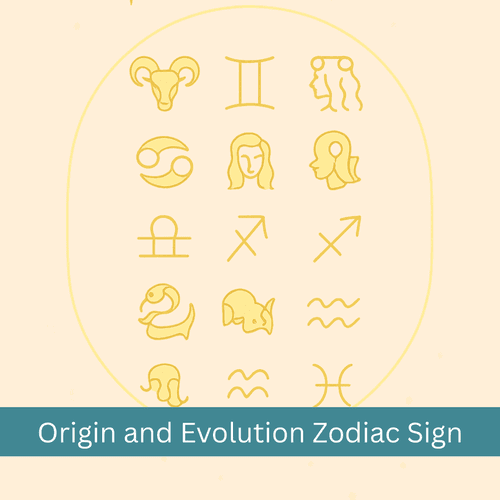
The History of Astrology - Part 2: The Origin Story of Zodiac Signs
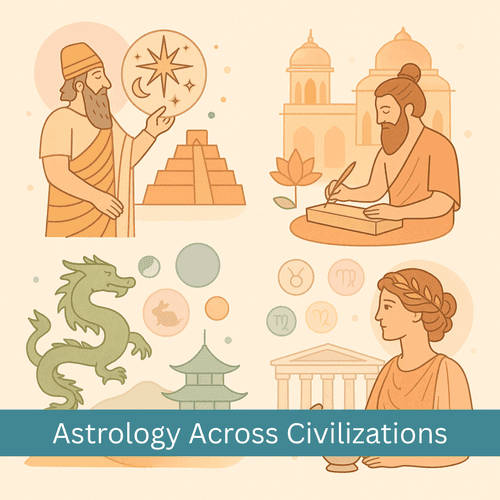
The History of Astrology - Part 3: Astrology Across Cultures - The Making of a Global Tradition
The History of Astrology - Part 4: Its Influence on Religion, Mythology, Culture, Science and Medicine
The 6 Major Branches of Astrology: Introduction to Jataka, Gola, Nimitta, Prashna, Muhurta and Ganita
ज्योतिष का इतिहास - पार्ट 2: Zodiac (राशि चिन्ह) बनने का इतिहास
Share this article with friends and family
About ZODIAQ
ZODIAQ is an online Vedic Astrology platform. It connects clients seeking astrological advice to experienced astrologers with deep knowledge. Our users also generate kundali and perform kundali milan for free. ZODIAQ also offers services to the Astrologers. Astrologers utilize various offerings by ZODIAQ to serve their clients effectively.
If you are a User
Consult with experienced astrologers and seek their guidance. You can also order handwritten Janm Patrika report with life prediction prepared by experienced astrologers. Generate accurate Kundali, perform Kundali Matching and check horoscope and muhurat. Utilize our online library for all the necessary astrological and spiritual information.
If you are an Astrologer
Create accurate kundali for your clients and perform Kundali Matching for up to 5 people at a time. Write comprehensive Janm Patrika report for your clients with ZODIAQ. Check client details anytime by saving it in client directory. Become more productive by tracking how many clients you guide every day.
WELCOME TO
ZODIAQ
Right Decisions at the right time with ZODIAQ
