Ashtami Maa Mahagauri Puja Vidhi and Significance 2026
By Aparna Patni
Chaitra Navratri Day 8: Kanya Pujan and Purification
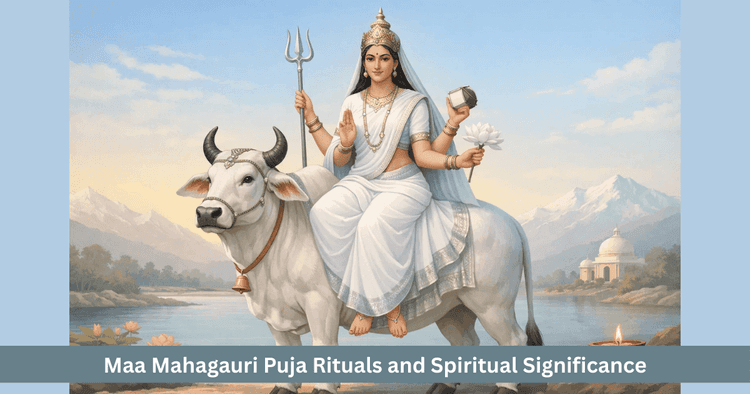
Table of Contents
The eighth day of Navratri is entirely dedicated to the worship of Maa Mahagauri, the eighth divine form of Goddess Durga. This holy day is considered a wonderful symbol of purity, peace, forgiveness and spiritual transformation. After the experience of the intense and powerful energy of Maa Kalaratri on the seventh day, the eighth day of Navratri reveals that calm, radiant and compassionate form of the divine mother who provides devotees with the blessing of inner purity and spiritual grace. The seeker who comes under the shelter of Maa Mahagauri obtains serenity by becoming free from mental impurities.
Important Information and Panchang for Chaitra Navratri 2026 Ashtami Tithi
In Chaitra Navratri 2026, the eighth day of Navratri falls on Thursday 26 March 2026. According to the calculations of the Panchang, this day is associated with Ashtami Tithi and is widely celebrated as Durga Ashtami. On this day, special rituals such as Sandhi Puja and Annapurna Ashtami are completed. It is also an extremely sacred day for Kanya Puja where little girls are worshipped as the direct manifest form of the Goddess.
| Description | Information |
|---|---|
| Date | 26 March 2026 |
| Day | Thursday |
| Navratri Day | Eighth Day |
| Tithi | Ashtami |
| Key Observances | Durga Ashtami, Mahagauri Puja, Annapurna Ashtami, Sandhi Puja |
| Sandhi Puja Time | 11:24 AM to 12:12 PM |
| Goddess Worshipped | Maa Mahagauri |
| Auspicious Color | Pink |
Who is Maa Mahagauri?
Maa Mahagauri represents the extremely pure and bright form of Goddess Parvati. According to ancient legends, after performing difficult penance for many years to obtain Lord Shiva as her husband, the body of Parvati became covered with dust and dirt. Then Lord Shiva bathed her with the holy water of the Ganga, because of which her complexion became extremely fair and radiant. From that very moment, she came to be known as Mahagauri, which means the Goddess of great purity and brightness. This form of the Goddess is considered a symbol of purification, forgiveness and the removal of the burden of past sins and karmas.
Iconography and Symbolism of Maa Mahagauri
Maa Mahagauri is depicted riding a white bull which represents purity and calm strength. She has four arms, of which she holds a Trishul (trident) in one hand which is an indicator of divine power. In her other hand is a Damru (drum) which represents cosmic rhythm and sound. The remaining two hands appear in Varada (boon-giving) and Abhaya (fearlessness) mudras, providing peace, prosperity and protection to devotees. Her white and radiant form is a living proof of the purification of mind and soul that inspires the devotee towards Satoguna (purity).
What is the Spiritual Secret of the Eighth Day of Navratri?
The eighth day of Navratri indicates spiritual purification and the removal of negativity accumulated through past actions. Worshipping Maa Mahagauri leads to the clearing of mental impurities and brings the arrival of peace, clarity and spiritual balance in life. Devotees pray to this form of the Goddess so that the obstacles of their path are removed and they can move forward on the path of righteousness and peace. Through her grace, tenderness and compassion circulate in the nature of the seeker.
Special Color and Significance of the Ashtami Day
The auspicious color for the eighth day of Navratri is Pink. Pink represents compassion, harmony and affection. Wearing pink clothes on this day is considered a symbol of the loving nature of the divine mother and unwavering devotion. This color purifies the emotions of the heart and awakens a feeling of kindness towards others.
Detailed Puja Rituals for Maa Mahagauri
On the eighth day of Navratri, devotees perform special worship of Maa Mahagauri along with the daily prayers of the Kalash established on the first day. The place of worship is decorated with flowers and lamps and sacred offerings are presented to the Goddess.
- The most important ritual of this day is Kanya Puja in which little girls representing the nine forms of Goddess Durga are worshipped.
- Devotees wash their feet, provide them with pure food and gifts and obtain their blessings.
- Sandhi Puja is another significant ritual which is performed during the transition period of Ashtami and Navami.
- It is believed that this is that same powerful time when Maa Durga slew the demons named Chanda and Munda.
- Devotees light 108 lamps at this time and sing special praises of the Goddess.
The Favorite Offering for Maa Mahagauri
On the eighth day of Navratri, offering coconut to Maa Mahagauri is traditionally considered best. Coconut is considered a symbol of purity and complete dedication. It is a religious belief that offering coconut to the Goddess leads to the attainment of happiness, prosperity and family harmony. This is a simple medium to obtain spiritual blessings.
Powerful Mantra for Maa Mahagauri
To receive the divine grace of Maa Mahagauri, one should chant this sacred mantra:
Om Devi Mahagauryai Namah (Om, salutations to the Goddess who is Mahagauri)
Pronouncing this mantra with devotion on the eighth day of Chaitra Navratri removes all sufferings and circulates peace and purity in the mind.
Divine Message of Maa Mahagauri for Life
The eighth day of Navratri teaches us that after conquering darkness and difficulties, life moves towards purification and inner peace. Maa Mahagauri reminds devotees that the ultimate result of spiritual development is stability, compassion and clarity. By worshipping her, devotees receive the blessings of the purification of the mind and a peaceful and harmonious life.
Frequently Asked Questions
What is the significance of Sandhi Puja in the worship of Maa Mahagauri?
Sandhi Puja is that special time when Ashtami ends and Navami begins. It is a symbol of the infinite power of the Goddess that ended demonic forces.
How many girls are required for Kanya Puja?
Traditionally, nine little girls and one boy (Batuk Bhairav) are invited for the puja.
What does the bull, the vehicle of Maa Mahagauri, show?
Her vehicle, the bull, is a symbol of stability and Dharma which teaches that power should always be kept in restraint.
Do family disputes get resolved by the worship of Mahagauri?
Yes, Maa Mahagauri is the Goddess of peace and her spiritual practice increases love and harmony in the family.
When will Ashtami be celebrated in Chaitra Navratri 2026?
The Ashtami of Chaitra Navratri in the year 2026 will be celebrated on Thursday 26 March.
Get your accurate Kundali
Generate KundaliDid you like it?
Author

Aparna Patni (63)
Experience: 20
Consults About: Family Planning, Career
Clients In: Punjab, Haryana, Delhi
Share this article with friends and family
About ZODIAQ
ZODIAQ is an online Vedic Astrology platform. It connects clients seeking astrological advice to experienced astrologers with deep knowledge. Our users also generate kundali and perform kundali milan for free. ZODIAQ also offers services to the Astrologers. Astrologers utilize various offerings by ZODIAQ to serve their clients effectively.
If you are a User
Consult with experienced astrologers and seek their guidance. You can also order handwritten Janm Patrika report with life prediction prepared by experienced astrologers. Generate accurate Kundali, perform Kundali Matching and check horoscope and muhurat. Utilize our online library for all the necessary astrological and spiritual information.
If you are an Astrologer
Create accurate kundali for your clients and perform Kundali Matching for up to 5 people at a time. Write comprehensive Janm Patrika report for your clients with ZODIAQ. Check client details anytime by saving it in client directory. Become more productive by tracking how many clients you guide every day.
WELCOME TO
ZODIAQ
Right Decisions at the right time with ZODIAQ
