The Goddess Who Chose Self Respect Over Love
By Aparna Patni
A Journey of Self Respect, Truth, and Transformation from Sati to Shailputri
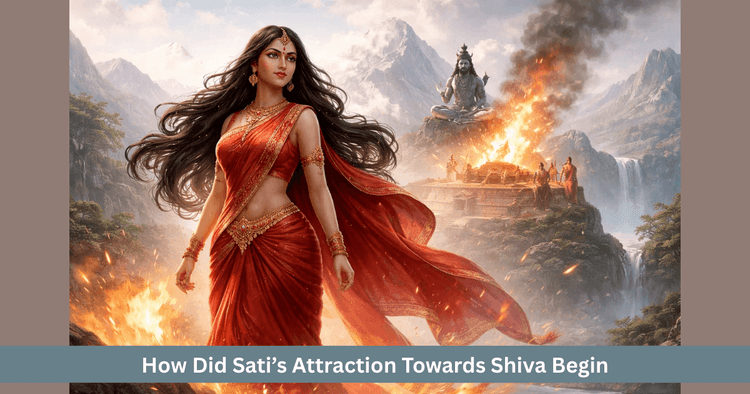
Table of Contents
This story is not merely an expression of love but a profound moment where a goddess recognized her existence, her dignity and the truth awakened within her. It is a moment where emotional softness stood face to face with unwavering awareness. The earlier birth of Maa Shailputri as Sati reveals a journey where love, pain, sacrifice, ego and ultimately self respect flow together. This is not just an event but a deep realization that when respect fades from relationships, even the most sacred bonds begin to lose their meaning.
How Did Sati’s Attraction Towards Shiva Begin
Sati, the daughter of King Daksha, was never ordinary. Even while living amidst royal luxury, comfort and authority, her mind remained drawn toward a deeper purpose. While others around her found joy in external beauty and power, Sati’s heart was inclined toward a truth that could not be seen but deeply felt. She was naturally drawn to Lord Shiva. Shiva existed beyond societal norms. He symbolized detachment, austerity, liberation and absolute freedom. His dwelling in cremation grounds, his adornment of ash and his unconventional nature were difficult for society to understand. King Daksha valued status, order and social approval but for Sati, Shiva was not merely a deity but the center of her being.
How Tapasya Strengthened Her Resolve
With time, this attraction transformed into an unshakable determination. Sati chose the path of intense tapasya. She endured hardships, let go of worldly comforts and fixed her mind on a single goal. This was not a simple desire but a deep inner conviction. Her devotion moved Shiva and he accepted her as his consort. This union was not just a marriage but a balance of energy and consciousness, bringing harmony to the cosmic order.
How Daksha’s Ego Grew Over Time
Alongside this divine union, a seed of conflict was also sown. King Daksha could never accept this marriage. He repeatedly felt that his daughter had chosen someone unworthy of his stature. This thought slowly grew into ego within him. Instead of fading, it intensified and eventually shaped a decision that changed everything.
Why Was the Yajna Designed as an Insult
King Daksha organized a grand yajna. It was not merely a ritual but a display of pride and authority. All gods and sages were invited. however Shiva and Sati were deliberately excluded. This was not an oversight but a direct insult, reflecting the depth of Daksha’s ego.
What Inner Conflict Did Sati Experience
When Sati learned about the yajna, she felt a deep conflict within. As a wife, she sensed the insult toward her husband. As a daughter, she felt drawn toward her parental home. She approached Shiva, who calmly advised her not to go where there is no respect. He warned that it would only bring sorrow. Yet Sati, holding onto hope, believed her father’s heart might have changed and decided to go.
What Happened at the Yajna Site
When Sati arrived, the atmosphere was deeply painful. No one welcomed her. No one showed joy at her presence. The place that was once her home now felt unfamiliar. The deepest pain came when her own father showed no affection. Instead, he mocked Shiva and insulted his existence. These were not mere words but blows that wounded Sati’s inner being.
How Self Respect Awakened Within Sati
Sati stood there listening to everything. Her love, trust and connection began to shatter. In that moment, a profound realization emerged within her. This was not just an insult to her husband but to her own existence, her choices and her dignity. Accepting this would mean denying her own truth.
Why Did Sati Choose the Fire
Sati declared firmly that she could no longer keep a body born from such ego. She stated that remaining in a place where her husband is insulted goes against her self respect. Without fear or hesitation, she entered the sacrificial fire. This was not self destruction but the ultimate expression of self respect, leaving the entire universe stunned.
What Does Shiva’s Tandava Represent
When Shiva learned of this, his calm form transformed into a fierce force. His sorrow turned into anger. From his locks emerged Veerbhadra, who destroyed the yajna. Shiva then carried Sati’s body and began his tandava. This cosmic dance was so intense that it threatened the balance of creation.
How Was Cosmic Balance Restored
To restore balance, Lord Vishnu intervened. With the Sudarshan Chakra, he divided Sati’s body. The places where her body parts fell became known as Shakti Peethas, sacred centers of divine energy.
What Does Sati’s Rebirth Indicate
Sati’s end was not an end but a beginning. She was reborn as Parvati in the house of Himalaya and came to be known as Maa Shailputri. In this birth, her awareness was deeper and her purpose was clear. This rebirth symbolized profound spiritual evolution.
What Does This Story Teach About Life
This story teaches that love becomes complete only when it carries respect. It shows that ego can break even the strongest bonds. It reveals that difficult decisions are often the path to discovering one’s true self. Maa Shailputri reminds that every ending carries a new beginning and every destruction holds a deeper creative force.
FAQs
Why did Sati enter the fire
She chose to protect her self respect and refused to accept the insult of her husband.
Why could Daksha not accept Shiva
He valued social status and order and could not understand Shiva’s detached nature.
Who was Veerbhadra
Veerbhadra was a powerful manifestation of Shiva who destroyed the yajna.
How were Shakti Peethas formed
They were formed where parts of Sati’s body fell after Vishnu divided it.
Who is Maa Shailputri
She is the rebirth of Sati as Parvati, representing inner strength and self respect.
Get your accurate Kundali
Generate KundaliDid you like it?
Author

Aparna Patni (63)
Experience: 20
Consults About: Family Planning, Career
Clients In: Punjab, Haryana, Delhi
Share this article with friends and family
About ZODIAQ
ZODIAQ is an online Vedic Astrology platform. It connects clients seeking astrological advice to experienced astrologers with deep knowledge. Our users also generate kundali and perform kundali milan for free. ZODIAQ also offers services to the Astrologers. Astrologers utilize various offerings by ZODIAQ to serve their clients effectively.
If you are a User
Consult with experienced astrologers and seek their guidance. You can also order handwritten Janm Patrika report with life prediction prepared by experienced astrologers. Generate accurate Kundali, perform Kundali Matching and check horoscope and muhurat. Utilize our online library for all the necessary astrological and spiritual information.
If you are an Astrologer
Create accurate kundali for your clients and perform Kundali Matching for up to 5 people at a time. Write comprehensive Janm Patrika report for your clients with ZODIAQ. Check client details anytime by saving it in client directory. Become more productive by tracking how many clients you guide every day.
WELCOME TO
ZODIAQ
Right Decisions at the right time with ZODIAQ
