Ashtami Shradh 2026: Date, Significance and Ritual Procedure
By Pt. Nilesh Sharma
Complete guide to muhurat, significance, and step-by-step rituals for performing Ashtami Shradh in 2026
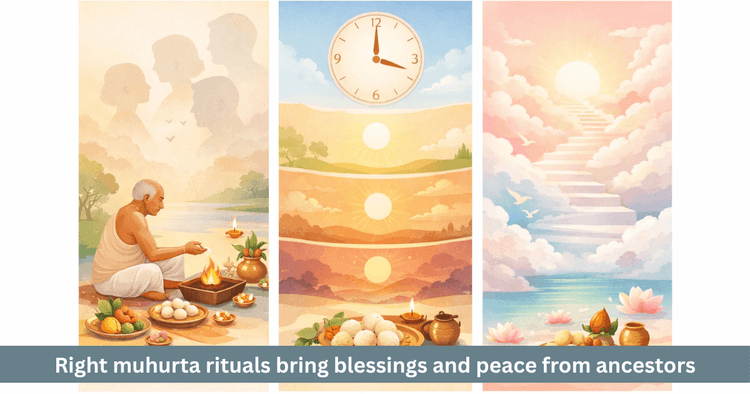
Table of Contents
Every day of Pitru Paksha carries its own distinct spiritual meaning, yet Ashtami Shradh is regarded as especially significant. In the year 2026, Ashtami Shradh will be observed on Saturday, October 3, 2026. The Kutup Muhurat is approximately from 11:36 AM to 12:24 PM, the Rohina Muhurat is approximately from 12:24 PM to 1:12 PM and the Aparahna Kala is approximately from 1:12 PM to 3:36 PM. These are considered the most suitable periods for Shradh rituals, because offerings made to the ancestors during this time are believed to be especially fruitful.
What is Ashtami Shradh
Ashtami Shradh is a tithi based Parvan Shradh observed during Pitru Paksha. It is performed for those ancestors who passed away on Ashtami Tithi in any month, whether it was Shukla Paksha Ashtami or Krishna Paksha Ashtami. On the Ashtami that falls during Pitru Paksha, tarpan, pinda daan and reverential remembrance are offered to them.
In Hindu tradition, performing Shradh according to the exact tithi holds deep importance. For this reason, the Shradh done on the same tithi as the ancestor’s passing is regarded as more scripturally aligned and spiritually effective. Ashtami Shradh is one such serious and meritorious observance.
What does Ashtami Tithi signify spiritually
The number eight carries profound meaning in the Hindu spiritual tradition. This tithi evokes Mahagauri, Ashtamurti Shiva and Ashtadik, the eight directions. Because of this, Ashtami is not seen merely as one date in the lunar calendar. It is understood as a tithi of transformation, purification and inward guidance.
In the context of ancestral rites, this understanding becomes even more meaningful. Ashtami is regarded as a time of subtle nearness between the world of the living and the realm of the ancestors. That is why the Shradh performed on this day is believed to reach the ancestors with clarity and become a means of their satisfaction.
Why is Ashtami Shradh given scriptural importance
The Garuda Purana counts Ashtami among the auspicious tithis for Shradh. Since it comes near the middle of the lunar fortnight, it is regarded as a period of spiritual receptivity. It is understood that tarpan and pinda daan offered on this day reach the ancestors with particular effectiveness.
The Shiva Purana also describes Ashtami as a special tithi of Lord Shiva. On this basis, it is believed that the Shradh performed on Ashtami is not only a family duty but also carries a deeper dimension of the prayer for mukti, meaning liberation.
In the Vishnu Dharmashastra tradition, it is also mentioned that if Shradh is not performed for an ancestor who passed on Ashtami Tithi, certain subtle forms of Pitru Dosha may appear in the family. therefore performing Ashtami Shradh properly is not only an observance of tradition but also a means of maintaining peace in the lineage.
Date and timings of Ashtami Shradh 2026
In the year 2026, Pitru Paksha begins on September 26 and continues until October 10. Within this sequence, Ashtami Shradh falls on October 3, 2026, Saturday. It comes after Saptami Shradh and before Navami Shradh, which gives it an important place in the flow of Pitru Paksha observances.
The timings can be seen simply below:
| Ritual Period | Time |
|---|---|
| Kutup Muhurat | Approximately 11:36 AM to 12:24 PM |
| Rohina Muhurat | Approximately 12:24 PM to 1:12 PM |
| Aparahna Kala | Approximately 1:12 PM to 3:36 PM |
Saturday is associated with Shani, meaning Saturn, who is regarded as the lord of karma, time and inherited responsibility. Because of this, Ashtami Shradh falling on a Saturday gains even deeper significance from the perspective of karmic order, ancestral remembrance and inner peace.
For which ancestors is Ashtami Shradh performed
The first rule is simple. If any direct ancestor from the paternal or maternal line passed away on Ashtami Tithi, Ashtami Shradh should be performed for them. This is its primary basis.
Beyond this, the Dharmashastra tradition also connects certain special situations with this day. For example, ancestors who died after prolonged illness or suffering, ancestors devoted to Shiva or Shakti, ancestors whose final rites could not be completed properly or even loved ones who were not related by blood but were like family in life, may also be remembered with devotion on this day.
If a family does not know the death tithi of its ancestors, Sarva Pitru Amavasya is considered the more suitable occasion. Even so, where the tithi is known, the corresponding Shradh of that tithi is considered more precise and more beneficial.
How is Ashtami Shradh performed
The ritual method of Ashtami Shradh follows the Parvan Shradh tradition, though the nature of this tithi gives it certain added devotional tones. The observance begins with purification in the morning. After bathing, it is considered auspicious to wear clean clothes, especially white garments. If the ritual is being performed at home, adding Gangajal to the bath water is also considered beneficial.
After this, some families perform a brief Avahana, meaning invocation, inviting the ancestors to be present. In this step, a sesame oil lamp is lit facing the southern direction. The south is regarded as the direction of Yama and the ancestors, so it holds special importance.
Then the Sankalpa, meaning sacred resolve or formal declaration of intent, is made. In the sankalpa, the performer remembers their name, gotra and the ancestors for whom the Shradh is being done. Immediately after this comes Tarpan, meaning the ritual water offering. In tarpan, water, black sesame seeds and Kusha grass are used. This offering, made respectfully through the right hand, is believed to reach the ancestors.
The stage of Pinda Daan
After tarpan, pindas are prepared. These are usually made from boiled rice, sesame seeds, honey and ghee. Each pinda is offered while remembering the names of the ancestors. In some traditions connected with Ashtami Shradh, a small amount of Vibhuti, meaning sacred ash, is also mixed into the pindas, indicating the Shaiva character of this tithi.
Pinda daan at a riverbank or sacred confluence is regarded as even more meaningful, because there water, mantra and remembrance together create a profound atmosphere for ancestral offering.
Brahmin feeding and offerings to living beings
After pinda daan, Brahmin bhojan is offered. This is not merely the serving of a meal but a way of expressing gratitude toward the ancestors. Before the Brahmin eats, a portion of the food is also set aside for the cow, crow, dog and ants. These offerings are regarded as an essential part of the ancestral rite.
After the meal, dakshina is given with sincerity and respect. In the scriptural view, the satisfaction of the Brahmin is taken as a symbol of the satisfaction of the ancestors.
What should be done on the day of Ashtami Shradh
The conduct of this day should be calm, restrained and reverential. Some actions are considered especially beneficial:
| What to do | Why it is done |
|---|---|
| Offer water and bilva leaves at a Shiva temple in the morning | Ashtami is linked with Shiva’s grace |
| Use black sesame seeds | They are regarded as highly sacred in Shradh |
| Light a sesame oil lamp in the southern direction | It symbolizes remembrance of the ancestors |
| Recite the **Maha Mrityunjaya Mantra** 108 times | For ancestral peace and well being |
| Give charity in memory of ancestors who died from illness | It becomes an act of compassion and remembrance |
What should be avoided on the day of Ashtami Shradh
On the day of Shradh, one should remain away from outward display and indulgence. If there is ritual impurity in the home due to a recent birth or death, Shradh should not be performed. In the same way, non vegetarian food, alcohol, onion and garlic should be avoided on this day.
The ritual should not be done in haste or as a mere formality. The heart of Shradh is shraddha, meaning reverence filled devotion. Shradh should also be avoided after sunset, because its proper time is considered to last only until the afternoon. Performing the ritual in torn, dirty or impure clothing is also considered improper.
Loud sound, festivity, music or entertainment should also be avoided so that the mind remains steady in remembrance of the ancestors.
What does this day of ancestral remembrance teach
Ashtami Shradh is not only a date in the calendar. It is a day of remembering one’s source. It offers an opportunity to recognize the stream of life without which the present existence would not be possible. When a family offers tarpan while remembering the names of its ancestors, it is not merely calling the past. It is honouring the consciousness of its lineage.
There is also a gentle inner teaching in this Shradh. It reminds a person of gratitude, duty and spiritual humility. The generations that have gone before are the very shade beneath which the present generation stands. Ashtami Shradh is a sacred occasion to accept that bond with reverence.
FAQs
When is Ashtami Shradh 2026
Ashtami Shradh in the year 2026 will be observed on Saturday, October 3.
For which ancestors is Ashtami Shradh performed
It is performed for those ancestors who passed away on Ashtami Tithi in any month.
What is the most suitable time for Ashtami Shradh
Kutup Muhurat, Rohina Muhurat and Aparahna Kala are considered the most suitable timings for Shradh.
Is Pinda Daan necessary in Ashtami Shradh
Yes, tarpan, pinda daan and Brahmin bhojan are regarded as the main parts of Ashtami Shradh.
What should be done if the death tithi is not known
In such a situation, performing Shradh on Sarva Pitru Amavasya is considered more appropriate.
Get your accurate Kundali
Generate KundaliDid you like it?
Author

Pt. Nilesh Sharma (63)
Experience: 20
Consults About: Family Planning, Career
Clients In: Punjab, Haryana, Delhi
Share this article with friends and family
About ZODIAQ
ZODIAQ is an online Vedic Astrology platform. It connects clients seeking astrological advice to experienced astrologers with deep knowledge. Our users also generate kundali and perform kundali milan for free. ZODIAQ also offers services to the Astrologers. Astrologers utilize various offerings by ZODIAQ to serve their clients effectively.
If you are a User
Consult with experienced astrologers and seek their guidance. You can also order handwritten Janm Patrika report with life prediction prepared by experienced astrologers. Generate accurate Kundali, perform Kundali Matching and check horoscope and muhurat. Utilize our online library for all the necessary astrological and spiritual information.
If you are an Astrologer
Create accurate kundali for your clients and perform Kundali Matching for up to 5 people at a time. Write comprehensive Janm Patrika report for your clients with ZODIAQ. Check client details anytime by saving it in client directory. Become more productive by tracking how many clients you guide every day.
WELCOME TO
ZODIAQ
Right Decisions at the right time with ZODIAQ
