Bahula Chaturthi 2026: Bol Choth Date, Cow Worship, Vrat Katha and Godhuli Puja
By Aparna Patni
Celebrate cows, children, and agricultural gratitude on Bhadrapada Krishna Chaturthi during Bahula Chaturthi
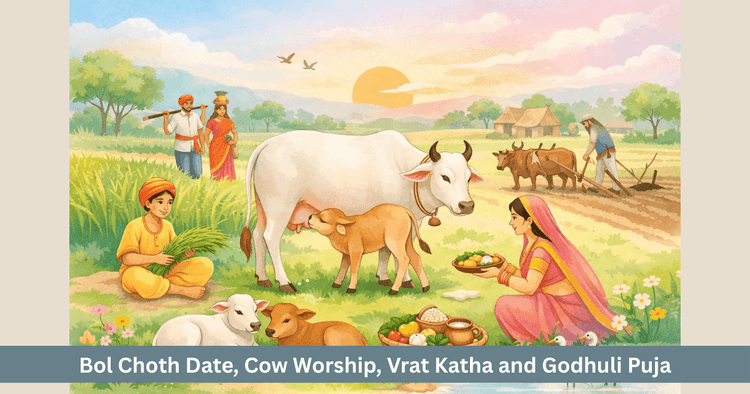
Table of Contents
For farming families Bahula Chaturthi, also known as Bol Choth, is much more than a fast. It is a day to honour cows, calves and the land that sustains every household. On the Krishna Chaturthi of the Bhadrapada month, communities turn their attention to gratitude, protection for children and a fresh beginning for their fields and cattle.
Bahula Chaturthi 2026 Date, Chaturthi Tithi and Godhuli Puja Timing
Bahula Chaturthi is observed on the Krishna Paksha Chaturthi of the Bhadrapada month. In 2026, this vrat falls shortly after Shravan Purnima.
| Detail | Date and Day | Time / Information |
|---|---|---|
| Bahula Chaturthi 2026 / Bol Choth | Monday, 31 August 2026 | Vrat and cow worship throughout the day |
| Chaturthi tithi begins | 31 August 2026 | Around 08:51 AM in the morning |
| Chaturthi tithi ends | 1 September 2026 | Between around 07:41 AM and 08:53 PM according to traditional references |
| Godhuli puja window | 31 August 2026 | Around 06:43 PM to 07:08 PM |
| Moonrise on Bahula Chaturthi | 31 August 2026 | Around 08:50 PM, helpful for ending the fast |
Thus, Bahula Chaturthi 2026 will be observed on Monday, 31 August. Devotees fast through the day, perform cow worship and conclude their vows in the evening after Godhuli puja and moonrise.
What Is Bahula Chaturthi and Where Is It Observed?
Bahula Chaturthi is widely known as Bol Choth or Bahula Chauth in various regions. It is especially observed in Gujarat, rural belts of Rajasthan and among farming communities in several other states.
On this day cows and calves are revered as sources of good fortune, peace and prosperity. It is believed that observing a sincere fast, performing cow worship and maintaining a humble heart on Bahula Chaturthi brings blessings for family welfare and strong yields from the land. In some traditions, the vrat is closely linked with the wellbeing and protection of children.
The festival also carries a clear ethical message. Devotees remember that a cow’s milk belongs first to her calf, so they refrain from using it for themselves during the fast. In this way Bahula Chaturthi becomes a living reminder of compassion and restraint.
Why Do Devotees Avoid Milk and Dairy on Bahula Chaturthi?
One of the distinctive features of the Bahula Chaturthi fast is the avoidance of milk, curd, ghee butter and other cow based dairy products. Two key sentiments are expressed through this practice. First, the recognition that the natural and primary right over a mother’s milk belongs to the calf, not to human beings. Second, a willingness to step back from personal comfort and to acknowledge that everything received from the cow, from dung and urine to milk, is a gift rather than a possession.
For this reason, many devotees eat only millets, bajra, jowar and simple non dairy dishes. In certain lineages, wheat and rice are also avoided, while rice preparations may be made specifically for feeding the cattle.
Spiritual Benefits and Inner Meaning of the Vrat
Bahula Chaturthi is considered especially auspicious for the farming community and those who keep cattle. It is believed that those who keep a complete fast, honour the cow with devotion and perform Godhuli puja followed by moon worship receive blessings for healthy children, protection from misfortune and a favourable harvest.
In many households, mothers undertake the vrat with a heartfelt wish for the safety and long life of their sons and daughters. By remembering the story of Bahula, they align themselves with the spirit of patient love, selfless duty and unshakeable commitment.
What Is the Vrat Katha of Bahula Chaturthi?
The central story associated with Bahula Chaturthi revolves around a cow named Bahula and the fearless love she holds for her calf. Simple in form, the narrative carries deep meaning for the fast.
According to the story, Bahula used to go into the forest to graze every day and would return in time to feed her calf. One day, while she was on her way back with her udder full of milk, she encountered a lion on the path. Hungry and fierce, the lion desired to kill and eat her.
With calm dignity, Bahula requested the lion to let her go home just once to feed her calf. She promised that after feeding the little one she would return to the same spot and offer herself. It was not easy to convince the lion but the truthfulness and maternal strength in her eyes touched him. He agreed on the condition that if she did not return, he would not spare the calf either. Bahula accepted this and moved ahead with her vow in mind.
Back at home she lovingly fed her calf, stroked it gently and inwardly took leave, though the calf remained unaware of the sacrifice in her heart. After the calf was satisfied, Bahula wasted no time. She turned and walked back towards the forest to keep her promise, even though it meant giving up her life.
When she appeared again before the lion, he was astonished. He had not truly expected her to return. Witnessing her maternal devotion and strict honouring of her word, the lion’s heart softened. In some tellings, it is revealed that the lion was in fact Lord Krishna in disguise, testing Bahula’s faithfulness and truth.
Deeply moved, the lion granted her life back and spared both mother and calf. Lord Krishna blessed Bahula and declared that on the Krishna Chaturthi of Bhadrapada, people would worship her as an example of loyalty and love. From that time, the day became known as Bahula Chaturthi.
The story illustrates that raw strength, anger and cruelty must bow before genuine care, promise and compassion. Bahula Chaturthi keeps this lesson alive each year.
How Are Bahula Chaturthi Rituals Performed?
The rituals of Bahula Chaturthi are simple but filled with feeling. Most of them centre on cows, calves and the spaces where they live.
Preparations and Brahma Muhurat Bath
Devotees wake in the early Brahma Muhurat and bathe. With a focused mind they remember Lord Krishna and Lord Vishnu and make a sankalpa for the fast. A small lamp is lit at the home altar before moving towards the cowshed or field. Beginning the day with cleanliness and clarity signals readiness for sincere worship and service.
Cleaning the Cowshed and Bathing the Cattle
Cow service lies at the heart of Bahula Chaturthi. Farmers and rural families thoroughly clean their cowsheds, stables and feeding areas. Cows, calves and other cattle are bathed, their coats brushed and their bodies gently massaged. In some places the cows’ resting area is smeared with fresh cow dung and decorated with simple rangoli or flower designs. This care is both practical and symbolic. It expresses gratitude for the animals that support ploughing, transport and nourishment.
Worship of Lord Krishna and Vishnu
Bahula Chaturthi also honours Lord Krishna and Lord Vishnu as protectors of cows and dharma. Images or idols of Sri Krishna and Vishnu are decorated at home. Devotees offer kumkum, sandal paste, rice grains, flowers and incense. Many visit nearby temples to see the deities and to bow before the cows kept there. Krishna’s form as a cowherd boy caring for his herd becomes a living ideal for how humans should relate to animals.
Mantra Chanting and Aarti
On Bahula Chaturthi, mantra recitation fills the atmosphere with a quiet strength. A widely recited mantra is
Om Namo Bhagwate Vasudevaye
This invocation offers salutations to Vasudeva, the all pervading Lord Krishna and seeks protection, clarity and peace. Families often sit together, read the Bahula Chauth story, sing aarti and chant this mantra, which helps align the mind with humility and devotion.
Godhuli Puja and the Beauty of Cow Worship
The Godhuli period, just before sunset when cows return from grazing and dust gently rises from their hooves, is considered especially sacred for cow worship on Bahula Chaturthi.
At this time cows and calves are adorned with flower garlands and simple decorations. Kumkum and sandalwood tilak are applied to their foreheads. Devotees light lamps, circle the cows in reverence and offer water, grain or green fodder. Families fold their hands and pray for peace in the home, healthy children and a prosperous farming year. Through Godhuli puja, the story of Bahula and the daily realities of rural life come together in a single, graceful ritual.
Fasting Discipline and Ending the Vrat at Moonrise
In the Indian tradition fasting is seen as a way to purify not only the body but also the intentions of the mind. On Bahula Chaturthi, the fast is usually observed as follows. Devotees take a morning vow and avoid regular meals throughout the day. Many take only fruits, water or light millet preparations. Cow’s milk and its products are left entirely for the calves as a mark of respect.
After Godhuli puja and at moonrise, devotees offer water or milk free arghya to the Moon. Only then do they break the fast with simple prasad. This expresses the idea that the entire day of restraint and service is brought to a gentle close under the cool and steadying light of the moon.
Special Food Customs and Eating Under the Open Sky
An interesting custom linked to Bahula Chaturthi is preparing and sometimes eating food in the open sky. Dishes are often made from bajra, jowar and other millets. In some traditions wheat and rice are minimised or reserved for offerings to the cattle. Special rice based preparations may be cooked specifically to feed cows and calves.
Eating outdoors, close to the fields or near the cowshed, reminds people that their real dining hall is nature itself and that every grain connects back to land and livestock.
Inner Guidance from Bahula Chaturthi 2026
Bahula Chaturthi 2026 comes at a time when questions around agriculture, animal welfare and environmental balance are very present. The vrat offers gentle but firm guidance. It calls for moving away from seeing animals and land purely as resources. It invites a return to relationships based on gratitude, care and balance.
Bahula’s story shows that love, promise and sacrifice can soften even the hardest forces. If farmers, cattle keepers and urban families alike bring a little more kindness and restraint into their daily interactions with animals and food, they will be living the true essence of this festival.
Frequently Asked Questions
When will Bahula Chaturthi be observed in 2026 and what is the Godhuli puja time?
Bahula Chaturthi 2026 will be observed on Monday, 31 August, during the Krishna Chaturthi of Bhadrapada. Chaturthi tithi begins in the morning and continues into the next day. The Godhuli puja period is around 06:43 PM to 07:08 PM, after which moonrise around 08:50 PM is used for closing the fast.
Why do devotees avoid milk and dairy products on Bahula Chaturthi?
On this vrat, milk and dairy products are avoided to honour the belief that a cow’s milk belongs primarily to her calf. By stepping back from these foods for a day, devotees renew their sense of gratitude and reduce self centred claims over what the cow provides।
What is the key message of the Bahula Chaturthi vrat katha?
The story of the cow Bahula returning to the lion after feeding her calf highlights loyalty, maternal love and truthfulness। The lion or Krishna in disguise, is moved by her integrity and spares her। The message is that genuine love and adherence to one’s word can transform aggression into compassion।
What are the main rituals performed on Bahula Chaturthi?
Important practices include bathing at Brahma Muhurat, cleaning cowsheds, bathing and decorating cows, worshipping Krishna and Vishnu, chanting “Om Namo Bhagwate Vasudevaye,” conducting Godhuli cow puja and offering arghya to the Moon before breaking the fast।
Why is Bahula Chaturthi also known as Bol Choth or Gau Puja Vrat?
The focus of this day rests on cows, calves and their shelters। Through decoration, cleaning, special feeding and worship, people express their heartfelt thanks to these animals। Because of this emphasis, the festival is popularly known as Bol Choth, Bahula Chauth or Gau Puja Vrat in different regions।
Get your accurate Kundali
Generate KundaliDid you like it?
Author

Aparna Patni (63)
Experience: 20
Consults About: Family Planning, Career
Clients In: Punjab, Haryana, Delhi
Share this article with friends and family
About ZODIAQ
ZODIAQ is an online Vedic Astrology platform. It connects clients seeking astrological advice to experienced astrologers with deep knowledge. Our users also generate kundali and perform kundali milan for free. ZODIAQ also offers services to the Astrologers. Astrologers utilize various offerings by ZODIAQ to serve their clients effectively.
If you are a User
Consult with experienced astrologers and seek their guidance. You can also order handwritten Janm Patrika report with life prediction prepared by experienced astrologers. Generate accurate Kundali, perform Kundali Matching and check horoscope and muhurat. Utilize our online library for all the necessary astrological and spiritual information.
If you are an Astrologer
Create accurate kundali for your clients and perform Kundali Matching for up to 5 people at a time. Write comprehensive Janm Patrika report for your clients with ZODIAQ. Check client details anytime by saving it in client directory. Become more productive by tracking how many clients you guide every day.
WELCOME TO
ZODIAQ
Right Decisions at the right time with ZODIAQ
