Gauri Vrat 2026 in Gujarat: When and How to Observe This Sacred Vrat of Ashadha Month?
By Pt. Amitabh Sharma
Importance and Observance of Gauri Vrat
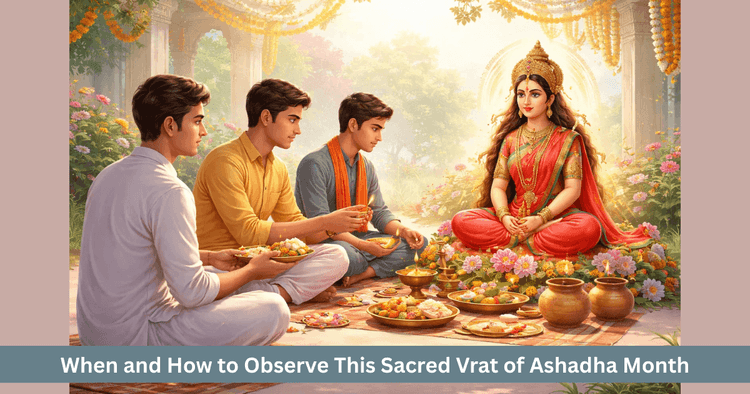
Table of Contents
Unmarried girls in Gujarat observe Gauri Vrat every year in Ashadha month. In 2026, this vrat begins on July 25 and concludes on July 29. It starts on Ekadashi tithi of Ashadha Shukla Paksha, lasting five days. The vrat ends on Purnima. Mother Gauri, another name for Goddess Parvati, is the deity of this ritual, holding special place in hearts of unmarried women. Purification through early morning bath precedes worship. This vrat not only offers spiritual growth but also guides in life's key decisions.
Story of Gauri Vrat: How Did Parvati Attain Shiva as Her Husband?
As described in ancient texts, Goddess Parvati herself undertook this Gauri Vrat. She ardently desired Lord Shiva as her perfect husband. Despite being daughter of Himalayas, she resorted to severe penance. By strictly following vrat rules, she pleased Shiva. Ultimately, Shiva accepted her as his consort. In villages and cities of Gujarat, this story is passed down generations. Unmarried girls draw inspiration from it to observe the vrat. Belief holds that it brings happy and prosperous marital life.
This story is not mere tale. It exemplifies devotion, patience and surrender. In Gujarat, mothers narrate it to daughters at night. It ignites enthusiasm for the vrat. Many families uphold this tradition for centuries.
When Does Gauri Vrat Begin in Gujarat and Why Is It Important?
Gauri Vrat commences on Ekadashi of Ashadha Shukla Paksha. In 2026, it starts on July 25. After four days, parana is done on July 29 Purnima. Each day carries unique significance. Sprouting begins on first day. Daily worship follows. Early morning bath is compulsory. Light lamp before image of Mother Parvati. Complete avoidance of salt is key to success. Occurring at onset of monsoon, it teaches harmony with nature.
In different regions of Gujarat, the vrat is celebrated with slight variations. More enthusiasm in Saurashtra, family worship emphasis in Kutch.
What Is the Method of Gauri Vrat? Complete Step by Step Guidance
The method of Gauri Vrat is simple yet profoundly spiritual. Begin preparations from first day. Take a small earthen pot. Moisten with water. Sow wheat or corn seeds and place in sunlight. Water daily to nurture sprouts.
Here is the complete method:
- First Step: Bath in Brahma Muhurta, wear pure clothes.
- Worship Items: Small idols of Parvati and Shiva, flowers, sandalwood, kumkum, lamp, incense.
- Daily Worship: Offer sprouts to Sun, perform aarti of Parvati-Shiva.
- Food: Wheat flour items, ghee, milk products, fruits. Salt prohibited.
- Fifth Day: Distribute sprouts as prasad. Install pot soil under tree.
This method fosters connection with nature's cycle. Sprout growth symbolizes vrat progress. Many women perform it in courtyards.
Why Is Salt Avoided in Gauri Vrat? Understand in Depth
Salt consumption is entirely prohibited during vrat period. It symbolizes austerity and restraint. Goddess Parvati followed this rule. It purifies body. Mind remains focused. Rock salt use is rare in Gujarat tradition. Instead, jaggery or dry ginger adds taste. This rule makes vrat rigorous, yielding greater fruits. Experts view it as ancient detoxification method.
How Does Gauri Vrat Differ from Other Parvati Vrats?
Gauri Vrat stands apart from others. Karnataka's Swarna Gauri Vrat focuses on gold worship. Gauri Teej of Magh month highlights Trayodashi. Hartalika Teej is in Bhadrapad. North India's Karwa Chauth in Kartik is for husband's longevity. Gujarat's Jaya Parvati Vrat is for marital bliss. Yet Ashadha Gauri Vrat is best for unmarried girls seeking husband. All share Parvati devotion.
What Are the Benefits of Gauri Vrat 2026? Know in Detail
This vrat brings excellent husband to unmarried women. Mother Parvati's grace ensures blissful marital life. Regular rituals grant mental peace. Sprouting teaches patience and responsibility. Family bonds strengthen. Many women report positive life changes post-vrat. It boosts self-confidence.
Frequently Asked Questions (FAQs)
What is the exact date of Gauri Vrat 2026?
From July 25 to 29. Ashadha Shukla Ekadashi to Purnima.
Can married women also observe Gauri Vrat?
Yes, for progeny bliss or marital harmony, though mainly by unmarried girls.
Which food to consume in Gauri Vrat?
Wheat flour, ghee, milk products, seasonal fruits. Salt avoidance mandatory.
How to use sprouted seeds finally?
Distribute as prasad, place remaining soil under tree.
Summarize the core story of Gauri Vrat?
Parvati observed this vrat for attaining Shiva and succeeded.
Is Gauri Vrat celebrated uniformly across regions?
No, Gujarat emphasizes sprout worship particularly.
Get your accurate Kundali
Generate KundaliDid you like it?
Author
Pt. Amitabh Sharma (56 Years)
Experience: 20
Consults About: Family Planning, Career
Clients In: Punjab, Haryana, Delhi
Share this article with friends and family
About ZODIAQ
ZODIAQ is an online Vedic Astrology platform. It connects clients seeking astrological advice to experienced astrologers with deep knowledge. Our users also generate kundali and perform kundali milan for free. ZODIAQ also offers services to the Astrologers. Astrologers utilize various offerings by ZODIAQ to serve their clients effectively.
If you are a User
Consult with experienced astrologers and seek their guidance. You can also order handwritten Janm Patrika report with life prediction prepared by experienced astrologers. Generate accurate Kundali, perform Kundali Matching and check horoscope and muhurat. Utilize our online library for all the necessary astrological and spiritual information.
If you are an Astrologer
Create accurate kundali for your clients and perform Kundali Matching for up to 5 people at a time. Write comprehensive Janm Patrika report for your clients with ZODIAQ. Check client details anytime by saving it in client directory. Become more productive by tracking how many clients you guide every day.
WELCOME TO
ZODIAQ
Right Decisions at the right time with ZODIAQ
