Hariyali Teej 2026: Sawan Teej Date, Timings, Rituals and Significance
By Pt. Abhishek Sharma
Learn about Hariyali Teej, celebrating marital harmony, devotion, and nature during the monsoon season
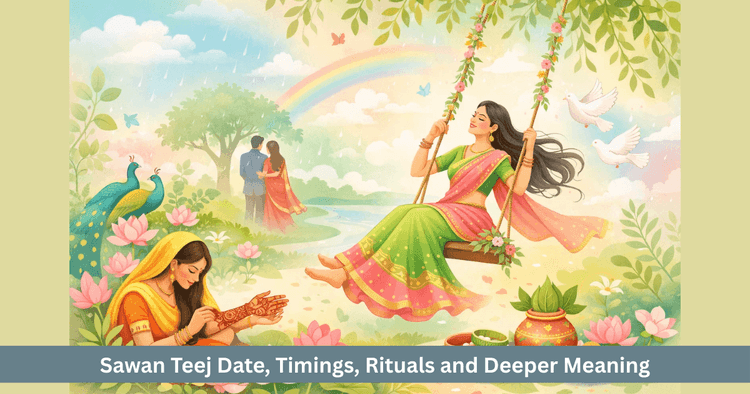
Table of Contents
Among the festivals of the monsoon season Hariyali Teej holds a special place as a celebration of marital harmony, devotion and the beauty of nature. This Teej is not only about adornment, it also honours the sacred union of Goddess Parvati and Lord Shiva and the long journey of tapasya that preceded it. In the year 2026 Hariyali Teej will be observed on Saturday, 15 August 2026 and it will fall two days before Nag Panchami.
Hariyali Teej 2026: Date and Tritiya Tithi Timings
Hariyali Teej is celebrated on the Tritiya tithi of the Shukla Paksha in the Shravan month. For 2026, the key timings connected with this Teej are as follows.
| Detail | Date | Time |
|---|---|---|
| Hariyali Teej 2026 | Saturday, 15 August 2026 | Vrat and celebrations throughout the day |
| Tritiya tithi begins | 14 August 2026 | At 6:47 PM |
| Tritiya tithi ends | 15 August 2026 | At 5:29 PM |
During this span of Shravan Shukla Tritiya women observe the Hariyali Teej fast. Most of the puja and festive activities can be comfortably performed on 15 August, as the tithi remains in force during the main part of the day.
Teej Festival Dates in 2026
Hariyali Teej, Kajari Teej and Hartalika Teej together form an important triad of festivals for women. The dates for these Teej observances in 2026 can be seen at a glance below.
| Teej festival | Date | Day |
|---|---|---|
| Hariyali Teej | 15 August 2026 | Saturday |
| Kajari Teej | 31 August 2026 | Monday |
| Hartalika Teej | 15 September 2026 | Tuesday |
Hariyali Teej is also known as Sawan Teej, Chhoti Teej and Madhusrawa Teej in different regions. Kajari Teej is observed in the Krishna Paksha of Bhadrapada and Hartalika Teej in the Shukla Paksha of the same month, while Hariyali Teej marks the start of this series during the Shravan Shukla Tritiya.
What Is Hariyali Teej and Why Is It So Special in Sawan?
Hariyali Teej is one of the three main Teej festivals and is closely linked with the Shravan month and the lush greenery of the monsoon. During this season the earth appears freshly renewed and the festival brings together nature, devotion and marital love. The central purpose of the vrat is for married women to pray for the long life, health and prosperity of their husbands and families.
In many households Hariyali Teej is considered comparable in importance to Karwa Chauth because both are connected with marital blessings. On this day Goddess Parvati is worshipped as Teej Mata and her patient quest to attain Lord Shiva as her husband is remembered. The festival thus becomes a reminder of perseverance, faith and commitment in relationships.
Divine Union of Goddess Parvati and Lord Shiva on Hariyali Teej
According to traditional narratives, after long periods of austerity and unwavering devotion, Goddess Parvati was finally accepted by Lord Shiva as His consort. Hariyali Teej is associated with the remembrance of this sacred union. Women worship Shiva and Parvati together and pray for similar stability, trust and mutual respect in their own married lives.
Because of this connection, Goddess Parvati is affectionately addressed as Teej Mata. It is believed that a woman who observes the Hariyali Teej fast with dedication receives support in maintaining harmony, dialogue and understanding within her marriage. Unmarried girls also take part in the vrat, seeking a suitable and supportive life partner.
Regional Names and Celebrations of Hariyali Teej 2026
Hariyali Teej is widely celebrated in various parts of North India. In Punjab it is known as Teeyan, where folk songs, Giddha, Bhangra and swings give the festival a very lively character. In Rajasthan it is called Shingara Teej and from royal households to simple homes, women celebrate with full sixteen fold adornment.
In many regions the same festival is called Sawan ki Teej, Chhoti Teej or Madhusrava Teej. Despite differences in name and style, the core feeling remains the same. In the heart of the rainy season women set aside time to celebrate, pray for their loved ones and allow themselves a space of shared joy and beauty.
Vrat Rules for Hariyali Teej 2026 and Tritiya Based Practices
The Hariyali Teej fast is often observed as a Nirjala vrat, in which some women avoid even water for the entire day. however this level of austerity is always best decided with awareness of health, age and personal capacity. Many choose a moderated form of fasting with fruits or limited water intake while maintaining the essence of restraint.
As the Tritiya tithi starts on 14 August at 6:47 PM and ends on 15 August at 5:29 PM, most women treat 15 August as the main vrat day. They bathe before sunrise, wear clean and usually green coloured clothes and then maintain the fast through the day. The fast is commonly broken after the evening puja or after viewing the Moon, according to the tradition followed in the family.
Shringaar and Sindhara Tradition on Hariyali Teej
One of the most loved aspects of Hariyali Teej is the focus on Shringaar and the exchange of Sindhara. On this day in laws send gifts to married daughters, especially sarees or lehengas, green bangles, henna, vermilion, bindis, sweets and other items symbolising marital auspiciousness. For newly married women this holds deep emotional value.
Women usually wear green sarees or lehengas on Hariyali Teej. The colour green represents the greenery of Sawan, fresh growth and abundance. It is believed that observing the vrat with the sixteen adornments strengthens the energy of marital bliss, helps maintain harmony and invites the presence of Lakshmi into the home.
Mehendi, Hands and the Language of Love
Mehendi has a special place in the rituals of Hariyali Teej. The festival feels incomplete without henna designs on the hands and feet. Women decorate their palms, arms and sometimes feet with intricate patterns. In some traditions they also weave their husband’s or beloved’s name into the designs.
A popular belief says that the deeper the colour of the mehendi, the stronger the love and affection from the husband or future partner. Whether or not one takes this literally, the practice itself becomes a gentle way of refreshing affection and appreciation in the relationship. The shared experience of applying mehendi among sisters and friends also builds a circle of support and joy.
Swings on the Banyan Tree, Songs and Dance
In many regions Hariyali Teej is also called Shravani Teej and the Vat Vriksha or Banyan tree plays an important role. Swings are tied to its spreading branches, in courtyards, gardens and even within some homes. Women spend time swinging, singing and dancing together, taking a break from the demands of daily responsibilities.
The Banyan tree is regarded as a symbol of longevity, wisdom and solidity. Its hanging roots are often seen as streams of knowledge. Worshipping the Banyan tree, circumambulating it and sitting in its shade for bhajans or quiet reflection are all considered auspicious on Hariyali Teej. These acts support a sense of inner rootedness and patience.
How to Perform Hariyali Teej Vrat and Puja?
The puja of Hariyali Teej centres on the married form of Lord Shiva and Goddess Parvati. For the woman observing the vrat, a simple and orderly approach can be followed.
Morning Preparations
- Wake during the early hours, bathe and wear clean clothes, preferably in green or light tones.
- Purify the place of worship with water and install images or idols of Lord Shiva and Goddess Parvati.
- Take a vow to observe the fast with humility, patience and devotion throughout the day.
Worship of Teej Mata, Shiva and Parvati
- Arrange a thali with roli, rice, flowers, incense, lamp, fruits, sweets and items of adornment.
- First remember Lord Ganesha and seek removal of obstacles.
- Then worship Goddess Parvati as Teej Mata by offering sindoor, bangles, kumkum, bindi, mehendi and a cloth or saree as per capacity.
- Worship Lord Shiva alongside and seek blessings from both for marital harmony and family wellbeing.
During the puja it is common to listen to or recite stories that describe the steadfast devotion of Goddess Parvati and her union with Shiva. The devotee quietly prays for similar understanding and stability within the home.
Observing the Fast and Breaking It after Puja
Many women keep the fast without water, though a moderated form is also acceptable when health requires it. The important point is a sincere heart and controlled senses rather than external severity alone.
- In the evening, after Moonrise or at the family’s traditional time, the woman again performs a brief puja of Shiva and Parvati.
- She receives blessings from elders and her husband or other respected family members.
- The fast is then broken with simple, sattvic food, often shared with the family in a calm and grateful mood.
Throughout the day the inner attitude of gratitude, simplicity and devotion holds more weight than form alone.
Hariyali Teej in Vrindavan and Krishna Temples
Hariyali Teej is also celebrated beautifully in Vaishnava traditions. In the temples of Vrindavan and Mathura the festival is marked by the Jhulan Leela of Radha and Krishna. Deities are placed on artistically decorated swings, often covered with flowers and colourful fabrics and the air is filled with kirtans and bhajans.
In many Krishna temples, devotees see the swinging of the deities as a celebration of divine love and the gentle joy of the monsoon. Water or perfumed sprays are sometimes used to symbolically welcome the rains and refresh the gathered devotees. This side of the festival adds another layer of sweetness to Hariyali Teej.
Inner Guidance from Hariyali Teej 2026
Hariyali Teej 2026 is not only a festival of appearance. It quietly reminds that relationships too need periodic renewal just as the earth renews herself in the rains. The swing that moves up and down can be seen as a symbol of the changing moods and circumstances of life. What keeps a marriage steady through such movement is patience, empathy and shared commitment.
Anyone who uses this day to reflect honestly on communication, responsibilities and tenderness within the family can receive a new sense of direction for the coming months. The heart of Hariyali Teej is that, like the greenery of Sawan, the inner landscape should remain fresh with gratitude, kindness and a willingness to nurture those one loves.
Frequently Asked Questions
On which date will Hariyali Teej be observed in 2026 and what are the Tritiya timings?
Hariyali Teej in 2026 will be observed on Saturday, 15 August 2026. Tritiya tithi begins on 14 August 2026 at 6:47 PM and ends on 15 August 2026 at 5:29 PM.
What is the religious and cultural importance of Hariyali Teej?
The festival honours the union of Goddess Parvati and Lord Shiva and focuses on marital happiness, the long life of husbands and the wellbeing of the family, while also celebrating the greenery and joy of the monsoon.
Is the Hariyali Teej fast only for married women?
Traditionally married women observe the fast for their husbands, yet unmarried girls also participate, praying for a worthy life partner and a harmonious married life in the future.
Why are green clothes and mehendi important on Hariyali Teej?
Green clothes represent the lush growth of the monsoon and are considered auspicious. Mehendi symbolises marital joy and adornment and its presence completes the visual and emotional mood of the festival.
Which main rituals are considered especially auspicious on Hariyali Teej?
Puja of Teej Mata and Shiva Parvati, observance of nirjala or disciplined fasting, sixteen fold adornment, applying mehendi, worship of the Banyan tree, enjoying swings and receiving elders’ blessings are all regarded as auspicious parts of the day.
Get your accurate Kundali
Generate KundaliDid you like it?
Author

Pt. Abhishek Sharma (63)
Experience: 20
Consults About: Family Planning, Career
Clients In: Punjab, Haryana, Delhi
Share this article with friends and family
About ZODIAQ
ZODIAQ is an online Vedic Astrology platform. It connects clients seeking astrological advice to experienced astrologers with deep knowledge. Our users also generate kundali and perform kundali milan for free. ZODIAQ also offers services to the Astrologers. Astrologers utilize various offerings by ZODIAQ to serve their clients effectively.
If you are a User
Consult with experienced astrologers and seek their guidance. You can also order handwritten Janm Patrika report with life prediction prepared by experienced astrologers. Generate accurate Kundali, perform Kundali Matching and check horoscope and muhurat. Utilize our online library for all the necessary astrological and spiritual information.
If you are an Astrologer
Create accurate kundali for your clients and perform Kundali Matching for up to 5 people at a time. Write comprehensive Janm Patrika report for your clients with ZODIAQ. Check client details anytime by saving it in client directory. Become more productive by tracking how many clients you guide every day.
WELCOME TO
ZODIAQ
Right Decisions at the right time with ZODIAQ
