Jivitputrika Vrat 2026: Date, Rituals and Devotion of Motherhood
By Pt. Narendra Sharma
Complete guide to the three-day fast from Nahai Khai to Parana
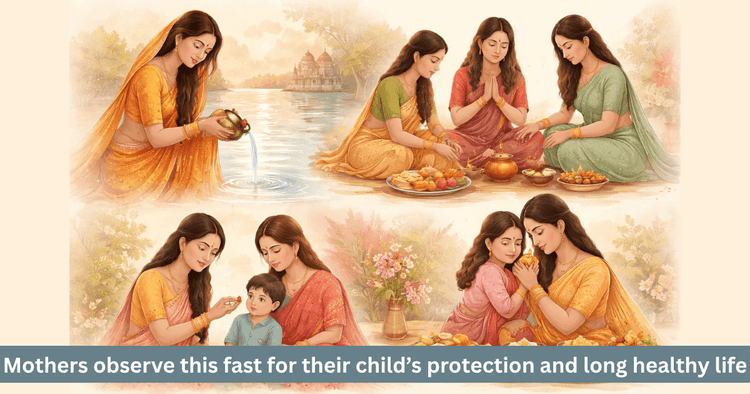
Table of Contents
In the year 2026, Jivitputrika Vrat will be observed on October 4, Sunday (Ashwin month, Krishna Paksha). This vrat is not limited to a single day but is a three day observance celebrated from Saptami to Navami Tithi. It begins with Nahai Khai, followed by a strict waterless fast on the second day and concludes with Paaran on the third day. This period reflects the depth of maternal devotion and commitment.
What is the spiritual significance of Jivitputrika Vrat
Jivitputrika Vrat symbolizes the unbreakable love and dedication of a mother. On this day, mothers observe a strict fast for the health, longevity and well being of their children. This vrat is not only a physical discipline but also a purification of mind and emotions.
It is believed that when a mother observes this vrat with complete devotion and discipline, her children receive protection and progress in life.
Is it necessary to observe Jivitputrika Vrat without water
Jivitputrika Vrat is considered extremely strict because not even a drop of water is consumed during the fast. If water is consumed, it is referred to as Khur Jitiya.
This vrat tests patience and self control, where mothers remain without food and water throughout the day and maintain their resolve.
How is this three day vrat performed
The sequence of Jivitputrika Vrat is systematic and traditional. It can be understood through the following table:
| Day | Ritual |
|---|---|
| First Day | Nahai Khai, sacred meal after bath |
| Second Day | Strict waterless fast |
| Third Day | Paaran to conclude the vrat |
On the first day, mothers take a bath and consume pure food. On the second day, they observe a complete fast without food or water. On the third day, the fast is concluded after the end of Ashtami Tithi.
In which regions is this vrat widely observed
Jivitputrika Vrat is primarily observed with deep devotion in Uttar Pradesh, Bihar, Jharkhand and certain regions of Nepal. In these areas, it forms an important part of family traditions.
It is not only a religious practice but also a cultural identity that has been preserved through generations.
What does the story of Jivitputrika Vrat teach
The story associated with this vrat highlights the compassion and sacrifice of King Jimutavahana. He was a noble king who renounced worldly pleasures and chose to live in a forest.
One day, he saw an old woman crying. She belonged to the Nagvanshi lineage and her only son was destined to be offered to Garuda as part of a ritual. The king assured her that he would protect her son.
King Jimutavahana covered himself with a red cloth and lay on a rock, offering himself as food to Garuda. When Garuda lifted him, he noticed that there was no fear in his eyes. Surprised, he asked about his identity.
Upon hearing the truth, Garuda was moved by his selflessness and courage and freed him. He also promised to stop taking sacrifices from snakes. This is why mothers observe this vrat for the protection and longevity of their children.
How to perform Jivitputrika Vrat rituals
The rituals of this vrat emphasize discipline and devotion. One wakes up before sunrise, takes a bath and consumes pure food.
After this, mothers abstain from both food and water throughout the day. They keep a firm resolve for the well being of their children. The next day, after the end of Ashtami Tithi, the fast is concluded.
This entire process reflects strength and faith.
The deeper emotion behind this sacred observance
Jivitputrika Vrat is not merely a ritual but a profound expression of a mother’s willingness to endure hardship for her children.
It teaches that true love is expressed not through words but through sacrifice and commitment. This vrat becomes a source of protection and auspiciousness for the family.
FAQs
When is Jivitputrika Vrat observed
It is observed during Krishna Paksha of Ashwin month from Saptami to Navami, with the main fast on Ashtami.
Can all mothers observe this vrat
Yes, all mothers can observe this vrat for the well being of their children.
Is drinking water allowed during the fast
No, this is a waterless fast and if water is consumed it is called Khur Jitiya.
When is the fast concluded
The fast is concluded on the next morning after the end of Ashtami Tithi.
What is the main purpose of this vrat
The purpose of this vrat is to pray for the longevity, health and happiness of children.
Get your accurate Kundali
Generate KundaliDid you like it?
Author
Pt. Narendra Sharma (63)
Experience: 20
Consults About: Family Planning, Career
Clients In: Punjab, Haryana, Delhi
Share this article with friends and family
About ZODIAQ
ZODIAQ is an online Vedic Astrology platform. It connects clients seeking astrological advice to experienced astrologers with deep knowledge. Our users also generate kundali and perform kundali milan for free. ZODIAQ also offers services to the Astrologers. Astrologers utilize various offerings by ZODIAQ to serve their clients effectively.
If you are a User
Consult with experienced astrologers and seek their guidance. You can also order handwritten Janm Patrika report with life prediction prepared by experienced astrologers. Generate accurate Kundali, perform Kundali Matching and check horoscope and muhurat. Utilize our online library for all the necessary astrological and spiritual information.
If you are an Astrologer
Create accurate kundali for your clients and perform Kundali Matching for up to 5 people at a time. Write comprehensive Janm Patrika report for your clients with ZODIAQ. Check client details anytime by saving it in client directory. Become more productive by tracking how many clients you guide every day.
WELCOME TO
ZODIAQ
Right Decisions at the right time with ZODIAQ
