Jyeshtha Purnima Vrat Mistakes
By Pt. Sanjeev Sharma
Learn which mistakes to avoid in Jyeshtha Purnima Vrat to receive Lord Vishnu's blessings and the full spiritual benefit
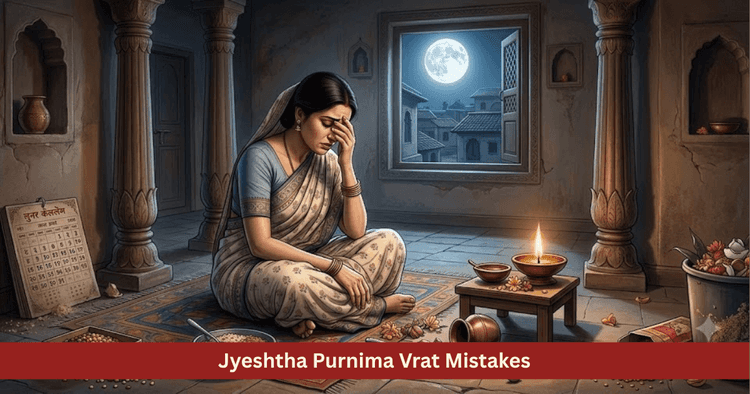
Table of Contents
Date, vrat and main rules
| Aspect | Description |
|---|---|
| Vrat | Jyeshtha Purnima Vrat |
| Worshipped deities | Lord Vishnu and Chandra Deva, meaning the Moon deity |
| Main purpose | Prayer for happiness, prosperity, mental peace and virtuous merit |
| Core of the vrat | Fasting, pure diet and purity of mind and speech |
| What may be taken | Fruits, milk, yogurt, makhana, sabudana, singhara flour, kuttu flour and dry fruits |
| What should be avoided | Meat, alcohol, honey, brinjal, radish and turnip |
| Special caution | Do not eat food prepared in another person's home |
What should be done on this day
- Take a morning bath and make the vrat sankalp, meaning sacred resolve, with purity
- Worship Lord Vishnu and Chandra Deva
- Follow fruit based fasting, waterless fasting or fruit only vrat according to family tradition
- Keep mind, speech and conduct restrained through the day
- Include charity, japa and calm remembrance in the observance
- Consume only pure home prepared food or fruit based vrat food
Which mistakes should be avoided in the vrat
| Mistake | Possible effect |
|---|---|
| Impure or tamasic food | Reduction in the purity of the vrat |
| Eating food from another home | Obstruction in sanctity and discipline |
| Anger and harsh speech | Mental unrest |
| Lies and negative thoughts | Weakening of the spiritual fruit of the vrat |
| Treating the vrat only as hunger | Loss of its true inner purpose |
Where fasting becomes more than giving up food
Jyeshtha Purnima is considered deeply significant in Sanatan tradition. On this day there is a sacred practice of fasting and worshipping Lord Vishnu along with Chandra Deva. It is believed that when Jyeshtha Purnima Vrat is observed with devotion, discipline and purity, it brings happiness, prosperity, peace of mind and auspicious merit. Yet the true strength of this vrat does not lie only in staying hungry but in carefully following its rules.
Many people understand a vrat only in terms of food. That itself becomes one of the greatest mistakes. A vrat is a discipline not only of the body but also of mind, speech and conduct. If food remains controlled but thoughts are disturbed, speech is harsh and the mind is full of negativity, the inner fruit of the vrat becomes reduced. That is why it is as important to know what should be avoided in Jyeshtha Purnima Vrat as it is to know its worship and fasting method.
What is the spiritual significance of Jyeshtha Purnima Vrat
Jyeshtha Purnima is regarded as a symbol of fullness, coolness and emotional balance. The full moon is connected with Chandra and Chandra is considered the significator of mind, memory, feeling and inner peace. On this day the worship of Lord Vishnu along with Chandra Deva is considered especially meaningful because Vishnu is the presiding force of preservation, balance, dharma and life order. In this way the vrat supports harmony in both mind and life.
From the religious point of view, one major purpose of fasting is that a person may begin to notice the impurities within oneself. Controlling hunger is only the first step. The real sadhana, meaning spiritual discipline, begins when a person also starts observing anger, falsehood, restlessness and negative tendencies within. That is why Jyeshtha Purnima Vrat is a festival of both outer observance and inner discipline.
Which mistakes should be avoided to receive Lord Vishnu's blessings
Purity is the most important principle in Jyeshtha Purnima Vrat. Therefore certain foods and certain behaviors are clearly considered unsuitable. On the day of the vrat, it is important to stay away from things regarded as tamasic or impure. If these rules are ignored, the full merit and calming effect of the vrat may become reduced. This is not only a matter of custom but also of preserving the inner sanctity of the observance.
Special attention should be given to food, company, speech and emotional state. What is eaten on a vrat day is not only material for the body but also a base for subtle energy. Therefore food that is considered heavy, violent, tamasic or spiritually unsuitable is avoided. The success of the vrat quietly rests in this awareness.
Main mistakes that weaken the vrat
- Consuming tamasic items
- Eating food from another home
- Anger, falsehood and harshness
- Keeping the vrat for display
- Remaining mentally restless through the day
Why is it necessary to avoid meat and alcohol
According to astrological and religious belief, the consumption of meat and alcohol is completely forbidden on the day of Jyeshtha Purnima Vrat. Both are considered to increase tamasic tendencies. The purpose of the vrat is to make the mind light, calm and fit for divine remembrance, while tamasic substances may make consciousness heavy and unstable. That is why avoiding them is regarded as one of the basic conditions of the vrat.
This is not only about following a rule but also about understanding subtle effect. The nature of food affects the mind. If a person observes a vrat and at the same time takes food that increases heaviness or agitation, the spiritual direction of the vrat may become disturbed. Therefore avoiding meat and alcohol is not merely a religious prohibition but also a protection of the sadhana.
Why should honey, brinjal, radish and turnip not be consumed
According to the given guidance, honey, brinjal, radish and turnip should also be avoided during Jyeshtha Purnima Vrat. In traditional vrat observances, certain food items have long been treated as unsuitable from the standpoint of purity, digestion or subtle energy balance. On a fasting day the aim of food is not variety of taste but purity and lightness suitable for worship. For this reason these items are best avoided.
Religious discipline also considers which foods support stability in the body and which may create unnecessary disturbance or imbalance. Brinjal, radish and turnip are not treated as vrat appropriate in some traditions. Honey too appears in the list of items to avoid on this day. Therefore anyone wishing to observe the vrat with full discipline should stay away from them.
Which foods should be avoided
| Restricted item | Reason |
|---|---|
| Meat | Considered tamasic |
| Alcohol | Disturbs mind and vrat purity |
| Honey | Restricted in vrat discipline |
| Brinjal | Considered unsuitable for pure vrat food |
| Radish | Not aligned with vrat purity |
| Turnip | Included in traditional avoidance list |
Why should one not eat food from another person's home
Religious guidance advises that on the day of the vrat one should avoid eating food prepared in another person's home. The root reason behind this is the protection of purity and sanctity. A vrat is not only about reducing the quantity of food. The purity, intention and preparation of that food are also considered highly important. Food prepared at home with devotion and discipline becomes connected to the sankalp of the person observing the vrat. Food from outside or from another household may weaken this subtle discipline.
There is also a psychological side to this rule. When a person treats vrat food as part of one's sacred discipline, greater awareness naturally develops. Food from another home can sometimes become an option of convenience, whereas the path of vrat asks for restraint, not convenience. Therefore during Jyeshtha Purnima Vrat it is considered proper to take only pure home prepared food or fruit based vrat food.
What may be eaten during the vrat
According to family custom and personal resolve, one may take fruit based or light vrat food during Jyeshtha Purnima. Fruits, milk, yogurt, makhana, sabudana, singhara flour, kuttu flour and dry fruits are generally considered acceptable. Some people take fruit based meals with rock salt, while others keep a fruit only or water based vrat. Some devotees even make a resolve of waterless fasting. This choice depends upon personal tradition, capacity and sankalp.
One important point should be remembered here. The method of the vrat may be flexible but the principle of purity should remain firm. If health does not permit strict fasting, then light and sattvic fruit based food is appropriate. If the family follows a particular method, that too may be respected. The essential point is that food should remain less, pure and supportive of divine remembrance.
What may be taken during the vrat
- Fruits
- Milk
- Yogurt
- Makhana
- Sabudana
- Singhara flour
- Kuttu flour
- Dry fruits
- Fruit based food with rock salt
Is keeping the diet pure alone enough
No, this is one of the deepest teachings of the vrat. According to religious understanding, a vrat is not only a rule about food. It is also a refinement of mind, speech and conduct. Therefore one should stay away from anger, lies, harsh language and negative thinking on this day. If a person fasts outwardly but remains inwardly disturbed, jealous, harsh or untruthful, the spiritual effect of the vrat becomes weakened.
The true purpose of Jyeshtha Purnima Vrat is inner purification. This means that the faults living within should not be fed, at least on this sacred day. Remaining calm, speaking less, speaking truth, not hurting others and keeping the mind centered in Vishnu remembrance are all invisible yet very important parts of the observance. This is why the success of the vrat is measured not only by the plate but also by the condition of the mind.
Importance of worship, charity and remembrance
In this vrat, the worship of Lord Vishnu, remembrance of Chandra Deva, charity and calm japa are considered especially meaningful. Worship takes a person from outer action toward inner presence. Charity reduces ego and softens the heart. Japa and remembrance help collect the mind and protect it from distraction. When all of these come together, the fruit of the vrat becomes not only religious but also psychological and spiritual.
It is especially important not to turn the vrat into a burden. It should be observed with simplicity, peace and purity. The grace of Lord Vishnu is not linked only with method but also with inner feeling. Therefore the same purity that is maintained in food should also be maintained in intention.
Conduct that completes the vrat
| Conduct | Spiritual benefit |
|---|---|
| Vishnu worship | Protection and reverence |
| Remembrance of Chandra | Peace of mind |
| Charity | Humility and merit |
| Japa | Focus and purification |
| Calm behavior | Inner success of the vrat |
Where restraint becomes a blessing
The true beauty of Jyeshtha Purnima Vrat lies in the fact that it gives a person the opportunity, even if only for one day, to become more aware, more restrained and more pure. On this day control over food, sweetness in speech, peace in mind and sattvic conduct are brought together. This joined discipline is what makes the vrat effective. Therefore to receive the blessings of Lord Vishnu, keeping the fast alone is not enough. It must also be observed in the right spirit.
A person who avoids meat, alcohol, honey, brinjal, radish, turnip and food from another home, while also staying away from anger, falsehood and harshness, is considered to observe the vrat more meaningfully. In this way Jyeshtha Purnima Vrat becomes not merely a list of rules but a small yet deep practice of self restraint and pure living. That is its lasting and auspicious teaching.
FAQ
What should not be eaten during Jyeshtha Purnima Vrat
Meat, alcohol, honey, brinjal, radish and turnip should be avoided during this vrat.
Can one eat food from another person's home during Jyeshtha Purnima Vrat
No, it is advised to avoid food from another home in order to preserve purity and sanctity during the vrat.
What can be eaten during Jyeshtha Purnima Vrat
Fruits, milk, yogurt, makhana, sabudana, singhara flour, kuttu flour and dry fruits may be taken.
Are food rules alone important in this vrat
No, avoiding anger, lies, harsh speech and negative thoughts is also an essential part of the observance.
What should be done to receive Lord Vishnu's blessings in this vrat
Observe the vrat with devotion, take pure food, worship Vishnu, give charity, remain calm and keep the mind pure.
Get your accurate Kundali
Generate KundaliDid you like it?
Author
Pt. Sanjeev Sharma (63)
Experience: 20
Consults About: Family Planning, Career
Clients In: Punjab, Haryana, Delhi
Share this article with friends and family
About ZODIAQ
ZODIAQ is an online Vedic Astrology platform. It connects clients seeking astrological advice to experienced astrologers with deep knowledge. Our users also generate kundali and perform kundali milan for free. ZODIAQ also offers services to the Astrologers. Astrologers utilize various offerings by ZODIAQ to serve their clients effectively.
If you are a User
Consult with experienced astrologers and seek their guidance. You can also order handwritten Janm Patrika report with life prediction prepared by experienced astrologers. Generate accurate Kundali, perform Kundali Matching and check horoscope and muhurat. Utilize our online library for all the necessary astrological and spiritual information.
If you are an Astrologer
Create accurate kundali for your clients and perform Kundali Matching for up to 5 people at a time. Write comprehensive Janm Patrika report for your clients with ZODIAQ. Check client details anytime by saving it in client directory. Become more productive by tracking how many clients you guide every day.
WELCOME TO
ZODIAQ
Right Decisions at the right time with ZODIAQ
