Kamika Ekadashi 2026: Date, Vrat Rituals, Story and Path to Liberation
By Pt. Narendra Sharma
Kamika Ekadashi of Shravan Krishna Paksha is an important fast for Lord Vishnu worship and sin forgiveness
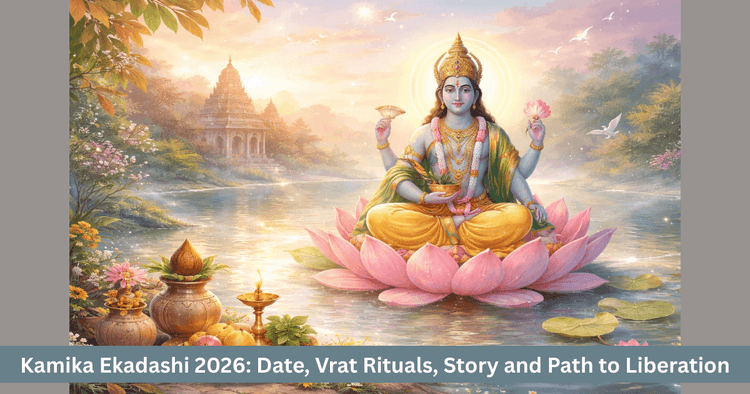
Table of Contents
The Kamika Ekadashi of the Krishna Paksha in the month of Shravan is regarded as a powerful day for worship of Lord Vishnu. Devotees observe a fast with faith and it is believed that through this vow the burden of deep sins becomes lighter and the way towards liberation opens gradually. In the year 2026 Kamika Ekadashi will be observed on Sunday, 9 August 2026, when the Shravan Krishna Ekadashi tithi will be present during the day.
Kamika Ekadashi 2026: Date, Tithi and Parana Timings
The following table summarises the key timings for Kamika Ekadashi 2026 so that the fast and its completion can be planned properly.
| Detail | Date | Time |
|---|---|---|
| Ekadashi tithi begins | 8 August 2026 | Around 2 PM onwards |
| Ekadashi tithi ends | 9 August 2026 | Around 11:15 AM |
| Main fast of Kamika Ekadashi | 9 August 2026, Sunday | From sunrise throughout the day |
| Parana begins | 10 August 2026 | Around 5:57 AM |
| Parana ends | 10 August 2026 | Around 7:55 AM |
| Dwadashi end on Parana day | 10 August 2026 | Around 7:55 AM |
Most devotees begin their fast from sunrise on 9 August and break it on Dwadashi morning of 10 August within the suitable time window. Since there can be slight regional differences it is always wise to confirm the exact muhurta from the local panchang followed in one’s region.
What Is Kamika Ekadashi and In Which Month Does It Fall?
Kamika Ekadashi is the Ekadashi of the dark fortnight of the Shravan month. In the Gregorian calendar it usually falls in July or August. On this day Lord Vishnu is worshipped with special devotion, accompanied by fasting and night vigil. The belief is that those who observe the Kamika Ekadashi vrat with proper method begin to shed the weight of accumulated sins and move steadily towards the path of liberation.
According to traditional descriptions, the fruit of Kamika Ekadashi has been compared with the merit of performing an Ashvamedha yajna. Especially in Shravan, when the element of water is strong and worship of both Lord Vishnu and Lord Shiva is considered favourable, this Ekadashi becomes a particularly supportive occasion for spiritual progress.
Why Is Worship of Lord Vishnu on Kamika Ekadashi Considered Special?
The month of Shravan is honoured both for Vishnu devotion and for worship of Shiva. On Kamika Ekadashi, worship of Lord Vishnu along with Tulsi leaves is associated with pacification of ancestral disturbances known as Pitru Dosha. The day does not only point to removal of sins but also symbolises calming of restless desires, anger and ego.
The very word Kamika hints at directing desires in a higher way. When a devotee spends the day in fasting, prayer and remembrance of the Lord, inner cravings gradually begin to settle. This calming of the inner field becomes an initial step towards liberation because progress on that path requires control over agitated mental tendencies.
What Does the Main Legend of Kamika Ekadashi Teach?
The famous story associated with Kamika Ekadashi describes a landlord living in a village. In ancient times this landlord became angry during a dispute with a Brahmin. In his uncontrolled rage he struck the Brahmin and the Brahmin died. The act was not pre planned yet its consequence was very serious. The villagers refused to allow the landlord to take part in the Brahmin’s last rites and he came to bear the stigma of killing a Brahmin.
Filled with remorse, the landlord approached a saint and asked for a way to free himself from this sin. The saint advised him to observe the Kamika Ekadashi fast in the month of Shravan and to worship Lord Vishnu with full sincerity. The landlord followed the instructions exactly. That night he slept beside the deity of the Lord. In his dream Lord Vishnu appeared and told him that his sin had been forgiven and that he had been freed from his burden.
Tradition also recounts that this Kamika Ekadashi story was first narrated by Sage Vashishta to King Dilip and later by Lord Krishna to Yudhishthira. The message running through the narrative is that sincere repentance, combined with the vrata and devotion to Lord Vishnu, can soften even very grave karmic consequences, provided that the person genuinely wishes to change and did not act with deliberate cruelty.
Is It Right to Misuse the Power of Kamika Ekadashi?
Scriptural explanations clearly warn against using the greatness of Kamika Ekadashi as an excuse to commit intentional wrongs. To think that one can consciously harm others and then erase the result simply by listening to a story or keeping a single fast is considered a serious mistake. Deliberate sin carries heavy consequences.
The purpose of the vow and the Katha is to awaken awareness, compassion and a commitment to righteous conduct. Kamika Ekadashi is support for a repentant heart, not a license for repeated misdeeds. Those who sincerely wish to stay away from sinful behaviour are the ones who truly benefit from this observance. Hearing the glory without changing one’s conduct is seen as incomplete spiritual effort।
How to Observe Kamika Ekadashi Vrat Vidhi?
The vow of Kamika Ekadashi is simple yet deeply meaningful. Its rules guide both the body and the mind.
Morning Preparations
- Rise during the early hours, bathe and wear clean, preferably light coloured clothes.
- Purify the place of worship with sacred water and install an image or picture of Lord Vishnu.
- Facing the east, resolve to keep the fast and worship throughout the Ekadashi tithi with sincerity and restraint.
Puja Method of Lord Vishnu
Panchamrit, flowers, fruits and Tulsi leaves play a central role in this worship.
- Offer Panchamrit to the deity of Lord Vishnu or at least offer water and Panchamrit symbolically.
- Place yellow or white flowers, Tulsi leaves, sandal paste, incense, lamp, food offering, fruits and sesame seeds at the Lord’s feet.
- It is regarded as especially auspicious to offer at least twenty one Tulsi leaves at the lotus feet of Lord Vishnu on this day।
- Throughout the day maintain inner remembrance of the Lord by reciting His names and avoid anger and harsh speech.
Depending on health and tradition, devotees may observe a fruit only fast or remain on water. One should not push the body into extreme strain and at the same time should avoid unnecessary indulgence. The key is conscious restraint and a prayerful mood।
Night Vigil and Dwadashi Parana
On Kamika Ekadashi night many devotees observe a jagaran, spending the hours in bhajans, kirtans and repetition of Vishnu mantras. According to capacity, one may remain awake longer than usual or at least keep the mind in devotion until late evening.
The fast is broken on Dwadashi, the next day, after sunrise within the prescribed time. Before eating, devotees first offer water, fruits and a simple food item to Lord Vishnu and seek permission to end the fast. Feeding a Brahmin and giving clothes and a small donation are considered very meritorious. Only then does the vrat holder partake of a simple, sattvic meal.
Importance of Charity and Pilgrimage Bath on Kamika Ekadashi
On this Ekadashi three practices are especially praised, namely bathing, charity and pilgrimage. If possible, devotees take a holy dip in sacred rivers such as Ganga, Godavari, Yamuna, Krishna or Kaveri on this day. Where such rivers are not accessible, a bath taken at home with inner remembrance of sacred waters is also honoured.
Charity in the form of food, lamps, clothes and monetary support to the needy or to learned Brahmins is strongly encouraged. Feeding a deserving person is considered a powerful way to complete the fast. Lighting lamps in temples or near sacred spots symbolises the removal of darkness from one’s own heart and from the environment.
Kamika Ekadashi and Relief from Pitru Dosha
Another belief linked with Kamika Ekadashi is that worship of Lord Vishnu with Tulsi leaves on this day brings relief from Pitru Dosha. The observance is regarded as helpful for the peace of ancestors and for harmony within the family line. Those who consistently perform ancestral rites and also keep Kamika Ekadashi with devotion are believed to receive blessings in the form of inner steadiness and resolution of certain inherited difficulties.
Tradition further states that those who fast, worship and maintain a pure night vigil on this Ekadashi are shielded from the harsh judgement of Yamaraja, the lord who presides over death. Thus Kamika Ekadashi offers guidance for a balanced life here and gentle passage after death.
Inner Guidance from Kamika Ekadashi 2026
Kamika Ekadashi 2026 is more than a date on the calendar. It offers a chance for honest self reflection and conscious change. The day can be used to look at where anger, harsh words or careless actions have hurt others in recent times. Through the vow, one can quietly resolve to be more careful and kind in the future.
A devotee who approaches Kamika Ekadashi with this spirit of reflection, along with the fast, Katha and worship, may feel both lightness and steadiness within. Freedom from sin is not merely a doctrine, it is a gradual inner process shaped by right choices. Kamika Ekadashi gently points towards this process and shows a practical way to begin.
Frequently Asked Questions
When will Kamika Ekadashi be observed in 2026 and in which lunar month does it fall?
Kamika Ekadashi in 2026 will be observed on Sunday, 9 August 2026, during the Krishna Paksha of the Shravan month.
What is the core message of the Kamika Ekadashi legend?
The legend shows that unintentional but serious wrongs can be eased through sincere repentance, observance of Kamika Ekadashi and devoted worship of Lord Vishnu when there is genuine desire to change।
How should Lord Vishnu be worshipped on Kamika Ekadashi?
After a morning bath, install an image of Lord Vishnu and offer Panchamrit, flowers, Tulsi leaves, fruits, sesame seeds, incense and lamp while maintaining remembrance and restraint throughout the day.
Is night vigil compulsory on Kamika Ekadashi?
Night vigil is not compulsory, yet staying awake as far as possible with bhajans, kirtans and mantra chanting significantly enhances the spiritual benefit of the fast.
Is Kamika Ekadashi considered helpful for pacifying Pitru Dosha?
Yes, there is a strong belief that worship of Lord Vishnu with Tulsi leaves on Kamika Ekadashi, along with fasting and charity, helps reduce the impact of Pitru Dosha and invites blessings from ancestors.
Get your accurate Kundali
Generate KundaliDid you like it?
Author
Pt. Narendra Sharma (63)
Experience: 20
Consults About: Family Planning, Career
Clients In: Punjab, Haryana, Delhi
Share this article with friends and family
About ZODIAQ
ZODIAQ is an online Vedic Astrology platform. It connects clients seeking astrological advice to experienced astrologers with deep knowledge. Our users also generate kundali and perform kundali milan for free. ZODIAQ also offers services to the Astrologers. Astrologers utilize various offerings by ZODIAQ to serve their clients effectively.
If you are a User
Consult with experienced astrologers and seek their guidance. You can also order handwritten Janm Patrika report with life prediction prepared by experienced astrologers. Generate accurate Kundali, perform Kundali Matching and check horoscope and muhurat. Utilize our online library for all the necessary astrological and spiritual information.
If you are an Astrologer
Create accurate kundali for your clients and perform Kundali Matching for up to 5 people at a time. Write comprehensive Janm Patrika report for your clients with ZODIAQ. Check client details anytime by saving it in client directory. Become more productive by tracking how many clients you guide every day.
WELCOME TO
ZODIAQ
Right Decisions at the right time with ZODIAQ
