Mangala Gauri Vrat 2026: Dates, Puja Method, Story and Udyapan Guidance
By Pt. Amitabh Sharma
Mangala Gauri Vrat during Shravan Tuesdays is observed for marital happiness, children blessings and prosperity
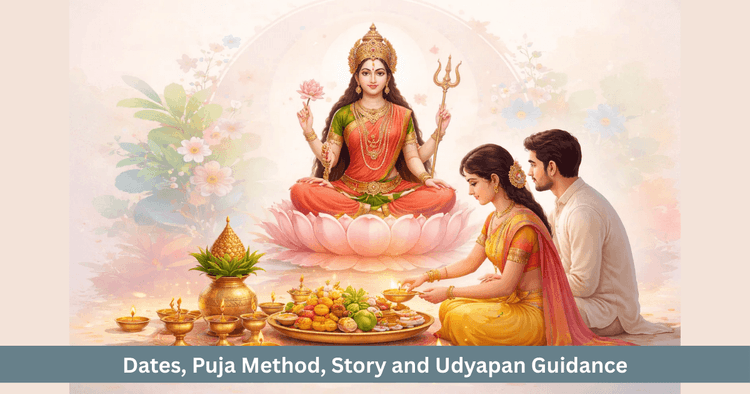
Table of Contents
During the month of Shravan the Mangala Gauri Vrat is considered highly auspicious for married and newly married women. This sacred vow is dedicated to Mother Gauri for protection of marital life, blessing of children and overall prosperity. In the year 2026 the Mangala Gauri Vrat will be observed on all Tuesdays of the Shravan month and the first Mangala Gauri Vrat will fall on Tuesday, 4 August 2026.
Mangala Gauri Vrat 2026 Tuesdays and Schedule
| Order | Date | Day | Description |
|---|---|---|---|
| 1 | 4 August 2026 | Tuesday | First Mangala Gauri Vrat |
| 2 | 11 August 2026 | Tuesday | Second Mangala Gauri Vrat |
| 3 | 18 August 2026 | Tuesday | Third Mangala Gauri Vrat |
| 4 | 25 August 2026 | Tuesday | Fourth Mangala Gauri Vrat |
All Tuesdays of Shravan on which women fast in the name of Mother Gauri are collectively known as Mangala Gauri Vrat. In some traditions the vow extends to sixteen Tuesdays, yet the four Shravan Tuesdays are commonly treated as the main cycle.
What Is Mangala Gauri Vrat and Who Observes It?
Mangala Gauri Vrat is observed exclusively by women. It is especially recommended for newly married women. According to traditional belief, a woman who begins Mangala Gauri Vrat from the Shravan Tuesdays after her marriage and continues it with devotion for sixteen Tuesdays receives the blessings of unbroken marital good fortune, harmony with her husband and happiness in family life.
The month of Shravan itself is dedicated to Lord Shiva and Mother Gauri. This makes the observance of Mangala Gauri Vrat during this month even more significant. The vow is not only a request for fulfilment of desires but also a disciplined way of nurturing love, responsibility and spiritual strength within married life.
How to Prepare for Mangala Gauri Vrat Puja?
On the day of the fast a woman takes an early bath and wears clean clothes. With a composed mind she resolves to spend the day in remembrance of Mother Gauri, worship and moderation. The place of worship is cleaned carefully and a small chowki or wooden plank is covered with a white cloth.
On this white cloth nine planetary symbols are formed using rice grains. On a piece of red cloth kept nearby, wheat grains are arranged to represent sixteen goddesses known as Shodasha Mata. On one side of the chowki rice and flowers are placed and a kalash is installed there. The kalash is filled with water, symbolising purity and blessing for the entire ritual.
Detailed Puja Method of Mangala Gauri Vrat
Order of Worship and Main Ingredients
In Mangala Gauri Vrat both sequence and inner feeling are important. A simple traditional method is as follows.
- Prepare a four faced lamp from wheat flour and place wicks at four points in it.
- Light four special lamps, each prepared with sixteen wicks, which are regarded as sacred lamps for the vow.
- Begin the ritual with the invocation of Lord Ganesha so that all obstacles are removed.
After worship of Ganesha, the devotee worships Mother Gauri and the nine planets. Items such as water, red powder, sacred thread, sandal paste, vermilion, betel nuts, cloves, betel leaves, rice, flowers, cardamom, bilva leaves, fruits, dry fruits and a small monetary offering are used. The kalash is also worshipped in the same way as Lord Ganesha, recognising it as a seat of divine presence. The nine planets and sixteen goddesses are offered food and dakshina, completing the main part of the ritual.
Establishing and Adorning the Form of Mangala Gauri
In the middle of the puja a form of Mangala Gauri is fashioned from clean clay. The image is bathed with water, milk and curd. After the bath, fresh clothes are offered and the form is decorated with red powder, sandal paste, vermilion, collyrium and light ornaments. A garland is made using sixteen kinds of leaves and flowers. Offerings include five varieties of nuts, each in sets of sixteen, along with betel nuts, cloves, mirror, comb and bangles. These symbolise unbroken marital fortune, protection and prosperity.
During the worship the story of Mangala Gauri Vrat is heard with attention. After the narration, the woman touches the feet of her mother in law and receives blessings. Texts mention the practice of breaking the fast with single grains of food, as a reminder of discipline and humility. On the following day the clay image of Gauri is immersed in water or respectfully placed at a sacred spot and the special meal called Mangla bhojan is taken.
Spiritual Message of the Mangala Gauri Vrat Story
A well known story connected with Mangala Gauri Vrat tells of a wealthy merchant named Dharmapala. Although he had abundant wealth, he had no child and this caused deep sorrow. After much worship and charity, by divine grace he was blessed with a son. however astrologers foretold that the boy would die at the age of sixteen due to a snake bite.
Unable to change fate, the father surrendered the matter to the will of the Divine. In due time the son was married to a girl from a virtuous family. The girl’s mother had observed the Mangala Gauri Vrat with deep devotion. Because of the vow, the daughter was blessed with strong marital good fortune and protection. The story explains that by the power of this vow the lifespan of Dharmapala’s son was extended and the danger of snake bite was averted.
Through this narrative, tradition teaches that sincere vows and worship can bring protection not only to the one who observes them but also to family members. It also highlights that good deeds, blessings and divine grace together have the strength to soften even difficult indications of destiny.
Udyapan Method of Mangala Gauri Vrat
When a woman completes the intended cycle of Tuesdays, she performs Udyapan, the formal completion ceremony. This is usually done after the Tuesdays of Shravan have passed. The Udyapan day is observed with special worship and careful discipline.
Main Steps of Udyapan
- After completing the set of Shravan Tuesdays, one auspicious Tuesday is chosen for Udyapan.
- On this day food intake is kept restricted and the devotee remains especially mindful of purity and calmness.
- Mother Gauri is worshipped with full sixteen step adornment, including mehndi and complete marital ornamentation.
- Four Brahmins are invited to assist in the ritual and to take part in the fire offering and prayers.
A small pavilion is made by tying banana stems at the four corners of the chowki. Inside the pavilion a kalash is installed and a plate with the image of Mangala Gauri is placed upon it. Near the plate are kept a sari, nose ornament and all items related to marital adornment. The woman seeks blessings from Mother Gauri for unbroken marital happiness.
After the main worship and fire ritual, sixteen wheat flour laddus are prepared. A sari and some coins are placed in a silver or clean metal vessel and offered at the feet of the mother in law. Touching her feet and seeking her blessings is regarded as an essential part of Udyapan.
Charity, Feeding Brahmins and Honouring Married Women
On the day after Udyapan, sixteen Brahmins are served food with respect. They are offered dhoti, cloth and other basic items as per capacity. Alongside, married women or wives of the Brahmins receive plates filled with suhag articles like bangles, kumkum, comb, bindis and sari.
Only after these offerings and meals are completed does the woman who observed the vow take her own meal. In this way the full cycle of Mangala Gauri Vrat comes to a formal and heartfelt close. The process provides a sense of completion, gratitude and inner fulfilment.
Deeper Life Perspective from Mangala Gauri Vrat 2026
Mangala Gauri Vrat 2026 highlights the strength, patience and devotion present in the life of a married woman. Through this vow she prays sincerely for the stability of her marriage, the welfare of her husband and the protection of her family. At the same time she trains herself in discipline, purity and regularity.
The observance gently reminds that protection of family and marital happiness depend not only on external arrangements but also on faith, blessings and good conduct. A woman who follows Mangala Gauri Vrat with devotion creates a protective spiritual atmosphere around her home, filled with blessings, good will and quiet strength.
Frequently Asked Questions
When does the first Mangala Gauri Vrat fall in 2026?
The first Mangala Gauri Vrat in 2026 will be observed on Tuesday, 4 August 2026, during the month of Shravan.
Who observes Mangala Gauri Vrat and what is its central purpose?
The vow is observed by women, especially newly married ones. Its central purpose is to seek Mother Gauri’s blessings for long lasting marital good fortune and family welfare.
What is the significance of making a clay image of Mangala Gauri during the puja?
Creating and worshipping a clay form of Gauri symbolises inviting the Motherly divine presence into the home with love and honour and caring for her as a cherished guest.
When should Udyapan be performed and what are its main requirements?
Udyapan is performed after completing the intended Tuesdays of Shravan. It includes special worship, fire ritual, feeding of Brahmins, gifts to married women and offering sari and laddus to the mother in law.
Is Mangala Gauri Vrat restricted to one year or must it continue for sixteen Tuesdays?
In some families it is observed at least for the Tuesdays of one Shravan month, while in others the tradition extends it to sixteen Tuesdays after marriage. The decision depends on family custom and personal devotion.
Get your accurate Kundali
Generate KundaliDid you like it?
Author
Pt. Amitabh Sharma (56 Years)
Experience: 20
Consults About: Family Planning, Career
Clients In: Punjab, Haryana, Delhi
Share this article with friends and family
About ZODIAQ
ZODIAQ is an online Vedic Astrology platform. It connects clients seeking astrological advice to experienced astrologers with deep knowledge. Our users also generate kundali and perform kundali milan for free. ZODIAQ also offers services to the Astrologers. Astrologers utilize various offerings by ZODIAQ to serve their clients effectively.
If you are a User
Consult with experienced astrologers and seek their guidance. You can also order handwritten Janm Patrika report with life prediction prepared by experienced astrologers. Generate accurate Kundali, perform Kundali Matching and check horoscope and muhurat. Utilize our online library for all the necessary astrological and spiritual information.
If you are an Astrologer
Create accurate kundali for your clients and perform Kundali Matching for up to 5 people at a time. Write comprehensive Janm Patrika report for your clients with ZODIAQ. Check client details anytime by saving it in client directory. Become more productive by tracking how many clients you guide every day.
WELCOME TO
ZODIAQ
Right Decisions at the right time with ZODIAQ
