Parsva Ekadashi 2026: Date, Fasting Rules and Puja Vidhi
By Aparna Patni
Parsva Ekadashi Fasting and Puja Timings and Rules
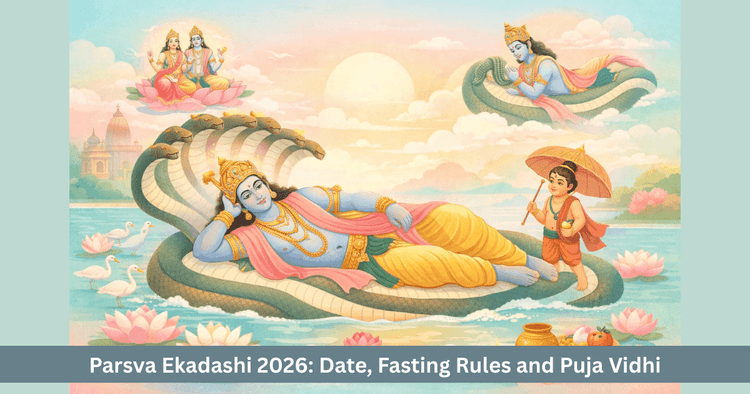
Table of Contents
Parsva Ekadashi 2026 will be observed on Bhadrapada Shukla Ekadashi with deep devotion. This Ekadashi falls every year between August and September. In 2026, Parsva Ekadashi spans Monday 21 September and Tuesday 22 September. The tithi begins on 21 September 2026 at 08:04 PM and ends on 22 September 2026 at 09:45 PM. Recommended parana time is on 23 September between 06:15 AM and 10:18 AM. In the Vaishnava tradition Ekadashi fasting is always broken on the next day Dwadashi within the proper time window.
Parsva Ekadashi is considered one of the most important Ekadashis of Chaturmas. During this period Lord Vishnu resides in yoganidra on the ocean of milk resting on Ananta Shesha. On this sacred day He turns to His other side on the divine serpent bed, therefore the name Parsva Ekadashi, the Ekadashi of turning. In many regions this day is also known as Pravartini Ekadashi, Jayanti Ekadashi and Vamana Ekadashi.
Parsva Ekadashi 2026 Date and Timing Overview
Parsva Ekadashi is observed on the eleventh lunar day of the bright fortnight of Bhadrapada. On this day Lord Vishnu makes a symbolic turn while resting in yogic sleep. The main timings for 2026 can be summarised as follows.
| Detail | Time and Date |
|---|---|
| Ekadashi Tithi begins | 21 September 2026, 08:04 PM |
| Ekadashi Tithi ends | 22 September 2026, 09:45 PM |
| Recommended parana period | 23 September 2026, 06:15 AM to 10:18 AM |
In the Vaishnava system the Ekadashi vrata is decided by udaya tithi. Devotees observe the fast throughout the Ekadashi day and break it on Dwadashi morning during the prescribed parana time. This Ekadashi is seen as a turning point in the middle of Chaturmas for one spiritual life.
What is Parsva Ekadashi and how is it linked to Chaturmas?
Parsva Ekadashi belongs to the heart of Chaturmas. The sleep of Lord Vishnu on Ananta Shesha begins from Devshayani Ekadashi. Parsva Ekadashi marks the moment when Lord Vishnu changes His side during this yogic rest.
This change of position is understood not only as a celestial event but also as an invitation for devotees to turn their own lives toward dharma and devotion. One who reshapes lifestyle into a spiritual mode by adopting simplicity and sadhana on this day receives special support from the Lord. Because of this inner turn Parsva Ekadashi is closely related to Devshayani Ekadashi and the entire Chaturmas period.
During Chaturmas devotees follow specific disciplines in diet behavior and spiritual practice. Parsva Ekadashi gives a natural checkpoint in the middle of this period to review and reinforce those vows. Those who sincerely wish to make their life more sattvic regulated and God centered find this day especially helpful.
Other names and special identity of Parsva Ekadashi
Parsva Ekadashi is known by many names in different traditions such as
- Pravartini Ekadashi
- Parivartini Ekadashi
- Jayanti Ekadashi
- Vamana Ekadashi
- Jaljhilini Ekadashi
These names carry deep meanings. Because the Lord turns His side it is called Parsva or Parivartini. In honour of His Vamana avatara it is also called Vamana Ekadashi. Since this Ekadashi inspires a new start and fresh commitments in spiritual life it is called Pravartini, that which sets one in motion toward higher goals.
Story of Lord Vamana and King Bali on Parsva Ekadashi
The glory of Parsva Ekadashi is woven with the story of Lord Vishnu Vamana avatara. Scriptures describe how mighty King Bali, the grandson of Prahlada, became ruler of the three worlds. His power disturbed the balance of the cosmos and the devas felt helpless.
To protect dharma Lord Vishnu appeared as Vamana, a young dwarf brahmana. He arrived at the grand sacrifice of King Bali where the king was performing an auspicious yajna to expand his strength further. Vamana humbly requested only three steps of land. The generous king did not refuse the request of this small brahmana and made the solemn vow to grant it.
The moment the vow was given Vamana began to expand His form. With one step He covered the earthly realms, with the second step He covered all the heavenly planets. There remained no space for the third step. Realising that this was none other than his worshipful Lord Vishnu, King Bali offered his own head as the place for that final step.
The Lord blessed Bali for this sincere surrender. He granted him the kingdom of Sutala, a residence said to be even better than the abode of the devas and stayed with him as his eternal protector. Remembering this pastime on Parsva Ekadashi inspires humility, renunciation of ego and the spirit of complete surrender.
Fasting rules of Parsva Ekadashi
Every Ekadashi has its own fasting discipline. For Parsva Ekadashi elders recommend following Vaishnava standards carefully. The vrata is described in three broad phases.
1) Pre preparation on Dashami
Preparation begins on Dashami, the day before Ekadashi. It is advised to eat only sattvic food on this day. The meal should be light and prepared without onion, garlic and heavy spices.
Many devotees start taking vrata friendly items from Dashami itself such as fruits and milk preparations. This makes Ekadashi fasting more natural and less stressful. One should sleep early, avoid over eating and keep the mind inclined toward remembrance of the Lord.
2) Morning rituals and sankalpa on Ekadashi
On Ekadashi day wake up in Brahma muhurta, ideally between 4 and 6 AM. Take a purifying bath and wear clean clothes. Purify the altar, wash the deity pictures and decorate with fresh flowers.
Sit peacefully and take a sankalpa for the Ekadashi vrata stating that the fast is being observed for pleasing Lord Vishnu and for inner purification. Mention time and place silently in the heart.
How to perform puja on Parsva Ekadashi
- Light ghee lamps before the deity.
- Offer tulsi leaves, fruits and sweets to Lord Vishnu.
- Recite Vishnu stotras, read from the Bhagavad Gita or other Vaishnava texts.
- Engage as much as possible in chanting the Hare Krishna Mahamantra throughout the day.
3) Types of fasting on Parsva Ekadashi
Depending on age and health devotees can choose from three main styles of fasting.
i) Nirjala fasting
This is the most rigorous form. One abstains from both food and water for the entire Ekadashi day. This kind of vrat is usually undertaken only by those who are strong and accustomed to strict fasting.
ii) Phalahar fasting
In this kind of observance devotees take only fruits, dry fruits, dairy and water. It is the most common standard followed by many households. The aim is to keep the body supported while maintaining lightness and focus on spiritual practice.
iii) Sattvic fasting
This is suitable when health requires gentler discipline. One may take fasting friendly items such as sabudana kheer, sabudana khichdi, simple potato preparations and similar foods prepared in minimal oil and spices. Pregnant women, elderly persons and children can safely follow this form.
The strength of the vrata lies in sincerity and remembrance of the Lord, not in torturing the body. Therefore one should choose according to capacity while maintaining a devotional mood.
Parsva Ekadashi Puja Vidhi in detail
Along with fasting, proper worship of Lord Vishnu makes the observance complete.
Main steps of the puja
1. Purification of deity or picture
Bathe the image of Lord Vishnu with clean water or Ganga water. Offer yellow cloth as garment.
2. Archana and worship
Offer chandan, haldi, akshata and flowers. Place tulsi leaves at the lotus feet. Keep a lamp near the altar.
3. Naivedya and tulsi
Offer fruits and Ekadashi suitable sweets as naivedya. Grain based foods are traditionally avoided on Ekadashi.
4. Bhajan, kirtan and scripture hearing
Keep the atmosphere filled with kirtan, japa and readings about Lord Vishnu, especially the Vamana avatara and teachings from Bhagavad Gita.
Benefits of observing Parsva Ekadashi
The vrata of Parsva Ekadashi is famous for its strong results, especially during Chaturmas.
1. Progress toward liberation
Sincere observance brings one closer to moksha, freeing the soul from repeated birth and death.
2. Increase of spiritual strength
Devotees pray for more potency to serve the Lord. This day is known to enhance determination for bhakti.
3. Health and inner cleansing
Regulated fasting helps detoxify the body and refresh the system. Combined with quiet mind it promotes overall wellbeing.
4. Success and stability
Scriptures state that obstacles diminish and auspiciousness increases in life when one follows Ekadashi regularly.
5. Multiplied merit in Chaturmas
Since Parsva Ekadashi falls in Chaturmas, every act of vrata and dana performed now yields multiplied spiritual merit.
Mahatmaya and atonement through Parsva Ekadashi
Parsva Ekadashi is praised as a day suitable for prayaschitta, sincere atonement for past mistakes. Those who regret wrongdoings and seek a fresh start can use this Ekadashi as a spiritual reset point.
By combining fasting, prayer and honest introspection one releases guilt and gains courage to walk on a better path. The vrata disciplines body and mind together, leading to a more sattvic lifestyle.
Recommended charity and seva on Parsva Ekadashi
Charity performed on this day pleases Lord Vishnu greatly.
- Donate food grains, clothes, fruits and funds according to means.
- Support cows, calves and bulls by contributing fodder or helping goshala services.
- Feed children and needy persons with respect and compassion.
Visiting a temple and offering some assistance in daily services is also considered powerful. Such seva connects the vrata with practical compassion.
Parsva Ekadashi as a new beginning in sadhana
In the middle of Chaturmas Parsva Ekadashi offers a chance to review spiritual life. Devotees may assess their progress and take new vows.
Those seeking clarity, willpower and direction can decide on this day to increase japa, adopt regular scripture reading or embrace certain lifelong habits such as avoiding intoxicants or harmful speech. Because the Lord Himself symbolically changes His side, devotees are encouraged to shift from lethargy to purposeful practice.
Best mantra to chant on Parsva Ekadashi
The most recommended mantra on Parsva Ekadashi is the Hare Krishna Mahamantra.
Hare Krishna Mahamantra
Hare Krishna Hare Krishna Krishna Krishna Hare Hare
Hare Ram Hare Ram Ram Ram Hare Hare
Chanting this mantra with attention and devotion purifies the heart. Meditating on the beautiful form of Lord Krishna while chanting helps the mind stay focused and peaceful.
Frequently asked questions on Parsva Ekadashi 2026
Can Parsva Ekadashi fast be kept without strict nirjala?
Yes. Those unable to stay without food or water can observe either phalahar or sattvic fasting.
Is Parsva Ekadashi more important than other Ekadashis?
In the Vaishnava calendar Parsva Ekadashi is among the very special days especially because it falls in Chaturmas and is linked with the Lord turning on Ananta Shesha.
Can women and elderly people observe Parsva Ekadashi?
Yes. They may comfortably choose between phalahar fasting and sattvic fasting according to health.
What type of charity is recommended on Parsva Ekadashi?
Feeding the poor, helping children, supporting cows and contributing to temple service are all pleasing to Lord Vishnu.
Which mantra is best to chant on Parsva Ekadashi?
The Hare Krishna Mahamantra is considered the most auspicious mantra to chant, especially during the parana period and throughout the Ekadashi day.
Get your accurate Kundali
Generate KundaliDid you like it?
Author

Aparna Patni (63)
Experience: 20
Consults About: Family Planning, Career
Clients In: Punjab, Haryana, Delhi
Share this article with friends and family
About ZODIAQ
ZODIAQ is an online Vedic Astrology platform. It connects clients seeking astrological advice to experienced astrologers with deep knowledge. Our users also generate kundali and perform kundali milan for free. ZODIAQ also offers services to the Astrologers. Astrologers utilize various offerings by ZODIAQ to serve their clients effectively.
If you are a User
Consult with experienced astrologers and seek their guidance. You can also order handwritten Janm Patrika report with life prediction prepared by experienced astrologers. Generate accurate Kundali, perform Kundali Matching and check horoscope and muhurat. Utilize our online library for all the necessary astrological and spiritual information.
If you are an Astrologer
Create accurate kundali for your clients and perform Kundali Matching for up to 5 people at a time. Write comprehensive Janm Patrika report for your clients with ZODIAQ. Check client details anytime by saving it in client directory. Become more productive by tracking how many clients you guide every day.
WELCOME TO
ZODIAQ
Right Decisions at the right time with ZODIAQ
