Sankashti Chaturthi Moon Arghya
By Pt. Suvrat Sharma
Arghya method and rules to complete the Ganesha vrat
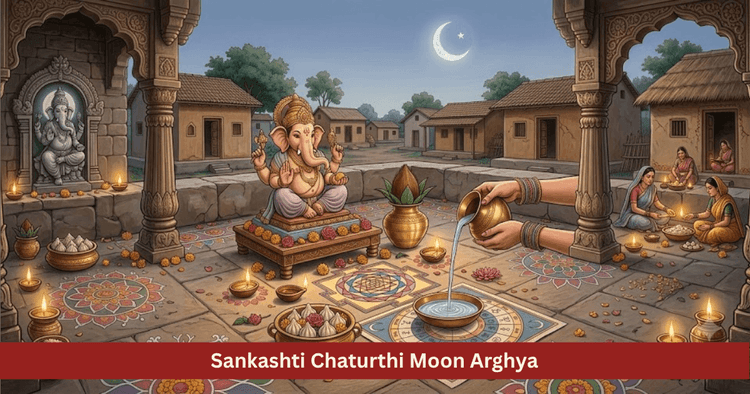
Table of Contents
Key Details for Completing the Vrat
Sankashti Chaturthi is a deeply revered vrat dedicated to Lord Ganesha. Devotees observe fasting and worship on this day for removal of obstacles, strength of wisdom, happiness, peace and greater ease on the path of life. According to religious belief, the vrat is not completed only through daytime restraint. The completion of the vrat is accepted only after Moon sighting and offering arghya to the Moon.
In 2026 the exact date of Sankashti Chaturthi should be confirmed according to the regional panchang. Patience, devotion and proper method are valued more than haste. Some customs may differ by family and region, yet the central spirit of Moon arghya remains widely similar.
Important Details
| Aspect | Details |
|---|---|
| Vrat | Sankashti Chaturthi |
| Year | 2026 |
| Main deity | Lord Ganesha |
| Completion of vrat | Moon sighting and arghya |
| Core spirit | Patience, devotion, discipline |
| Main offerings | Durva, flowers, modak or laddoo |
| Purpose | Obstacle removal, wisdom, happiness and stability |
Basic Steps of Vrat Completion
- Keep the mind calm in the evening
- Take a clear sighting of the Moon
- Offer arghya gently with clean water
- Remember Lord Ganesha and pray
- Offer durva, flowers and naivedya
- Break the fast after aarti according to tradition
Deeper Meaning of Moon Arghya
The fast of Sankashti Chaturthi disciplines both body and mind. Through the day the devotee restrains desire, speech and food. Yet the final doorway of the vrat is considered to be Moon arghya. The Moon is regarded as connected with the mind. When the devotee offers arghya in a calm spirit, the act does not remain a mere pouring of water. It becomes a sign of mental purification and completion of the vrat.
Lord Ganesha is regarded as the lord of discernment and auspicious beginnings. Remembering him along with Moon arghya teaches that outer obstacles and inner restlessness both need to be eased. When the mind becomes calm, decisions become clear. When decisions become clear, the path itself begins to appear simpler.
Why Arghya Should Be Offered With Devotion
Religious belief holds that arghya should be offered to the Moon gently, not by throwing water toward it. The devotee should remain calm, steady and respectful.
Method matters, yet sincerity of heart matters even more than outer method. If the outer action is complete and the inner state is restless, the sadhana remains incomplete. therefore while offering arghya, haste should be left aside and focused attention should be maintained.
Points to Remember While Offering Arghya
- Keep both body and mind steady
- Use clean water
- Look toward the Moon with respect
- Offer the water gently
- Keep gratitude and prayer in the heart
Clean Water and Family Tradition
In religious tradition, clean water holds special importance for arghya. In many homes unbroken rice known as akshat and flowers are also added to the water. Akshat indicates wholeness and auspiciousness. Flowers indicate tenderness and devotion.
Customs may differ by region and family. Some families offer only water. Some add akshat and flowers to the water. In some homes mantra recitation is more elaborate. Rather than becoming confused by these differences, faithful observance of ones own tradition is considered more appropriate.
| Material | Spirit | Use |
|---|---|---|
| Clean water | Purity | Foundation of arghya |
| Akshat | Unbroken auspiciousness | Offered with water |
| Flowers | Devotion and softness | With water or separately |
| Calm mind | Soul of sadhana | Through the full ritual |
Is the Vrat Complete Without Moon Arghya
According to belief, the Sankashti Chaturthi vrat is considered complete only after Moon sighting and arghya. If the Moon is not clearly visible due to clouds or other reasons, further guidance is understood according to local tradition and panchang direction. In the usual course, devotees wait patiently for Moon sighting.
This waiting is also part of sadhana. The vrat teaches that demanding fruit immediately is not enough. Waiting for the right time is also devotion. Breaking the fast in impatience and leaving the method incomplete is not considered proper.
How to Complete Ganesha Worship After Arghya
After offering arghya to the Moon, devotees remember Lord Ganesha. Prayer is offered for auspicious wishes, family welfare and the quieting of obstacles.
Order of Worship Completion
- Meditate on Lord Ganesha
- Offer durva grass
- Offer flowers
- Present modak or laddoo as naivedya
- Perform aarti
- Break the fast according to family tradition after prasad
Durva is considered dear to Ganesha. Modak and laddoo are offered as prasad. With aarti the outer ritual of the vrat is completed. Yet the inner ritual is complete only when peace, gratitude and good conduct remain in the mind.
Why Mental Restraint Is Necessary on Sankashti Chaturthi
A vrat is not limited to the kitchen and the puja plate. If one keeps a fast through the day and the mind remains filled with criticism, anger or agitation, the essence of sadhana becomes weak. The very word Sankashti is linked with crisis and obstruction. Obstruction exists outside and also within.
Inner obstructions often appear as impatience, harsh speech, untruth and an unsteady mind. therefore during arghya and through the whole day of the vrat, the devotee is expected to keep thoughts sattvic as well.
Supportive Conduct Through the Day
- Avoid harsh speech
- Do not enter unnecessary conflict
- Keep truthful and simple behaviour
- Practise patience toward others
- Awaken the spirit of charity and good deeds
Vedic and Astrological Perspective
Lord Ganesha is associated with wisdom, discernment, auspicious beginnings and removal of obstacles. The Moon is associated with the mind, emotion and mental stability. When Ganesha worship joins Moon arghya, the message of balance between action and mind becomes clear.
If there is intellect but the mind is unstable, decisions scatter. If the mind is calm but direction is unclear, life feels stalled. The sadhana of Sankashti Chaturthi joins these two poles. Discernment is sought from Ganesha and calmness of mind is practised through Moon arghya.
| Element | Symbol | Message of Sadhana |
|---|---|---|
| Ganesha | Wisdom and auspiciousness | Right beginning |
| Moon | Mind and feeling | Inner peace |
| Arghya | Surrender | Softening of ego |
| Fasting | Restraint | Control over desire |
| Aarti | Gratitude | Completion of the vrat |
How to Keep the Arghya Method Simple
The method need not be complicated. Simplicity and purity are more important. In the evening bathe or at least purify the hands and face. Wear clean clothes. Light a lamp at the place of worship. Remember Lord Ganesha. Then sight the Moon under the open sky and offer arghya.
Simple Practical Sequence
- Purification and calm seating
- Remembrance of Ganesha
- Moon sighting
- Arghya with water, akshat and flowers
- Prayer
- Durva, flowers, naivedya and aarti
- Breaking the fast with a peaceful mind
If health does not permit, the intensity of fasting should be kept according to capacity. True devotion is not measured by breaking the body. It is measured by steadiness of feeling.
Is Arghya Alone Enough
Arghya is considered an essential part of completing the vrat, yet merely releasing water does not complete the sadhana. Remembrance, prayer, offering of durva, naivedya, aarti and good conduct join with arghya. At the root of all these is faith.
Faith does not mean blindness. Faith means shaping action, mind and speech in harmony with sadhana. When a person keeps patience even in difficulty, does not become harsh toward others and does not run from duty, the vrat enters life.
Right Spirit of Breaking the Fast
Breaking the fast is not only an act of ending hunger. It is the moment of accepting the completion of the vrat. In many families prasad is taken first and then light sattvic food is eaten. Restlessness is not proper even in breaking the fast.
Food should remain sattvic, the mind should remain grateful and self review of the day should continue. If harshness of speech and impatience of behaviour remain even after the vrat, the effect of sadhana stays limited.
Extending the Vrat Into Home and Life
The fruit of Sankashti Chaturthi is not an object to be kept limited to one night. Its message should be carried through the month and through life.
- Think with discernment before every new work
- Do not become impatient when obstacles appear
- Calm the mind again and again
- Keep gentle communication with younger and elder people alike
- Practise gratitude regularly
Lord Ganesha teaches that the greatest obstacle is often hidden in an unclear mind and an unrestrained way of living. Moon arghya teaches that just as outer water should be pure, inner feeling should also become pure.
Sadhana Is Completed Through Patience
The most beautiful teaching of Sankashti Chaturthi is that crises may not vanish at once, yet the devotee can change at once. When the devotee learns patience, discipline and humble offering, circumstances also soften in course of time.
While offering arghya to the Moon, the devotee does not only lift water toward the sky. The devotee also quiets the unfinished haste of life. In that quietness the vrat is completed.
FAQ
When is the Sankashti Chaturthi vrat considered complete
According to belief the vrat is considered complete after Moon sighting and offering arghya to the Moon.
How should Moon arghya be offered
Clean water should be offered gently with a calm and respectful spirit. Water should not be thrown with force.
What may be added to the arghya water
In many traditions clean water is offered with akshat and flowers.
What should be done after arghya
Remember Lord Ganesha, offer durva, flowers and modak or laddoo, perform aarti and break the fast according to tradition.
Is it necessary to follow family tradition
Yes, customs may differ by region, so faithful observance of family tradition is considered appropriate.
Get your accurate Kundali
Generate KundaliDid you like it?
Author
Pt. Suvrat Sharma (63)
Experience: 20
Consults About: Family Planning, Career
Clients In: Punjab, Haryana, Delhi
Share this article with friends and family
About ZODIAQ
ZODIAQ is an online Vedic Astrology platform. It connects clients seeking astrological advice to experienced astrologers with deep knowledge. Our users also generate kundali and perform kundali milan for free. ZODIAQ also offers services to the Astrologers. Astrologers utilize various offerings by ZODIAQ to serve their clients effectively.
If you are a User
Consult with experienced astrologers and seek their guidance. You can also order handwritten Janm Patrika report with life prediction prepared by experienced astrologers. Generate accurate Kundali, perform Kundali Matching and check horoscope and muhurat. Utilize our online library for all the necessary astrological and spiritual information.
If you are an Astrologer
Create accurate kundali for your clients and perform Kundali Matching for up to 5 people at a time. Write comprehensive Janm Patrika report for your clients with ZODIAQ. Check client details anytime by saving it in client directory. Become more productive by tracking how many clients you guide every day.
WELCOME TO
ZODIAQ
Right Decisions at the right time with ZODIAQ
