Shani Pradosh Vrat Rules
By Pt. Abhishek Sharma
Learn what to eat, what to avoid, how to begin and how to follow the rules of Shani Pradosh Vrat on 27 June
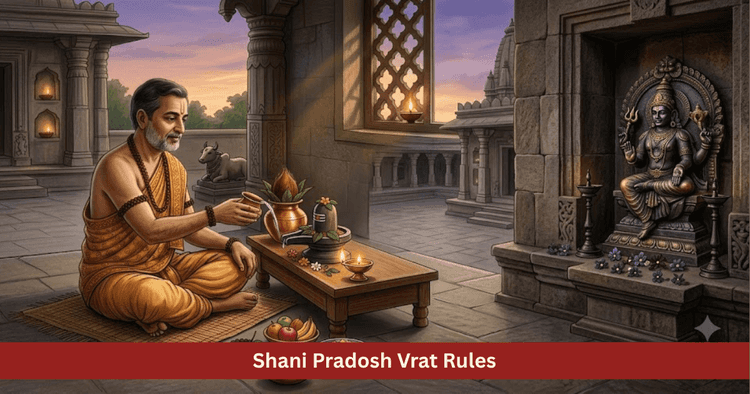
Table of Contents
Date, vrat and main details
| Aspect | Description |
|---|---|
| Festival | Shani Pradosh Vrat |
| Date | 27 June |
| Paksha | Shukla Paksha |
| Special tithi | Trayodashi |
| Month | Jyeshtha month |
| Worshipped deity | Lord Shiva |
| Main benefits | Relief from sorrow, peace from Saturn afflictions, grace of Shiva |
| Especially auspicious for | Those who wish to begin Pradosh Vrat for the first time |
What should be done on this day
- Take a morning bath and make the vrat sankalp, meaning sacred resolve
- Maintain restraint, japa and purity through the day
- Stay on phalahar, meaning fruit based fasting, if possible
- Worship Lord Shiva in the evening during Pradosh Kaal, meaning the sacred twilight period
- Take food only after the worship
- Keep the meal sattvic and completely avoid garlic and onion
What may be eaten in the vrat
| Condition | What may be taken |
|---|---|
| Phalahar vrat | Water, tea, coffee, fruits, fresh juice |
| Fruit based meal after evening worship | Dishes made from sabudana, kuttu or singhara |
| One meal resolve | Sattvic meal in the evening after worship |
| What to avoid through the day | Irregular eating, tamasic food, garlic, onion |
Where twilight becomes a spiritual discipline
Pradosh Vrat is regarded as a deeply sacred observance connected with the worship of Lord Shiva. When this vrat falls on a Saturday, it is called Shani Pradosh Vrat. In Vedic tradition, this day is considered especially auspicious for those who seek relief from sorrow, mental burden, obstacles and afflictions associated with Saturn. That is why 27 June is not treated as an ordinary date but as a favorable doorway for beginning a spiritual discipline.
The word Pradosh itself refers to the twilight period between day and night, a time when consciousness is believed to become especially receptive. In Shiva worship, this period holds great importance. Shani Pradosh Vrat is considered deep because it carries together the peace of Shiva and the karmic seriousness of Shani, meaning Saturn. This is why the vrat, when observed with faith and discipline, is believed to reduce suffering.
Why is 27 June considered auspicious for beginning the vrat
According to the given base, Shani Pradosh Vrat will be observed on 27 June and it is connected with Trayodashi Tithi of the Shukla Paksha in the Jyeshtha month. Trayodashi is considered especially favorable for Shiva worship and when it coincides with Saturday, its importance becomes greater. Therefore this day is seen as especially suitable for those who wish to begin observing Pradosh Vrat for the first time.
For beginning any vrat, an auspicious date is helpful but inner sincerity is equally necessary. Even then, certain dates are traditionally regarded as supportive for spiritual practice. 27 June is treated as one such occasion, where fasting, restraint, Shiva worship and inner purification may be brought together. This is why it is considered a favorable beginning point.
What is the spiritual significance of Shani Pradosh Vrat
The center of Shani Pradosh Vrat is the worship of Lord Shiva, yet its effect is not understood as limited only to ritual. This vrat trains a person in restraint, patience, discipline and prayer. Affliction from Saturn does not only mean a planetary difficulty. It may also indicate karmic obstacles, mental heaviness, delay, dissatisfaction and the burden of effort in life. Shiva worship gives a direction through which this burden may begin to turn into peace.
When a devotee observes this vrat with true devotion, the purpose is not only to ask for results but also to awaken humility and steadiness within. That is the real spiritual fruit of the vrat. The reduction of suffering does not always mean outer circumstances changing at once. It may also mean gaining the inner strength to endure, understand and surrender. Shani Pradosh Vrat may open that path of maturity.
Main spiritual feelings linked with this vrat
- Receiving Shiva's grace
- Peace from Saturn related suffering
- Practicing restraint and discipline
- Sense control through the day
- Purification of mind through evening worship
- Balance of karma and prayer
What rules are followed during the day in Pradosh Vrat
The main rule of Pradosh Vrat is that the fast is observed through the day and food is taken only in the evening after worshipping Lord Shiva during Pradosh Kaal. The purpose of this vrat is not merely staying hungry. Purity is to be maintained in speech, thought, conduct and food as well. Therefore it is considered best to keep the mind calm, restrained and turned toward Shiva through the day.
Many people ask whether nothing should be eaten through the day or whether light phalahar may be taken. The answer depends on one's resolve, health and capacity. If health allows, a fruit based fast is considered more auspicious. If this is not possible, then it is acceptable to fast through the day and take a sattvic meal in the evening after the worship. The essence of the rule is restraint, not stubbornness.
Can grains be eaten during Pradosh Vrat
There is often confusion around whether grains are completely forbidden during Pradosh Vrat. According to the given base, consumption of grains is not described as absolutely prohibited. The main rule is that the devotee should fast through the day and take food only after the evening worship of Lord Shiva. So if someone has taken the resolve of one meal, then a sattvic meal may be taken in the evening after puja.
Even so, if possible, a fruit based form of the fast is considered more meritorious. This is because phalahar keeps the body lighter and helps the devotee remain more focused, restrained and inwardly ready for japa and worship. Thus grains may not be entirely forbidden, yet the fruit based observance is generally regarded as the more elevated form of the vrat.
Why is phalahar considered more auspicious
From the scriptural point of view, a phalahari vrat, meaning a fruit based fast, is regarded as more sattvic and spiritually beneficial. Remaining on fruits, water and light intake reduces heaviness in the body and helps the mind remain more stable in worship. The purpose of Pradosh Vrat is not only to postpone food but to turn the senses toward Shiva through self restraint. That is why phalahar is seen as closer to the inner spirit of the vrat.
If a devotee follows a fruit based vrat, then one guideline mentioned is to avoid salt from sunrise to sunset. During this period, water, tea, coffee, fruits or fresh juice may be taken. After the evening worship, one may take salted phalahari food such as dishes prepared from sabudana, kuttu or singhara flour. In this way the vrat remains both disciplined and manageable.
What may be taken in phalahar vrat
| Time | What may be taken |
|---|---|
| From sunrise to sunset | Water, tea, coffee, fruits, fresh juice |
| What to avoid in this period | Salt |
| After worship | Salted fruit based meal |
| Suitable dishes | Sabudana, kuttu, singhara |
What should those do who take one meal
Every person's physical ability is not the same. therefore if a devotee cannot remain on fruit based fasting through the day, one may still observe the vrat by taking the resolve of one meal. In such a case, the person fasts through the day, performs the Shiva worship during Pradosh Kaal in the evening and only after that takes a sattvic meal. This is considered an accepted and respectful form of the vrat.
Taking one meal does not mean the seriousness of the vrat has been reduced. If the meal is sattvic, the mind remains restrained and the worship is done with sincerity, then the spirit of the observance remains intact. The important thing is that food should be taken after worship in the feeling of prasad, meaning sacred grace, not as mere convenience.
What is considered forbidden in food on this day
In Shani Pradosh Vrat, the food should be sattvic. According to the given base, the use of garlic and onion is considered completely forbidden on this day. Foods of tamasic and intensely stimulating nature may disturb the mind, so Shiva vrats traditionally avoid them. The simpler, lighter and purer the food, the more supportive it is considered for the spiritual nature of the observance.
Therefore whether one follows phalahar or one sattvic meal, purity and restraint in the kitchen should be maintained. Even those who take grains should avoid making the meal overly spicy, heavy or tamasic. The food of a vrat is not meant only to fill the stomach. It is meant to support the sadhana.
What should be avoided on this day
- Garlic
- Onion
- Tamasic food
- Repeated irregular eating
- Food before worship
- Anger and harsh speech
How should worship be done in Pradosh Kaal
The most important part of Pradosh Vrat is the evening worship of Shiva. The fast of the whole day finds completion in that worship. During this time, offering water to the Shiva Linga, lighting a lamp, offering incense, placing bilva leaves, chanting mantra and praying with humility are considered auspicious. The exact form of worship may vary according to place and family tradition, yet the main spirit should remain surrender to Shiva.
If someone is beginning the vrat for the first time, there is no need to become fearful of complexity. Simple devotion, pure conduct and evening remembrance of Shiva are the true roots of the observance. The japa and prayer done in Pradosh Kaal give spiritual direction to the fasting of the entire day.
What should first time observers keep in mind
Those who wish to begin Shani Pradosh Vrat for the first time should focus more on steadiness than on excessive harshness. One should take a resolve that can be maintained. If health is weak, choose the form with phalahar or one sattvic meal. If the body is capable, keep greater restraint through the day and make the evening worship the center of the observance. The purpose of the vrat is not to punish the body but to purify the mind.
First time observers should also remember that vrat is not only a food rule. It also asks for discipline in behavior, speech, anger, thought and use of time. In Shiva observances, peace is the greatest ornament. Therefore a vrat begun with simplicity and devotion often remains more lasting in the long run.
A simple path for first time observers
| Condition | Suggestion |
|---|---|
| Health is strong | Follow phalahar vrat |
| Health is moderate | Fast through the day and take sattvic meal in the evening |
| Beginning for the first time | Keep the rules simple and the devotion deep |
| Main focus | Shiva worship during Pradosh Kaal |
Where the vrat turns sorrow into discipline
The importance of Shani Pradosh Vrat lies not only in the belief that it reduces suffering but also in the truth that it teaches a person how to remain balanced amidst difficulty. Worship of Shiva calms the mind and the principle of Saturn teaches karma, patience and responsibility. When these 2 energies come together in the vrat, the devotee may receive not only relief but also inner steadiness.
This Shani Pradosh on 27 June may be considered special because it joins beginning, discipline and devotion in one sacred opportunity. Anyone who wishes to begin the vrat on this day may choose the form according to health, capacity and sincerity and take the resolve to become worthy of Shiva's grace. That is the most beautiful message of this observance.
FAQ
Why is Shani Pradosh Vrat on 27 June considered auspicious
Because it falls on Trayodashi of Shukla Paksha in the Jyeshtha month and is regarded as favorable for beginning Pradosh Vrat for the first time.
Can grains be eaten during Pradosh Vrat
Yes, grains are not described as absolutely forbidden but one should fast through the day and take only a sattvic meal after evening worship.
Is fruit based fasting considered better in Pradosh Vrat
Yes, if health allows, a fruit based observance is considered more auspicious and spiritually meritorious.
What may be taken during a phalahar vrat through the day
Water, tea, coffee, fruits and fresh juice may be taken but salt should be avoided from sunrise to sunset.
What should not be eaten in Shani Pradosh Vrat
Garlic, onion, tamasic food and any meal before the evening worship should be avoided.
Get your accurate Kundali
Generate KundaliDid you like it?
Author

Pt. Abhishek Sharma (63)
Experience: 20
Consults About: Family Planning, Career
Clients In: Punjab, Haryana, Delhi
Share this article with friends and family
About ZODIAQ
ZODIAQ is an online Vedic Astrology platform. It connects clients seeking astrological advice to experienced astrologers with deep knowledge. Our users also generate kundali and perform kundali milan for free. ZODIAQ also offers services to the Astrologers. Astrologers utilize various offerings by ZODIAQ to serve their clients effectively.
If you are a User
Consult with experienced astrologers and seek their guidance. You can also order handwritten Janm Patrika report with life prediction prepared by experienced astrologers. Generate accurate Kundali, perform Kundali Matching and check horoscope and muhurat. Utilize our online library for all the necessary astrological and spiritual information.
If you are an Astrologer
Create accurate kundali for your clients and perform Kundali Matching for up to 5 people at a time. Write comprehensive Janm Patrika report for your clients with ZODIAQ. Check client details anytime by saving it in client directory. Become more productive by tracking how many clients you guide every day.
WELCOME TO
ZODIAQ
Right Decisions at the right time with ZODIAQ
