Chaitra Amavasya Vrat: Significance and Story
By Pt. Nilesh Sharma
Benefits of Tarpan, Charity, and Vrat for Ancestors on Chaitra Amavasya
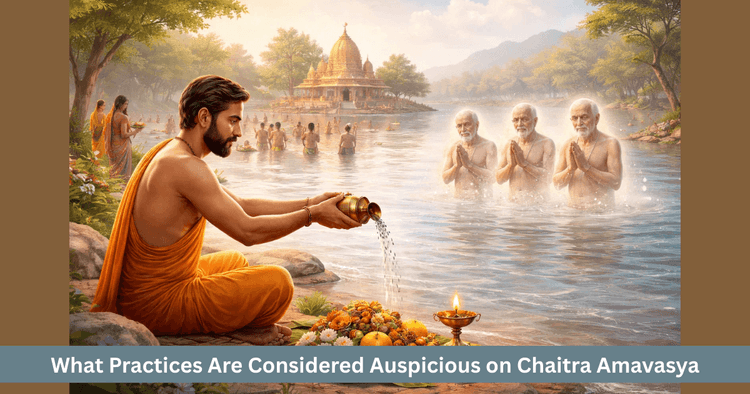
Table of Contents
In the Hindu lunar calendar the new moon of the dark fortnight of the month of Chaitra is known as Chaitra Amavasya. This day is regarded as very auspicious for bathing, charity and dedicated observances connected with the peace of ancestors. It is believed that when a person performs vrat on Chaitra Amavasya with faith and offers tarpan to the forefathers, the departed ancestors receive higher states of wellbeing and many difficulties of the devotee’s life slowly begin to lessen. Those who observe the Amavasya fast regularly every month consider Chaitra Amavasya particularly fruitful.
Chaitra Amavasya usually falls in the months of March or April. This period marks a change of season when warmth begins to increase and nature moves from spring toward the next phase of the year. At such a time acts like sacred bath, charity and ancestor worship are considered beneficial for the mind, body and family lineage.
What Practices Are Considered Auspicious on Chaitra Amavasya
On Chaitra Amavasya it is recommended to bathe during Brahma Muhurta or early morning in a river, lake or other sacred water body. Where this is not possible, one may bathe at home using clean water mixed with Ganga water. After the bath fresh clothes are worn and remembrance of Lord Vishnu, Lord Shiva and the ancestors is performed.
On this day tarpan for the forefathers using sesame seeds, water and sometimes raw milk is especially prescribed. Feeding Brahmins, cows, birds or needy people and offering clothes or other useful items in charity are also considered very meritorious. Many observe a fast through the day, taking only fruits or a single light meal according to capacity.
The main recommended actions can be seen in a simple table.
| Practice | Importance |
|---|---|
| Morning bath | Physical and mental purification |
| Pitru tarpan | Peace and contentment of ancestors |
| Charity and food donation | Increase of merit and ancestral grace |
| Lighting lamps | Filling the home with positive energy |
| Vrat and prayer | Inner resolve for relief from troubles |
Now it is helpful to understand the special Chaitra Amavasya vrat katha, which is closely associated with this sacred date.
Background of the Chaitra Amavasya Vrat Story
The Chaitra Amavasya vrat katha described in traditional texts is not just an engaging tale. It also conveys the hidden power of the fast and the subtle fruits connected with Amavasya. According to the story, in an ancient city there lived a brave king ruling his kingdom. His queen was naturally inclined toward religious life, simple in nature and deeply devoted. She used to observe the Amavasya fast regularly, give charity and participate sincerely in worship.
Exactly opposite the royal palace was the grand mansion of a wealthy moneylender. Over time a close friendship developed between the queen and the moneylender’s wife. The two women shared their joys and sorrows with each other. The queen had the splendour of royal life yet not a trace of pride. In her heart only faith in vows and devotion remained strong.
The Sad News from the Merchant’s House
One day while the queen was sitting in the courtyard of the palace, she heard loud cries of grief from the direction of the moneylender’s mansion. Shocked by the sound, she went at once to her friend’s house. On reaching, she saw that the wife of the moneylender was weeping bitterly and the atmosphere of the house was filled with sorrow.
The queen gently asked what misfortune had occurred that the whole household was crying. The moneylender’s wife replied with a heavy heart that her only son had died. Hearing this, everyone present was overwhelmed by grief. For the queen it was difficult to comprehend the depth of this pain because she herself had never experienced separation from her child.
The Queen’s Question and the King’s First Answer
When the queen returned to the palace, one thought kept turning in her mind. She wondered what this thing called sorrow really is that people find so hard to describe. She asked the king what kind of pain it must be when a son dies and why it shakes a person so deeply. The king understood that this question could not be fully explained through mere words.
According to the story, the king replied that only one who loses a son can truly feel the depth of that sorrow. The queen’s nature was straightforward and literal. She took his words exactly as spoken. At once she lifted her own son from her lap and threw him down upon the ground as if she wished to know that pain in that very moment.
By the grace of the Divine, the child did not suffer any injury and remained safe. The queen was astonished to see that nothing happened to her son. She again told the king that even now she had not understood what sorrow really is. This episode shows that although she was eager to know the nature of suffering, a divine protection surrounded the child and the family.
The King’s Plan for War and the Fruit of Amavasya Vrat
When the queen questioned him again, the king gave a second example. He said that when a war would arise with a neighbouring kingdom and he himself would go alone into that battle, if then news of his death reached the palace, at that time the queen would understand the meaning of sorrow. Even after hearing this, her mind did not feel clear, though she remained thoughtful.
In due time such an occasion arose when a war with the neighbouring kingdom became certain. The king set out for the battlefield with his army. Meanwhile the queen observed her regular Amavasya vrat with even greater sincerity. She prayed that whatever may happen, her husband should be protected, even if she still did not fully understand sorrow.
According to the tale, due to the power of the Amavasya fast the king returned safely and victoriously from the war. Once again the queen did not receive the experience she was trying to grasp. She questioned the king again as to when she would truly know what sorrow feels like. From here the story takes its next turn.
Pilgrimage to the Ganga and the Third Sign
After repeated questions from the queen, the king spoke a third time. He said that a day would come when they both would travel to have the darshan of Mother Ganga. During that journey he would jump into the river and when news of that event reached her, she would finally experience real grief.
The queen heard this also, yet her trust in the Amavasya vrat remained unshaken. She believed that the fast which had protected them until now would continue to shield her and her family from great disaster in future as well. Thus she waited for the answer to her question without abandoning her practice.
Lord Shiva Observing from Kailash
On the peak of Kailash, Lord Shiva and Mother Parvati watched this entire sequence with their divine vision. Lord Shiva said to Parvati that he would show her a truly happy soul. Here happiness did not refer merely to external comforts but to the deep security that comes from divine protection.
Lord Shiva then devised a play. He and Parvati took on the forms of a male goat and a female goat. In these forms they came near a stepwell or a small pond and began grazing on grass. This was the very place where the king and queen were later to stop and rest during their pilgrimage. The purpose of this play was to reveal to the queen the secret behind the power of her fast.
The Queen Overhears a Divine Conversation at the Well
According to the story, sometime later the king and queen set out on their journey to the Ganga. During the travelling they came upon the same well where the goat formed Shiva and Parvati were present. Seeing the spot, the queen suggested that they rest there for a while. The surroundings were peaceful and both of them prepared to pause.
While they rested, the queen overheard the conversation taking place between the female goat, who was in fact Mother Parvati and the male goat, who was Lord Shiva. She listened attentively to what they were saying. In their talk Lord Shiva told Parvati that the queen who had never neglected the Amavasya fast over many births would not be allowed to experience deep sorrow in this life. The protective strength of the Amavasya vrat had created a shield around her existence.
On hearing this, the queen realised that here lay the true answer to all her questions. She had repeatedly tried to know sorrow, yet each time the power of her fast had quietly prevented any major calamity from touching her.
The Queen’s Understanding and the Fruit of the Vrat
When the queen came to know this hidden truth that because of the Amavasya vrat serious grief could not even enter her life, she understood how divine grace works to protect a sincere practitioner. She went to the king and narrated everything, how Lord Shiva and Mother Parvati had praised her Amavasya fast while appearing as goats and declared that she would not face crushing sorrow in this birth.
From the ending of this story it becomes clear that the Amavasya fast is not just a formal rule. It acts like an unseen shield around the one who follows it with faith. On a sacred day such as Chaitra Amavasya, if the vrat is observed with discipline, ancestral devotion and a pure heart, many obstacles of life gradually begin to fade and a sense of safety arises.
Key Insights Related to Chaitra Amavasya Vrat
The story of Chaitra Amavasya shows that sorrow and hardship do form part of life, yet sincere faith and regular discipline can soften their impact. The queen remained curious to know what grief is but the Amavasya vrat repeatedly kept her safe from great shocks. This suggests that the Divine does not allow severe suffering to overwhelm one who is honestly committed to spiritual practice.
The observances of this date, such as bathing, charity and tarpan for the forefathers, do not only bring satisfaction to the ancestors but also create stability, peace and progressive relief from difficulties in the lives of their descendants. If on Chaitra Amavasya a person maintains purity in thoughts and actions, avoids anger and quarrelling and sustains a sattvic lifestyle, the effect of the vrat shines even more clearly.
Common Questions
Why is Chaitra Amavasya considered especially suitable for bathing and charity?
Chaitra Amavasya occurs in the early part of the year when nature itself is entering a fresh cycle. At such a time ritual bath and charity bring not only physical cleansing but also mental lightness. Through charity one shares a portion of one’s resources with others and when this is done in the name of the ancestors, it supports peace and grace within the family line.
Is Pitru tarpan on Chaitra Amavasya regarded as important for everyone?
Pitru tarpan is especially meaningful for those who wish to express gratitude toward their departed forefathers. By offering water, sesame seeds and prayers, a subtle message of respect and goodwill reaches the ancestors. One who performs such rites with devotion on this day takes a positive step toward balancing hidden burdens that may be present in the family destiny.
How does the Chaitra Amavasya fast differ from a general Amavasya fast?
A general Amavasya fast can be observed on any new moon and supports inner purification and the satisfaction of ancestors. The fast of Chaitra Amavasya gains additional importance because it falls in the month of Chaitra, associated with new beginnings and fresh resolutions. Its sacred story, centred around the queen, shows clearly how regular Amavasya fasting can function like a protective armour against major sorrows.
What practical guidance does the story of the queen give to a spiritual seeker?
The queen kept demanding to understand sorrow, while her Amavasya fast was silently guarding her from severe pain. This teaches that the mind often clings to unnecessary curiosities, whereas the true power of devotion is already working in the background. For a seeker it is wiser to trust the Divine, remain steady in practice and free oneself from obstinate demands and fears.
If someone cannot observe a strict fast, can simple acts like bathing, giving and prayer still bring the fruit of Chaitra Amavasya?
The essence of the Chaitra Amavasya vrat lies in faith, respect for ancestors and a sattvic way of living. If strict fasting is not possible due to health or situation, one can still benefit by taking a clean morning bath, performing tarpan according to capacity, offering some charity and spending time in quiet prayer. In this observance the purity of intention and honesty of action are more important than the outer hardness of the fast itself.
Get your accurate Kundali
Generate KundaliDid you like it?
Author

Pt. Nilesh Sharma (63)
Experience: 20
Consults About: Family Planning, Career
Clients In: Punjab, Haryana, Delhi
Share this article with friends and family
About ZODIAQ
ZODIAQ is an online Vedic Astrology platform. It connects clients seeking astrological advice to experienced astrologers with deep knowledge. Our users also generate kundali and perform kundali milan for free. ZODIAQ also offers services to the Astrologers. Astrologers utilize various offerings by ZODIAQ to serve their clients effectively.
If you are a User
Consult with experienced astrologers and seek their guidance. You can also order handwritten Janm Patrika report with life prediction prepared by experienced astrologers. Generate accurate Kundali, perform Kundali Matching and check horoscope and muhurat. Utilize our online library for all the necessary astrological and spiritual information.
If you are an Astrologer
Create accurate kundali for your clients and perform Kundali Matching for up to 5 people at a time. Write comprehensive Janm Patrika report for your clients with ZODIAQ. Check client details anytime by saving it in client directory. Become more productive by tracking how many clients you guide every day.
WELCOME TO
ZODIAQ
Right Decisions at the right time with ZODIAQ
