Chaitra Purnima: Arrival of Spring and Spiritual Awakening
By Pt. Abhishek Sharma
Prosperity and New Beginnings Through Vrat, Worship, and Charity on Chaitra Purnima
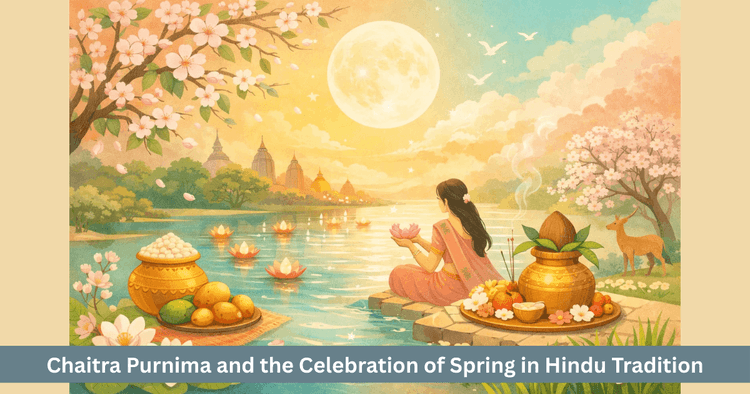
Table of Contents
In Hindu tradition, Chaitra Purnima is regarded as a symbol of the arrival of spring, new beginnings and inner awakening. It falls on the full moon day of the first lunar month, Chaitra, usually in March or April. This day encourages people to welcome freshness, clarity and new direction in life, in harmony with the blossoming of nature.
Chaitra Purnima is counted among the important sacred dates of the year. On this day, people seek blessings for prosperity, good fortune and spiritual growth through special worship, fasting, bathing and charity. It is seen as an auspicious time to renew one’s intentions and draw closer to the divine.
Date, Season and Traditional Context of Chaitra Purnima
The observance of Chaitra Purnima is closely linked with the spring season. Fields are prepared for new crops, trees put out fresh leaves and the weather becomes gentler. From a spiritual perspective, this phase is considered supportive for worship, satsanga and reflection.
Some of the main aspects associated with Chaitra Purnima can be summarised as follows.
| Aspect | Description |
|---|---|
| Month | Chaitra, the first month of the Hindu lunar year |
| Tithi | Full moon of the bright fortnight |
| Season | Peak of spring and transition from the cold months |
| Core themes | New beginnings, purification, spiritual growth, victory of light |
| Cultural side | Start of a new agricultural cycle and a time of joy and celebration |
On this day devotees express gratitude to the divine for the previous year and set intentions for the time ahead. Just as nature renews itself, people are encouraged to refresh their thoughts and approach to life.
Main Baths, Fasts and Rituals on Chaitra Purnima
A central tradition of Chaitra Purnima is the sacred bath. Many take an early morning dip in a holy river, lake or pilgrimage reservoir. Those who cannot travel prepare a ritual bath at home, often adding Ganga water, Tulsi leaves or fragrant substances to the water with a prayerful resolve.
This act is believed to assist in cleansing the body and mind and to mark the wish for a new beginning. It is treated as a sign of letting go of accumulated negativity and stepping into a fresh phase of life.
The main practices of the day can be viewed in this table.
| Practice | Brief meaning |
|---|---|
| Sacred bath | Bathing in holy rivers, lakes or at home with a conscious spiritual resolve |
| Fasting and restraint | Periods of abstaining from food to cultivate discipline and inner focus |
| Sattvic diet | Light vegetarian food such as fruits, nuts, milk and simple dishes to keep mind and body clear |
| Special worship | Puja to Vishnu or one’s chosen deity with lamps, incense, flowers and offerings |
| Charity and service | Offering food, clothes or money to those in need as an act of compassion |
Many households choose to worship Lord Vishnu on this day, seeing him as the preserver of the universe and as a source of protection, prosperity and spiritual guidance. Others may organise simple recitations, bhajans or readings from sacred texts at home.
Vishnu Puja and the Value of Mantra Chanting on Chaitra Purnima
Worship of Lord Vishnu on Chaitra Purnima is considered especially beneficial. Vishnu is revered as the sustainer of creation and as the one who upholds dharma. During the puja, an image or symbol of Vishnu is placed on a clean altar and offered water, sandal paste, flowers, Tulsi leaves, incense, lamps and fruit.
Devotees pray with a mindset of seeking forgiveness and grace. Many chant mantras that express repentance and a desire for purification. Through this they acknowledge past mistakes and resolve to move forward with greater awareness and responsibility.
Some of the inner benefits attributed to such worship include
- Release from feelings of guilt and mental heaviness
- Deepening of gratitude and surrender to the divine
- Reduction of fear, doubt and restlessness
- Stronger commitment to truthfulness, compassion and dharma
Thus ritual and inner attitude come together to make the observance meaningful.
Satsanga, Discourses and Charity on Chaitra Purnima
Chaitra Purnima is also seen as a time for collective spiritual gathering. In many places, communities organise discourses, satsangas or group prayers. Teachers speak about ethical living, compassion and the importance of right action.
Themes such as karma, dharma and the purpose of human life are discussed. This helps participants to look more honestly at their own journey and to find practical ways to refine behaviour and priorities.
Charity forms another important pillar of the day. Offering food, clothing or financial help to those in need is understood as a direct expression of kindness. Since Chaitra Purnima marks a fresh start, sharing one’s resources becomes a way of bringing light into the lives of others as well.
Pilgrimage Baths and Regional Traditions
Many devotees travel on Chaitra Purnima to river banks such as those of the Ganga or Yamuna for ritual bathing, offerings and prayer. Such pilgrimages are believed to lighten the mind and create a sense of closeness to sacred landscapes and traditions.
Those who stay at home may still perform a meaningful bath using water sanctified with Tulsi, Ganga water or fragrant herbs. Afterward, they light a lamp at the home altar, offer flowers and food and spend some time in silence and prayer.
Regional customs vary across India. Some communities prepare special festive dishes, others hold evening bhajan gatherings and some emphasise worship of a village deity or family deity on this day.
Despite these variations, the core intention remains the same.
- Purity
- Renewal
- Respect for nature
- Gratitude toward the divine
Because of this, Chaitra Purnima is experienced as an inclusive and living festival, shaped by local culture yet united by shared spiritual aims.
Spiritual and Philosophical Meaning of Chaitra Purnima
Chaitra Purnima invites attention not only to outer ritual but also to inner cleansing. Alongside bathing and puja, it encourages people to notice anger, jealousy, sadness or pessimism held within and to begin releasing them.
Three key principles often reflected upon at this time are
- Karma, the law that every action has consequences
- Dharma, the path of right conduct and responsibility
- The cycle of life, encompassing birth, growth, change and renewal
The observances associated with Chaitra Purnima serve as tools to bring these principles into daily living. A devotee looks at past actions and patterns and consciously chooses clear, constructive intentions for the time ahead.
How to Celebrate Chaitra Purnima at Home
Chaitra Purnima can be observed in a simple yet meaningful way at home. There is no requirement for elaborate ritual but a clean space, sincere heart and focused prayer are important.
A possible sequence for home observance is
- Waking early, bathing and wearing clean clothes
- Cleaning and decorating the altar with a lamp, flowers and incense
- Worshipping one’s chosen deity, especially Vishnu if so inclined
- Spending time in prayer, bhajans or reading a short passage from a sacred text with family
- Offering some help or charity to a person or cause in need
Preparing a few traditional dishes, decorating the home modestly and spending quality time together can deepen the spirit of the day. In this way, the festival strengthens mutual respect, closeness and cooperation within the family.
Inspiration for New Beginnings and Inner Growth
Above all, Chaitra Purnima stands for renewal and rejuvenation. It reminds people that whatever difficulties the past year may have held, there is always scope for a fresh start.
When a devotee uses this day to resolve to leave behind limiting habits and to cultivate more positive, disciplined and compassionate ways of living, Chaitra Purnima becomes a personal festival of transformation.
In this sense the date is not just a point in the calendar but a sacred opportunity to rekindle hope, growth and balanced enthusiasm in one’s journey.
Common Questions
In which month does Chaitra Purnima occur and how is it linked to the seasons?
Chaitra Purnima falls in the month of Chaitra, usually in March or April. It coincides with the height of spring, when new leaves, blossoms and preparations for fresh crops mark a natural renewal around us.
Why is a sacred bath emphasised on Chaitra Purnima?
Bathing in holy waters or with sanctified water at home is seen as a symbol of purification. It supports the intention to leave behind past mistakes and heaviness and to step forward with a clearer and lighter mind.
Is fasting compulsory on Chaitra Purnima?
Fasting is not obligatory but many choose it as a form of discipline and focus. Those unable to keep a complete fast may follow a light sattvic diet with fruits, nuts and simple vegetarian food, keeping the mind calm and alert.
What is the special significance of worshipping Lord Vishnu on this day?
Vishnu is honoured as the sustainer of balance and order. Worship on this day expresses a wish for protection, prosperity and clear guidance. It also strengthens commitments to gratitude, restraint and ethical living.
How can one observe Chaitra Purnima simply at home?
One can bathe, light a lamp, offer flowers and perform a short puja at the home shrine. Spending time in prayer or devotional singing with family and sharing food or help with someone in need makes the observance heartfelt and complete.
Get your accurate Kundali
Generate KundaliDid you like it?
Author

Pt. Abhishek Sharma (63)
Experience: 20
Consults About: Family Planning, Career
Clients In: Punjab, Haryana, Delhi
Share this article with friends and family
About ZODIAQ
ZODIAQ is an online Vedic Astrology platform. It connects clients seeking astrological advice to experienced astrologers with deep knowledge. Our users also generate kundali and perform kundali milan for free. ZODIAQ also offers services to the Astrologers. Astrologers utilize various offerings by ZODIAQ to serve their clients effectively.
If you are a User
Consult with experienced astrologers and seek their guidance. You can also order handwritten Janm Patrika report with life prediction prepared by experienced astrologers. Generate accurate Kundali, perform Kundali Matching and check horoscope and muhurat. Utilize our online library for all the necessary astrological and spiritual information.
If you are an Astrologer
Create accurate kundali for your clients and perform Kundali Matching for up to 5 people at a time. Write comprehensive Janm Patrika report for your clients with ZODIAQ. Check client details anytime by saving it in client directory. Become more productive by tracking how many clients you guide every day.
WELCOME TO
ZODIAQ
Right Decisions at the right time with ZODIAQ
